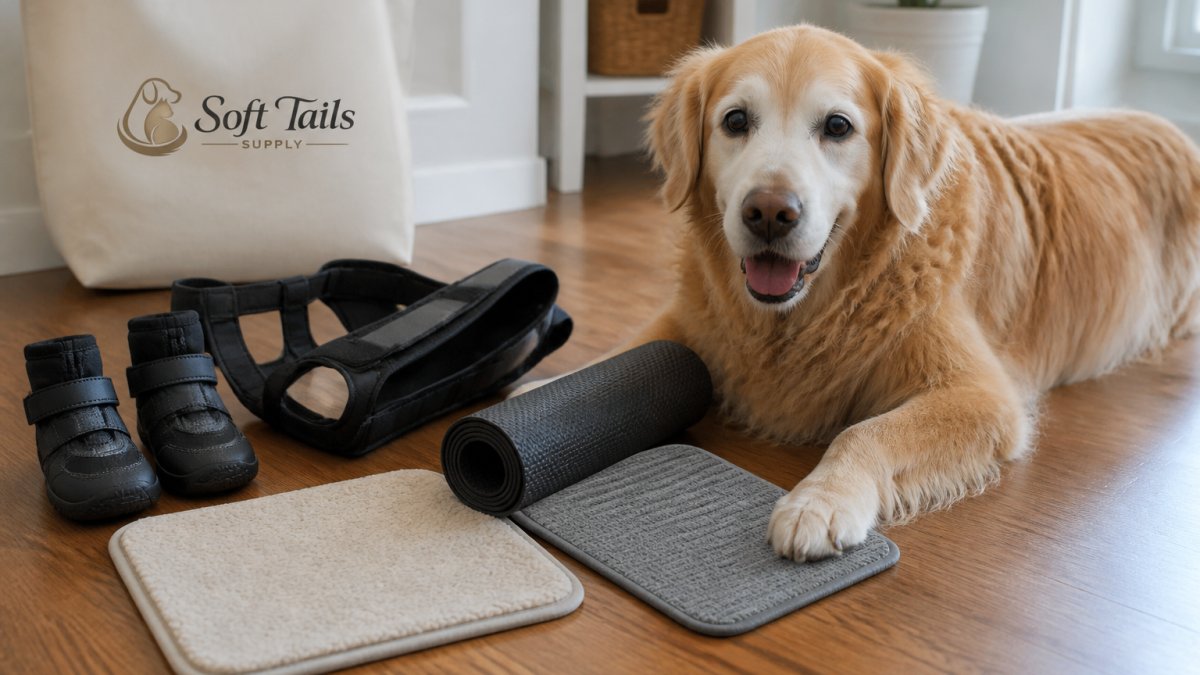
 blog
blog
Traction Aids for Senior Dogs on Hardwood Floors
Table of Contents
- Why Senior Dogs Slip on Hardwood Floors
- How to Help Dogs Walk on Slippery Floors
- Non-Slip Dog Socks for Senior Dogs
- Dog Paw Grips for Hardwood Floors
- Dog Booties for Indoor Hardwood Use
- Fit, Sizing, and Keeping Traction Aids in Place
- Cleaning, Durability, and Replacement
- Matching the Aid to Your Dog
- Frequently Asked Questions
Last Updated: October 4, 2026
Why Senior Dogs Slip on Hardwood Floors
Paw pads are built for grass and carpet, not polished wood, so slipping is a common, overlooked mobility problem in older dogs.

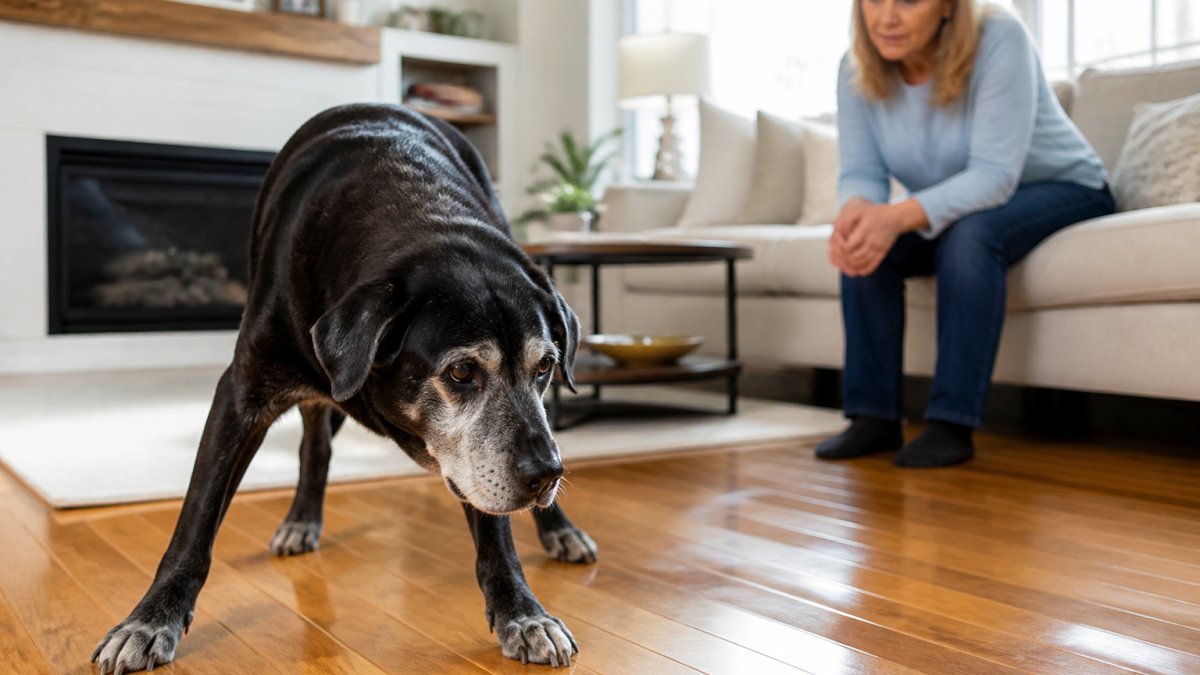
Gradual, age-related slipping is manageable, but a sudden change in how a dog walks, stands, or gets up is not something to solve with a floor mat. According to the American Veterinary Medical Association's pet owner resources, sudden weakness, dragging a limb, or an inability to rise warrants a veterinary exam.
How to Help Dogs Walk on Slippery Floors
Two levers exist: change the floor or change the paw. The floor is the faster win, runners, area rugs, and carpet tiles along the dog's main routes eliminate the problem in those zones.
| Traction Aid | How It Works | Best For | Main Drawback |
|---|---|---|---|
| Dog socks with gripper soles | Fabric sock with rubber tread on the sole | Whole-paw protection, cold floors | Dogs kick them off; sizing is fussy |
| Stick-on paw grips | Adhesive pad applied to the paw pad | Short-term, post-surgery, trial use | Wears out; needs reapplying |
| Toenail-mounted grips | Small cap fitted over individual nails | Dogs that reject socks | Requires correct nail length |
A sensible order: trim pad hair and check nail length, add floor traction along main routes, start paw-pad moisturizing, then add a wearable traction aid only where rugs cannot cover.
Non-Slip Dog Socks for Senior Dogs
Non-slip dog socks for senior dogs are the most popular traction aid: they cover the whole paw, add cushioning and warmth, and work on any hard surface.
Measure paw width at the widest point while standing and length from the back of the pad to the longest nail, and size down between sizes.
For a lower-commitment option, our Self-Adhesive Anti-Slip Paw Pads for Dogs attach straight to the paw pad and improve grip on hardwood, tile, and laminate.
Dog Paw Grips for Hardwood Floors
Dog paw grips for hardwood floors fall into two families: adhesive pads that stick to the underside of the paw, and caps that fit over individual toenails. Stick-on grips apply in seconds and suit a short window such as post-surgery weeks, but they wear down and perform poorly on wet or dirty paws; toenail grips mimic a natural claw and stay on better in many dogs, but require nails at the correct length.
Start with the back paws, senior dogs carry most of their rear weight there, and rear-end slipping causes the classic "splits" fall. Add front grips if the dog still scrambles when turning.
Dog Booties for Indoor Hardwood Use
Dog booties for indoor hardwood use are the most protective option and the hardest sell: they cover the entire paw, provide rubber soles, and add a waterproof barrier outdoors. The problem is bulk, many senior dogs plant their feet cautiously for the first week, which looks like the booties are making things worse. Give it seven to ten days of short indoor sessions.
Self-Adhesive Anti-Slip Paw Pads for Dogs →
Fit, Sizing, and Keeping Traction Aids in Place
Fit is the single biggest reason traction aids fail. Every wearable aid has the same two failure modes: too loose, so it rotates and comes off, or too tight, so it rubs and the dog refuses to walk.
Acclimation matters as much as sizing: short sessions, high-value treats, and a calm environment get most dogs past the high-stepping and chewing within a week.
Cleaning, Durability, and Replacement
Every traction aid wears out, and knowing when to replace one prevents the quiet failure where a dog wears a slick, worn-out aid and slips anyway.
Adhesive paw grips are consumable by design: replace them when the surface loses its tack or the edges lift. Toenail grips last longer but need maintenance, as nails grow, the grip seats less securely, so keep up with nail trimming.
Matching the Aid to Your Dog
There is no single best traction aid, only the best match for your dog's size, gait, and tolerance for wearing something on its paws.
| Your Dog's Situation | Start With | Why |
|---|---|---|
| Mild slipping, tolerates handling | Floor rugs plus pad trimming and moisturizing | Cheapest, no acclimation needed |
| Slipping on turns, kicks off socks | Adhesive paw grips | Low-profile, hard to remove by the dog |
| Needs whole-paw cushioning | Non-slip socks with ankle straps | Covers the pad, adds warmth |
Small dogs with long backs, such as dachshunds, benefit most from rear-paw traction because their gait loads the hindquarters. Large, heavy dogs need more surface area and a sole that will not compress flat under weight, and wide, flat-footed dogs often do better in grips than socks.
Sudden slipping or a dog that hesitates to get up rarely improves on its own. At SofttailSupply, we stock practical traction and comfort essentials for senior dogs, including our Self-Adhesive Anti-Slip Paw Pads for Dogs in sizes S to 3XL, with fast 24 to 48 hour shipping and responsive support.
Frequently Asked Questions
Are dog socks or paw grips better for hardwood floors?
It depends on your dog's needs. Non-slip dog socks cover the whole paw and stay on with straps or Velcro, which suits dogs that need steady grip all day. Dog paw grips for hardwood floors are smaller stick-on pads that attach directly to the paw pad or nail, so they are less bulky and harder for a dog to kick off. Socks offer more cushioning and warmth; grips offer a lower profile. Many owners try socks first, then switch to grips if their dog keeps pulling socks off. The Self-Adhesive Anti-Slip Paw Pads for Dogs ($22.99) are a simple starting point for temporary traction.
Why do senior dogs slip on hardwood floors?
Aging changes how a dog's paws meet a hard surface. Paw pads lose some elasticity, hair between the paw pads grows longer and reduces contact with the floor, and nails that are too long lift the paw off the ground. Muscle weakness and joint stiffness in the hind legs also make it harder to push up from a lying position. On smooth hardwood or tile, those small losses add up to slipping, splayed legs, and hesitation. Trimming nails and paw-pad hair, plus adding a traction aid, often makes an immediate difference.
How do I get my senior dog used to wearing traction socks?
Start with short sessions. Put the socks on for five minutes during a calm moment, give a treat, and take them off before your dog notices them. Repeat a few times a day, then extend to ten minutes, then a full walk around the living room. Some dogs kick socks off at first because the fabric feels strange on their pads. A snug fit and a strap around the ankle help. If your dog refuses socks after a week of gradual introduction, stick-on paw pads or nail grips are a lower-profile alternative that many dogs tolerate better.