 blog
5 Alternatives to Traditional Cat Scratching Posts
Table of Contents
- Why Cats Reject Traditional Scratching Posts and What to Try Instead
- Horizontal Cat Scratcher: Flat Surfaces That Work for Floor-Level Scratchers
- Cardboard Cat Scratcher: Lightweight, Affordable, and Disposable Options
- Angled and Incline Scratchers: A Middle Ground Between Flat and Upright
- Sisal-Wrapped and Rope-Wrapped Posts: Durable Vertical Options
- Wall-Mounted and Furniture-Style Scratchers: Saving Floor Space
- How to Choose a Cat Scratcher Based on Scratching Style
- How to Stop Cats From Scratching Furniture
- DIY Cat Scratcher Ideas: Build One for a Few Dollars
- Safety and Material Considerations
- Scratchers for Kittens, Seniors, and Cats With Mobility Limits
- Environmental Impact and Disposal
- Step-by-Step Transition Plan for Cats That Ignore Scratchers
- Frequently Asked Questions
Last Updated: October 12, 2026
Why Cats Reject Traditional Scratching Posts and What to Try Instead
Most owners buy a cat scratching post, watch their cat ignore it, and blame the cat. The real problem is usually the post: cats scratch to mark territory, shed claw layers, and stretch, and a wobbly, too-short, or wrong-texture post fails at all three. The fix is a surface that matches how your cat already scratches.
Horizontal Cat Scratcher: Flat Surfaces That Work for Floor-Level Scratchers
A horizontal cat scratcher is a flat board on the floor, letting your cat scratch while standing or lying down.
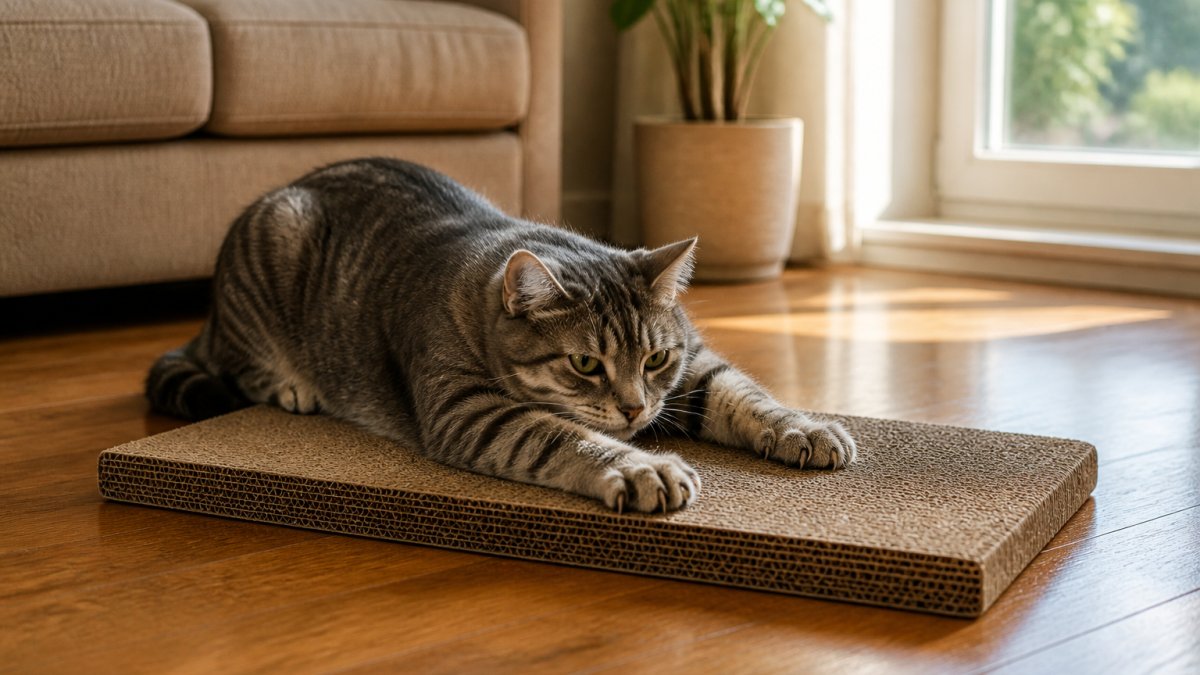
These suit low-to-the-ground scratchers and small homes, since they slide under a couch or bed. Look for a non-slip base so the board doesn't flip.
Cardboard Cat Scratcher: Lightweight, Affordable, and Disposable Options
A cardboard cat scratcher is a stack of corrugated layers your cat tears into; the rough edge mimics tree bark, so many cats take to it fast. They're cheap, light, and easy to replace, though a determined cat can flatten one in weeks, so rotate two boards.
Angled and Incline Scratchers: A Middle Ground Between Flat and Upright
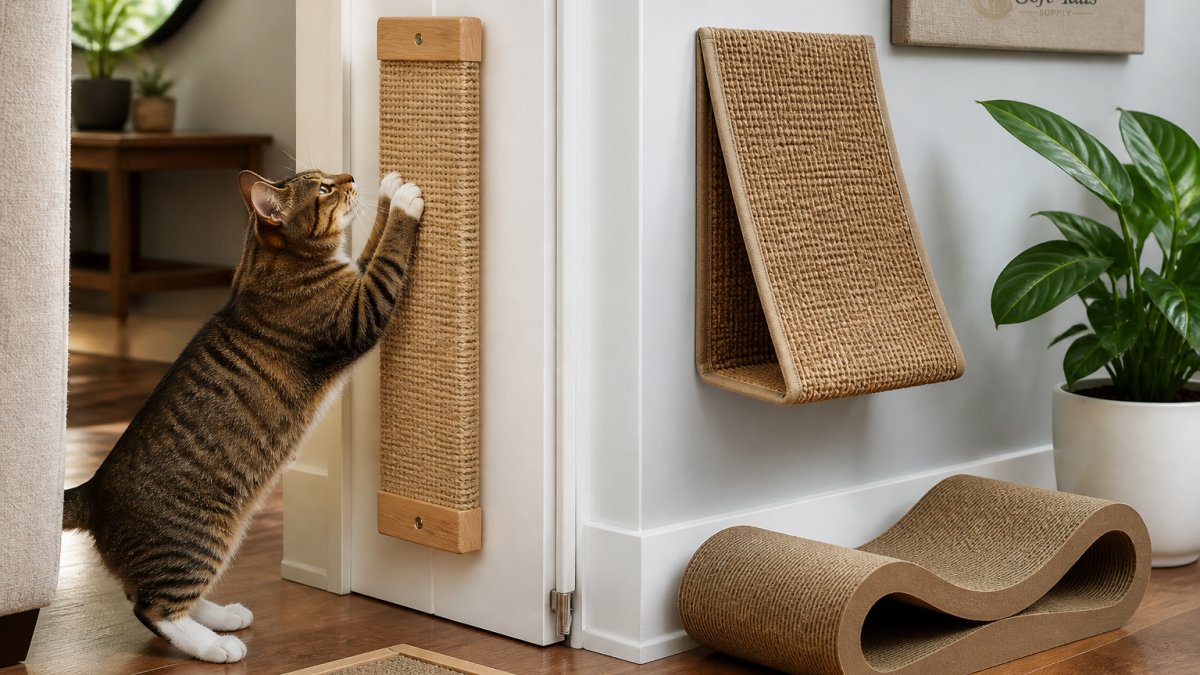
An angled scratcher sits between horizontal and vertical: the incline lets your cat stretch while keeping a stable base, ideal for cats who lean into a scratch but knock over tall posts. Look for a wide base and a surface reaching at least shoulder height.
Sisal-Wrapped and Rope-Wrapped Posts: Durable Vertical Options
Sisal rope and sisal fabric are the classic scratching materials: rough fibers hold up to daily claw maintenance and shed less than carpet. Carpet-covered posts are common, but looped carpet snags claws and shreds quickly; a tight, non-looped weave lasts longer.
Wall-Mounted and Furniture-Style Scratchers: Saving Floor Space
Wall-mounted scratchers bolt to a stud and give your cat a vertical surface without a footprint, suiting apartments and tight floor plans. Furniture-style scratchers hide the surface inside a side table or shelf. Measure your cat's full stretch, and mount wall units into solid wood, not drywall alone.
How to Choose a Cat Scratcher Based on Scratching Style
The right scratcher depends on how your cat scratches, not what looks best in a store. Watch your cat for a few days first.
| Scratching Style | What You See | Best Scratcher Type |
|---|---|---|
| Floor-level | Scratches while lying down | Horizontal board |
| Leaning | Stretches up on a wall or couch | Angled or incline |
| Full-stretch | Reaches high, claws deep | Tall vertical post |
Match the height to your cat's full reach; a too-short post forces an awkward crouch most cats skip.
How to Stop Cats From Scratching Furniture
Stop furniture scratching by giving your cat a better surface and making the couch less appealing, do both at once, or you just move the problem. Place the new scratcher next to the scratched spot, rub catnip or silvervine on it, cover the couch corner temporarily, trim claws every two weeks, and reward your cat the moment it uses the scratcher.
DIY Cat Scratcher Ideas: Build One for a Few Dollars
Build a DIY cat scratcher from a sturdy wooden board and sisal rope: wrap tightly, glue the ends, and mount at your cat's preferred angle. Other low-cost builds: a corrugated cardboard insert in a shallow box, a carpet scrap nailed to a solid plank, or a shelf bracket wrapped in sisal and mounted to a stud.
Safety and Material Considerations
Check every scratcher for sharp staples, loose glue, and exposed nails, a hidden staple can cut a paw or mouth.
Scratchers for Kittens, Seniors, and Cats With Mobility Limits
Kittens need low, cheap surfaces they outgrow: start with a cardboard board and size up as they grow. Senior cats and cats with arthritis often cannot reach a tall post, give them a horizontal or gently angled scratcher at floor level near a warm sleeping spot.
Environmental Impact and Disposal
Cardboard scratchers recycle in most curbside programs once tape and glue are removed. Sisal rope and fabric last longer, creating less waste, but are harder to recycle. Rewrapping a worn post is the lowest-waste option: keep the frame, replace only the surface.
Step-by-Step Transition Plan for Cats That Ignore Scratchers
If your cat ignores every scratcher, follow this plan in order, giving each step a few days: place the new scratcher where your cat already scratches, cover the old target temporarily, add catnip or a treat to the new surface, play with a wand toy nearby, reward every scratch on it right away, trim claws so couch damage slows, move the scratcher a few inches at a time toward its final spot, and keep two scratchers so your cat always has a choice.
Frequently Asked Questions
What can I use instead of a cat scratching post?
You can use horizontal scratchers, cardboard cat scratchers, angled boards, scratching barrels, or DIY options made from sisal rope and wood. Each alternative targets different scratching preferences. Horizontal scratchers suit cats that scratch floors, while angled boards work for cats that reach upward. Cardboard scratchers are affordable and replaceable. The best choice depends on your cat's scratching style, your space, and whether you want a disposable or long-lasting option.
Do cats prefer horizontal or vertical scratchers?
It depends on the individual cat. Some cats stretch upward and prefer vertical posts, while others scratch flat surfaces on the floor. Watch where your cat scratches most often: couch corners and door trim suggest a preference for vertical surfaces, while carpet edges and rugs point to horizontal scratching. Offering both a horizontal cat scratcher and a vertical option lets your cat choose, which increases the chance they ignore your furniture.
How do I get my cat to use a new scratcher?
Place the new scratcher near where your cat already scratches, not in a hidden corner. Rub it with catnip or attach a dangling toy to draw interest. If your cat ignores it, try a different material or orientation. Cats often reject scratchers that wobble, so choose a stable option or secure it to the floor. When your cat uses it, reward them immediately. Never force their paws onto the surface.
Your cat is not out to ruin your furniture. It just needs the right surface, at the right height, in the right spot. SofttailSupply carries durable scratchers, engaging toys, and cozy sleep solutions built for real cats, backed by fast 24-48 hour shipping, secure payment options, and responsive customer support. Start with one alternative, watch how your cat scratches, and adjust from there. Continue shopping at SofttailSupply and give your cat a surface it will actually use.