 blog
blog
Natural Alternatives to Plastic Dog Toys: Safe Picks
Table of Contents
- Why Natural Alternatives to Plastic Dog Toys Are Worth Switching To
- Durable Dog Toys for Heavy Chewers: What Survives Real Play
- How to Verify Safe Materials for Dog Toys Before You Buy
- Frequently Asked Questions
Last Updated: September 10, 2026
Why Natural Alternatives to Plastic Dog Toys Are Worth Switching To
Natural alternatives to plastic dog toys use natural rubber, organic cotton, hemp, and wool instead of synthetic plastics. This guide breaks down which materials hold up and how to verify safety.
Many plastic toys contain additives like phthalates and BPA, and a chewed, punctured, slobbered-on toy is one your dog ingests in small pieces over time (the CDC). The FDA's guidance on pet food and product safety treats chewed and ingested materials as a real exposure route, and natural materials biodegrade rather than sit in a landfill for centuries.
Below, we'll show how to pick safe, durable options and what most guides get wrong about "eco-friendly" labels.
Durable Dog Toys for Heavy Chewers: What Survives Real Play
Durable dog toys for heavy chewers need dense, thick-walled natural rubber or tightly braided hemp rope, not thin fabric or hollow plastic, which a heavy chewer destroys within days (avma.org).
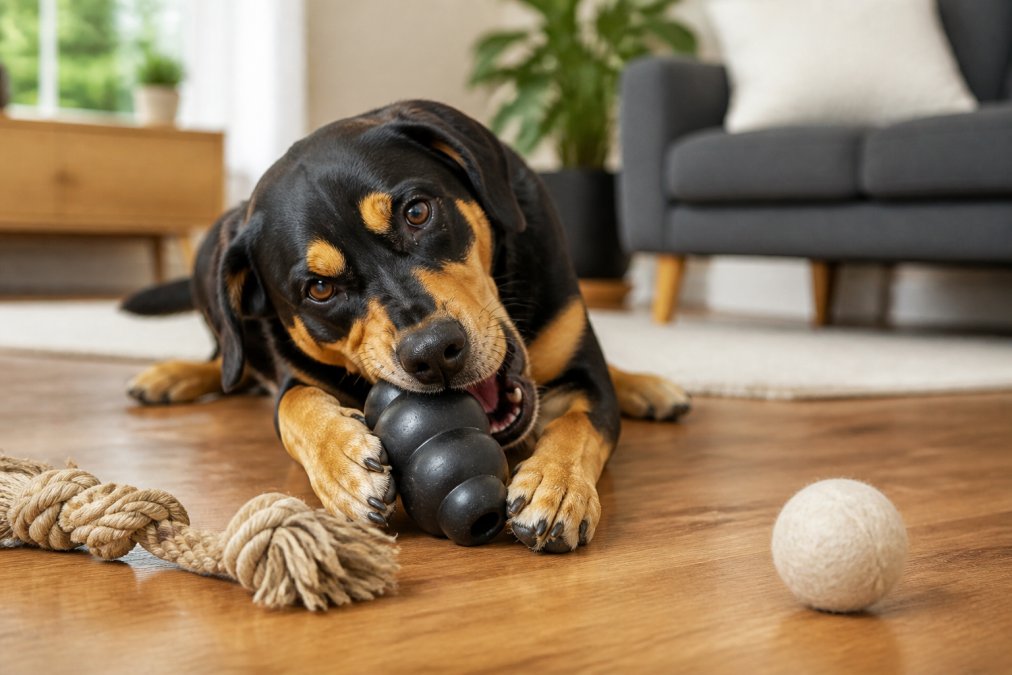
"Durable" and "natural" are not the same claim, a toy can be biodegradable and still fall apart in an hour. Look for solid-core construction, no glued seams, and braided rather than twisted rope.
How to Verify Safe Materials for Dog Toys Before You Buy
Verifying safe materials for dog toys means reading the label for specific material names and third-party certifications, not marketing phrases like "green" or "pet-safe."
If the material list says "rubber" with no qualifier, assume synthetic; natural rubber, organic cotton, hemp, or wool means you are on the right track. Chemical-free and phthalate-free claims should be stated explicitly, not implied.
| Claim on Label | What It Actually Means | Worth Trusting? |
|---|---|---|
| "Eco-friendly" | Unregulated marketing term | No |
| "Natural rubber" | Latex from rubber trees | Yes |
| "Recycled plastic" | Still plastic | No |
Frequently Asked Questions
What are some alternatives to plastic chew toys for dogs?
Natural rubber, organic cotton, hemp rope, and wool are the most common alternatives to plastic chew toys. Natural rubber is flexible and holds up to heavy chewing, while hemp rope works well for tug-of-war and fetch. Wool toys suit gentle chewers and dogs that like to carry items around. These materials avoid the phthalates and BPA found in some plastic toys, and many break down over time instead of sitting in a landfill.
What is the safest material for dog toys?
Natural rubber and organic cotton are widely considered the safest choices for dog toys. Look for food-grade or phthalate-free labels, and check for third-party certification when available. Hemp rope is another strong option because it resists fraying and does not shed plastic fragments. Avoid toys with strong chemical smells, peeling coatings, or unknown material sourcing, since those signs often point to synthetic fillers or recycled plastics that were never meant for chewing.
How do I know if a dog toy is non-toxic?
Check the label for terms like phthalate-free, BPA-free, and food-grade, and look for a named certification body rather than a vague 'eco-friendly' badge. Squeeze the toy and smell it: a strong chemical odor is a warning sign. For heavy chewers, pick dense natural rubber over thin synthetic rubber, since it resists breaking into small pieces. When in doubt, contact the seller and ask about material sourcing before you buy.
Plastic toys wear down, and every chewed edge ends up somewhere. At SofttailSupply, we stock a curated range of tested, natural-material toys, plus fast 24-48 hour shipping, secure payment options, and responsive support if something isn't right. Browse the collection and find a durable, non-toxic toy your dog will actually keep.