 how-to
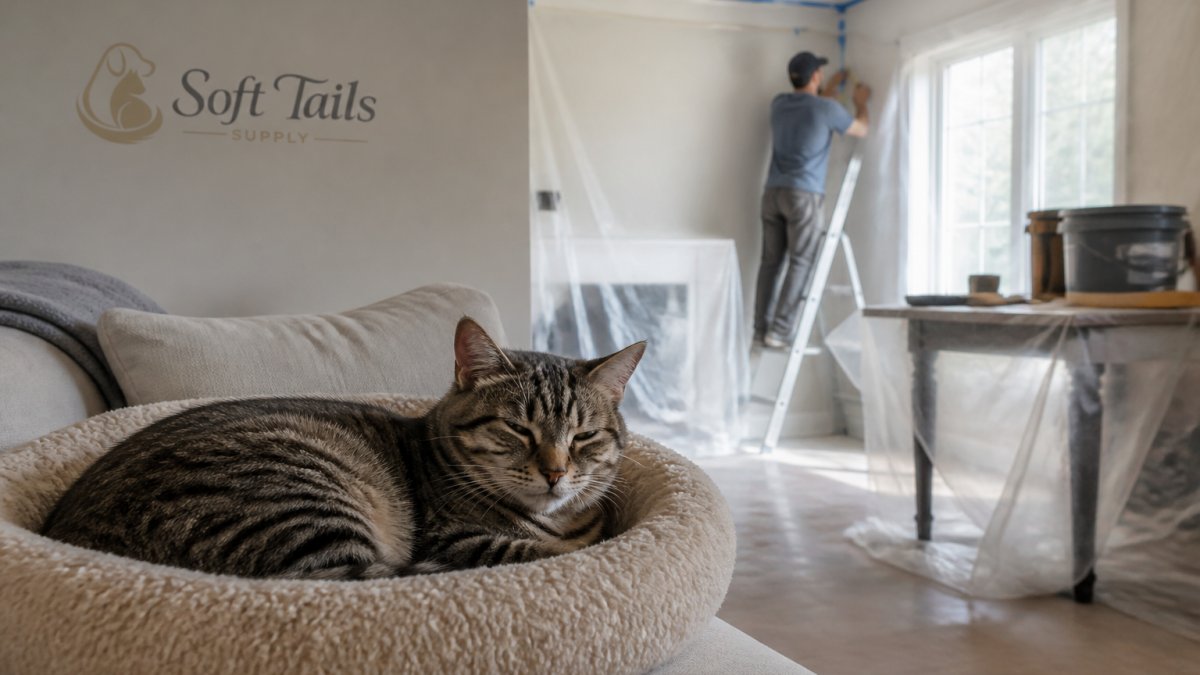
How Do You Keep Cats Calm During Renovations?
Last Updated: October 24, 2026
Quick Summary
To keep a cat calm during a renovation, set up a quiet safe room with a closing door away from the work zone, stocked a day early with a litter box, food and water, bedding, and familiar belongings. This closed-off space protects your cat from loud construction noise and prevents escapes.
- Pick a spare bedroom away from the work zone and move in supplies a day early.
- Keep the litter box far from food and water in the safe room.
- Close doors and windows and add soft music or a fan to muffle noise.
- An open exterior door during a material drop-off is the most common escape route.
- For whole-house demolition, boarding or temporary relocation may be kinder.
Table of Contents
- How to Set Up a Safe Room for a Cat Before Work Starts
- Cat Anxiety From Loud Noises: What Actually Helps
- How to Keep Pets Safe During Home Renovations
- Choosing Between a Safe Room, Boarding, or Temporary Relocation
- Reintroducing Cats to Renovated Areas
- Frequently Asked Questions
How to Set Up a Safe Room for a Cat Before Work Starts
A safe room is the most effective way to keep a cat calm during a renovation: a quiet, closed-off space stocked before work starts. Pick a spare bedroom away from the work zone and move in a litter box, food and water, bedding, and familiar belongings a day early.
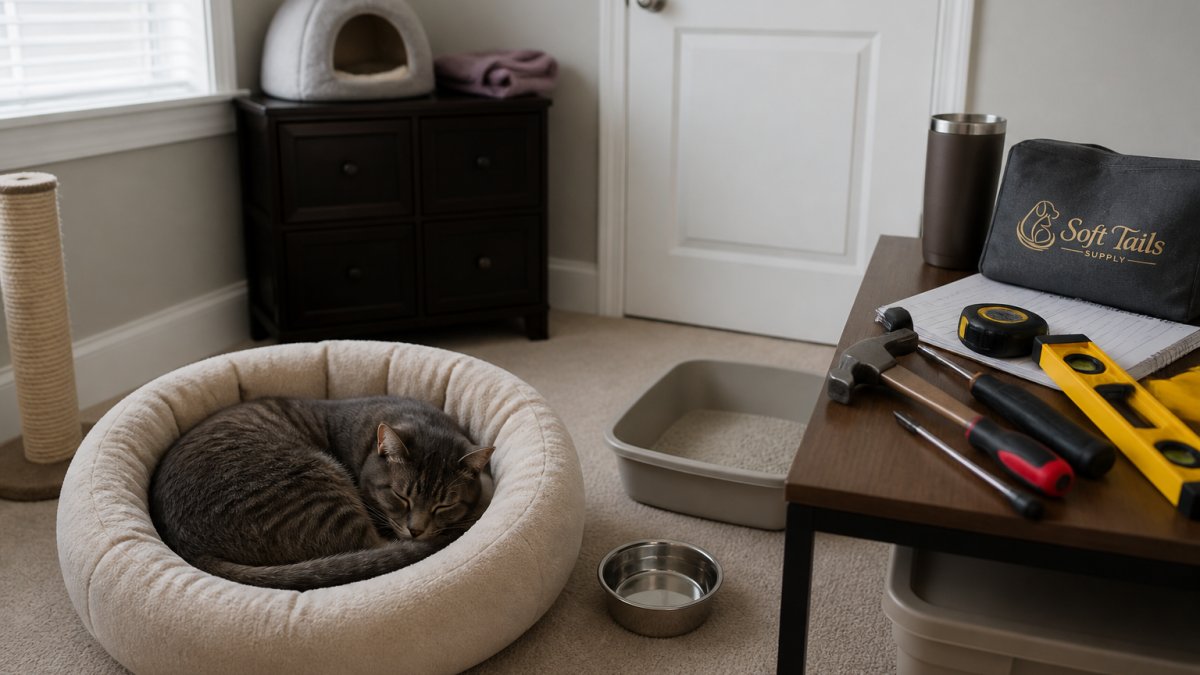
Choose a room with a closing door and tight window, keep the litter box far from food and water, and add a covered box or crate plus familiar toys and a worn T-shirt. The Cozy Nest Semi-Enclosed Pet Bed gives cats a private, breathable retreat from household noise. See our guide on how to keep indoor cats entertained.

Cat Anxiety From Loud Noises: What Actually Helps
Loud construction noise is hardest for most cats, so muffle it, mask it, and keep a predictable routine: put the safe room far from demolition, close door and window, add soft music or a fan, and run a noisy appliance beforehand. For serious noise anxiety, a calming bed helps; our comparison of dog beds for anxiety covers the same principles, and our tips on introducing a nervous cat to a new automatic feeder keep new gear calm too.
How to Keep Pets Safe During Home Renovations
Safety means preventing escapes, blocking hazards, and coordinating with the crew. Keep your cat in the safe room, keep ID tags and microchip current, seal rooms with plastic sheeting, and store paint and solvents in closed cabinets. Tell your contractor up front which doors stay closed and where the cat is. For pets with mobility issues, our guide on making home safer for arthritic pets extends these steps.
Watch out: An open exterior door during a material drop-off is the most common escape route, post a note on the door and confirm the rule with the crew lead.
Warm & Cozy Plush Cat Bed – A Soft Little Retreat →
Choosing Between a Safe Room, Boarding, or Temporary Relocation
For major demolition, heavy dust, or fumes across most of the house, boarding or a temporary stay elsewhere may be kinder.
| Situation | Best Option | Why |
|---|---|---|
| One or two rooms being remodeled | Safe room at home | Cat stays in familiar territory |
| Whole-house demolition or restoration | Boarding or temporary relocation | Avoids dust, fumes, and constant noise |
| Multi-cat household, tight space | Boarding for some, safe room for others | Prevents resource guarding and stress |
In multi-cat homes, give each cat its own resource cluster, spread apart so no cat guards the room.
Reintroducing Cats to Renovated Areas
Bring your cat back slowly once work is done; rushing a nervous cat into a changed space can undo weeks of calm. Start with short, supervised visits, keep familiar bedding and toys in place, and watch for stress signals, hiding, refusing food, or avoiding the litter box, pulling back if these last more than a day or two.
Frequently Asked Questions
Should I move my cat to another room during renovations?
Yes. Pick one room the work crew will not enter, ideally a spare bedroom or quiet back room, and move your cat there before demolition begins. Put in food, water, a litter box, bedding, and a few familiar toys. Visit often, keep the door closed, and ask contractors to treat that room as off limits. A dedicated safe room keeps your cat away from noise, dust, and open doors for the whole project.
Can renovation noise make cats sick or stressed?
Loud, unpredictable noise can raise stress in cats, and stress often shows up as hiding, pacing, over-grooming, or skipping meals. Some cats also develop stress-related urinary or digestive issues. Watch for changes in appetite, litter box habits, or behavior that last more than a day or two, and call your veterinarian if your cat stops eating or seems unwell.
How do I stop my cat from escaping while contractors are working?
Confine your cat to the safe room before anyone arrives, and keep the door shut while workers move in and out. Make sure the cat's microchip details and ID tag are current in case of a slip. Tell the crew not to prop exterior doors open, and check the room before you open it. A double-check routine at the start and end of each workday prevents most escapes.
A renovation turns your home upside down, and your cat feels every bit of it. SofttailSupply makes the calm part easier with cozy semi-enclosed beds, engaging toys, and fast 24-48 hour shipping so comfort arrives before the work crew does. Get started with SofttailSupply and give your cat a quiet retreat it will actually use.