 how-to
How to Keep Indoor Cats Entertained: 3 Proven Steps
Table of Contents
- Step 1: Build a Cat Enrichment Ideas Routine That Fits Your Schedule
- How to Tell If a Cat Is Understimulated (and What to Do Next)
- Step 2: Pick the Best Interactive Cat Toys for Solo and Supervised Play
- Step 3: Add Vertical Space, Scratching Surfaces, and Scent Play
- Step 3: Set Up Puzzle Feeders and a Toy Rotation
- Step 3: Match Enrichment to Your Cat's Age and Personality
- Step 3: Fix the Problems That Kill a Routine
- Common Mistakes to Avoid
- Frequently Asked Questions
Last Updated: September 30, 2026
Step 1: Build a Cat Enrichment Ideas Routine That Fits Your Schedule
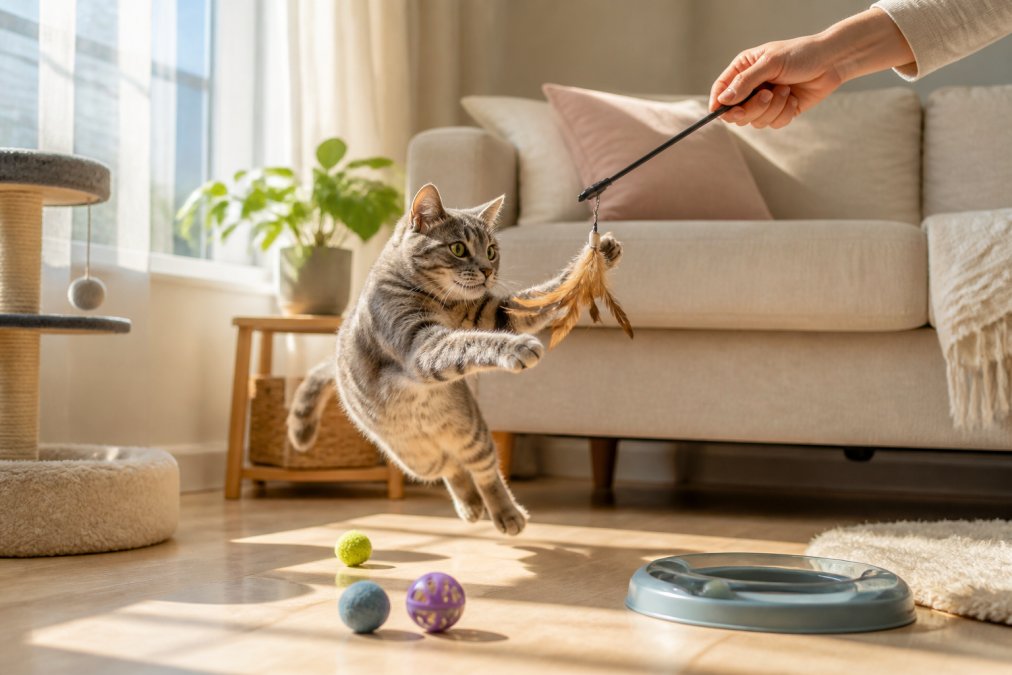
Cats sleep 12 to 16 hours a day, so keeping indoor cats entertained during their waking hours needs a plan. Cat enrichment ideas work best in short, predictable blocks: 10 minutes of wand play in the morning, a puzzle feeder at midday, 15 minutes of interactive play plus a meal in the evening, and a window perch or self-play toy at night.
How to Tell If a Cat Is Understimulated (and What to Do Next)
The clearest sign of an understimulated cat is a change in behavior, not a sleepy cat. Watch for chewing cords or furniture, night meowing, overgrooming, pacing, clinginess, and hiding. Rule out medical causes with a vet first, then add one interactive play session daily, a puzzle feeder for one meal, and vertical space plus a window perch, and recheck after two weeks.
Step 2: Pick the Best Interactive Cat Toys for Solo and Supervised Play
The best interactive cat toys split into two jobs: toys you operate and toys that run while you are away. For supervised sessions, a wand toy or suction cup teaser gives you control over the pace. For solo hours, the Smart Rolling Pet Ball with Rope rolls and changes direction on its own.


| Toy type | Best for | Supervision | Energy burned |
|---|---|---|---|
| Wand toy | Bonding, hunting sequence | Required | High |
| Suction cup teaser | Solo batting, windows | Low | Medium |
| Rolling ball with rope | Solo chase, busy days | Low | Medium |
Step 3: Add Vertical Space, Scratching Surfaces, and Scent Play
Cats need territory they can climb, scratch, and mark. Vertical space turns a small apartment into a large one: cat trees, wall shelves, and a cleared bookcase top all count. Scratching surfaces need variety: a tall sisal post, a horizontal cardboard scratcher, and a wall-mounted corner brush. Scent enrichment is the most overlooked category: rotate in catnip, silver vine, or a new cardboard box weekly, and hide treats around the room.
Step 3: Set Up Puzzle Feeders and a Toy Rotation
A puzzle feeder turns dinner into a job: foraging is a core cat instinct that a bowl removes entirely. Start easy with a muffin tin and treats under tennis balls, then move up to a slow-feed bowl or treat-release toy. Toy rotation is the cheapest upgrade in this guide: keep a bin and swap the visible toys every three to four days.
Smart Rolling Pet Ball with Rope →
| Day | Visible toys | Stored away |
|---|---|---|
| 1-3 | Wand, rolling ball | Puzzle feeder, teaser |
| 4-6 | Teaser, puzzle feeder | Wand, rolling ball |
| 7-9 | Wand, puzzle feeder | Rolling ball, teaser |
Step 3: Match Enrichment to Your Cat's Age and Personality
Kittens need short, frequent play; adults two solid sessions a day plus solo toys; seniors low jumps, soft surfaces, and floor-level food puzzles; shy cats hidden treats and quiet toys; bold hunters wand toys, laser with a catch, and climbing routes. Swap high jumps for ramps and warm, enclosed spots like the Banana-Shaped Pet Bed for Cats & Small Dogs.

Step 3: Fix the Problems That Kill a Routine
Most enrichment plans fail for the same few reasons: if your cat ignores a toy, try a different texture or room; if interest fades, shorten sessions and end on a catch; if play gets rough with hands, stop using hands as toys; if you run out of time, lean on solo toys and puzzle feeders; if your cat bothers you at night, add a play-then-feed session before bed.
Common Mistakes to Avoid
The biggest mistake is treating enrichment as a shopping problem. It is a routine problem. Other common errors: leaving ten toys out at once, skipping the catch at the end of play, using hands as toys, ignoring vertical space, forgetting scent play, and assuming a sleepy cat is a bored cat. Consistency is what keeps indoor cats entertained.
Frequently Asked Questions
How do I keep my indoor cat from being bored while I'm at work?
Set up solo-play options before you leave. A suction cup teaser toy attached to a window gives your cat a moving target to bat at, and a smart rolling ball changes direction on its own so play continues without you. Rotate toys every few days so the same items don't sit ignored. A window perch near a bird feeder adds passive entertainment for hours.
How much playtime does an indoor cat need daily?
Most indoor cats do well with two or three play sessions of 10 to 15 minutes each day. Short, focused sessions that mimic hunting, such as wand toys or a rolling ball, work better than one long session. Cats with high prey drive may need more. Watch for restlessness or night activity, which often signals the cat exercise requirements aren't being met.
How to tell if a cat is understimulated?
Signs include overgrooming, furniture scratching, night yowling, and following you room to room. Some cats knock items off shelves or nip during petting. These behaviors often point to boredom rather than aggression. Adding interactive play, puzzle feeders, and vertical space usually reduces them within a week or two. If problems continue, a vet or cat behaviorist can rule out medical causes.