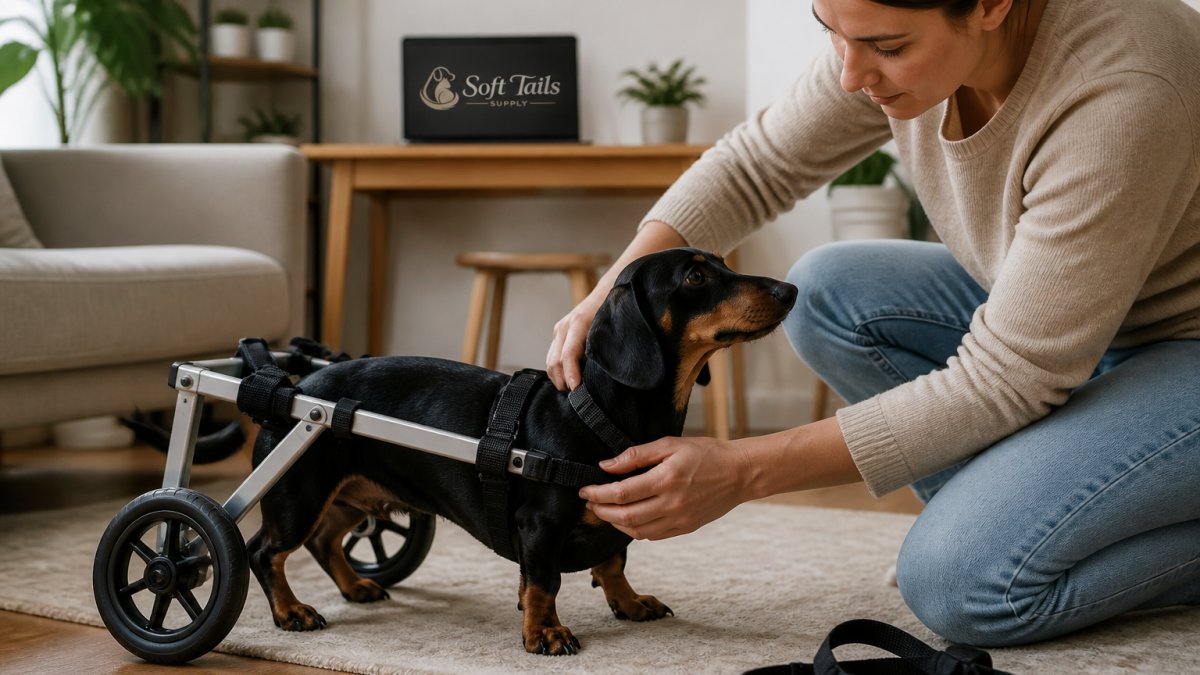
 how-to
How to Use a Dog Wheelchair Step by Step
Last Updated: October 22, 2026
Quick Summary
To use a dog wheelchair step by step, fit the front harness first, adjust the frame so the wheels sit just behind the hind legs, guide each hind foot into its leg ring, then lift the dog in while supporting the hindquarters. Snap the clips closed and run a fit check before the first step. The first fitting takes about 15 minutes, then under 2 minutes once you know the routine.
- Place the wheelchair on a non-slip surface and let your dog sniff it before fitting.
- Set the front harness at the shoulders, not the neck, with two fingers of slack.
- If the hind feet drag, raise the rear leg rings a notch.
- Keep first training sessions to 5-10 minutes on carpet or a rug, not smooth tile.
- Check the fit after every walk for rubbing, redness, and loose clips.
Table of Contents
- How to Get a Dog Into a Wheelchair Step by Step
- Training a Dog to Use a Wheelchair
- How to Walk a Dog in a Wheelchair
- Frequently Asked Questions
How to Get a Dog Into a Wheelchair Step by Step
Learning to use a dog wheelchair step by step starts with one calm, supported lift. A dog wheelchair is a wheeled frame that supports a dog's hindquarters, letting a dog with rear leg weakness walk, balance, and stay active.
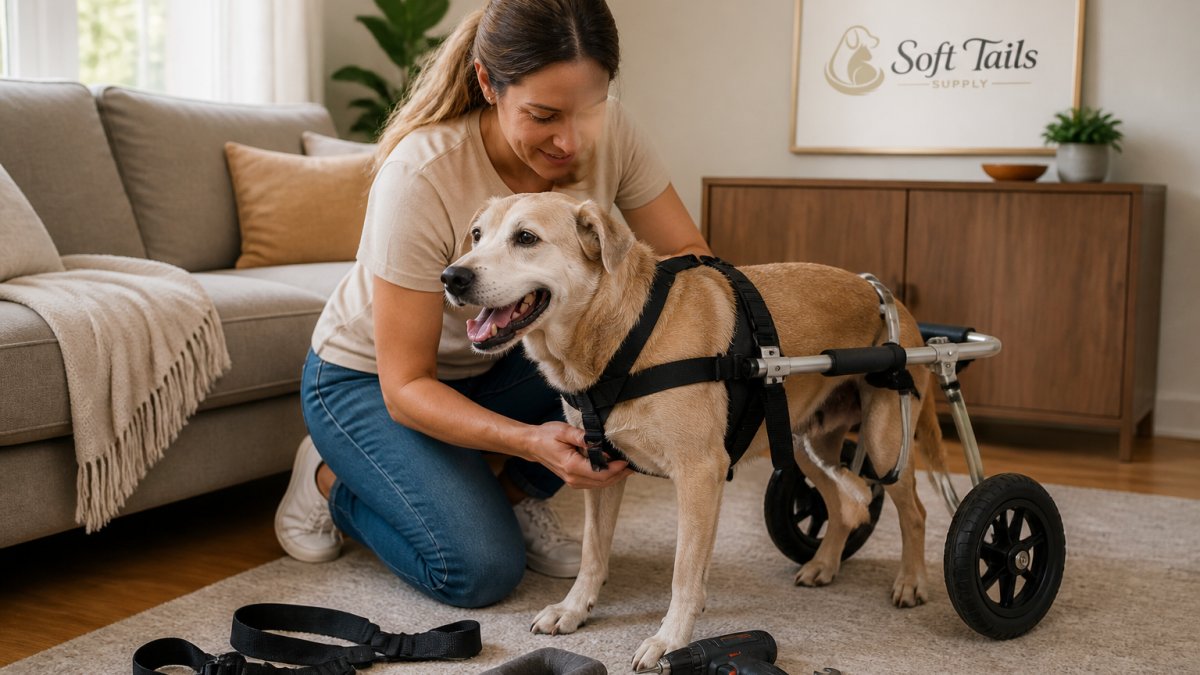
Total time: about 15 minutes for the first fitting, then under 2 minutes once you know the routine.
What you'll need: the assembled wheelchair and front harness, rear leg rings or support straps, a non-slip mat, a leash, and small treats.
Step 1: Prepare the dog and the chair [Time: 3 minutes] Place the wheelchair on a non-slip surface and let your dog sniff it. Fit the front harness first, since it carries the load and keeps the frame aligned with the spine.
Step 2: Adjust the frame to your dog [Time: 5 minutes] Set the side extenders to your dog's body length: wheels just behind the hind legs, front harness at the shoulders (not the neck), and the metal arm attachment level.
Step 3: Attach the rear leg rings [Time: 2 minutes] Guide each hind foot into its ring or support strap so the legs hang naturally with feet just clearing the floor. If the feet drag, raise the rings a notch.
Step 4: Lift the dog in [Time: 2 minutes] Stand beside your dog, support the hindquarters with one arm, and lower the rear legs into the frame. Clip the front harness and keep a hand under the belly until the dog feels steady.
Step 5: Secure the clips and check the fit [Time: 3 minutes] Snap the frame extenders and clips closed. Run a fit check by body area:
Self-Adhesive Anti-Slip Paw Pads for Dogs →
| Body Area | What to Check | Fix If Wrong |
|---|---|---|
| Front harness | Sits at shoulders, two fingers of slack | Loosen or tighten straps |
| Rear leg rings | Feet clear the floor, no rubbing | Raise or lower rings |
| Frame length | Wheels just behind hind legs | Adjust side extenders |
Training a Dog to Use a Wheelchair
Training a dog to use a wheelchair works best in short, supervised sessions on a non-slip floor with the leash on and treats ready. Keep sessions to 5-10 minutes at first, then add time as your dog settles.
- Let the dog stand still before asking for movement, and reward any forward step
- Practice turns and stops in a hallway or yard
- Watch for signs of strain: panting, stiff legs, or refusal to move
For dogs recovering from surgery or dealing with joint soreness, our Protective Hind Leg Sleeves for Dogs add a soft layer over the hind legs. For slippery floors, Self-Adhesive Anti-Slip Paw Pads for Dogs improve grip and confidence.


How to Walk a Dog in a Wheelchair
Walking a dog in a wheelchair means staying beside the hindquarters with a loose leash. Keep the pace slow, let the dog set the rhythm, steer around obstacles, and pause before stairs, curbs, or rough ground. Never pull the chair by the frame while the dog is inside it.
Dog wheelchair bathroom breaks need a plan. Many owners use a sling or helper to support the hindquarters while the dog toilets, then lift the dog back into the chair. For dogs that can stand briefly, unhook the rear rings and let the dog balance with support. Always supervise.
Check the fit after every walk for rubbing at the harness, redness on the legs, and loose clips. A quick fit check after each outing prevents small problems from becoming skin damage.
Frequently Asked Questions
How long should a dog wear a wheelchair at first?
Start with short sessions of 5 to 10 minutes, once or twice a day, and watch your dog's energy and comfort. Increase time gradually over one to two weeks as your dog builds strength and confidence. Always supervise early sessions and take the wheelchair off if your dog seems tired, stressed, or uncomfortable. A slow start helps prevent sore spots and makes training a dog to use a wheelchair much easier.
How can you tell if a dog wheelchair fits correctly?
A correct fit means the frame supports your dog's weight without rubbing, the harness sits snug but not tight, and your dog can stand, sit, and lie down with help. Check for redness or pressure marks on the skin after each session. The rear leg rings should let the hind legs hang naturally without dragging. If your dog stumbles, leans, or shows discomfort, adjust the frame length and height before the next walk.
How does a dog go to the bathroom in a wheelchair?
Most dog wheelchairs are open at the rear, so your dog can pee and poop while still supported by the frame. For dog wheelchair bathroom breaks, wheel your dog to a familiar spot, let them settle, and give them space. Some dogs need the wheelchair tilted slightly forward or the rear leg rings adjusted to squat comfortably. Stay nearby with a leash for safety, and clean the wheels after outdoor bathroom breaks.
A dog who is new to mobility support needs patience, a well-fitted chair, and a calm routine. SofttailSupply carries the everyday essentials that make that routine easier, including anti-slip paw pads and protective leg sleeves, all backed by fast 24-48 hour shipping and responsive support. Continue shopping with SofttailSupply and give your dog more confident steps at home.