 how-to
How to Introduce a Nervous Cat to a New Automatic Feeder
Table of Contents
- Why a Cat Is Afraid of an Automatic Feeder (and How to Read the Fear)
- How to Get a Cat to Eat From an Automatic Feeder: A Staged Plan
- How Long Does It Take a Cat to Adjust to an Automatic Feeder?
- Frequently Asked Questions
Last Updated: October 21, 2026
Why a Cat Is Afraid of an Automatic Feeder (and How to Read the Fear)
A cat afraid of an automatic feeder is usually reacting to sudden noise, unexpected movement, or a change in routine. This SofttailSupply guide walks through a staged plan that teaches her meals stay predictable even when the delivery method changes.
How to read the fear: hiding when the feeder runs signals sound or movement sensitivity; reluctance to eat near the bowl means the station feels unsafe; food refusal after dispensing means the context, not the food, is the problem.
How to Get a Cat to Eat From an Automatic Feeder: A Staged Plan
The fastest path is a staged introduction that separates feeder noise and movement from the food reward. Most cats accept a timed feeder within two to four weeks when each stage is earned, not rushed.
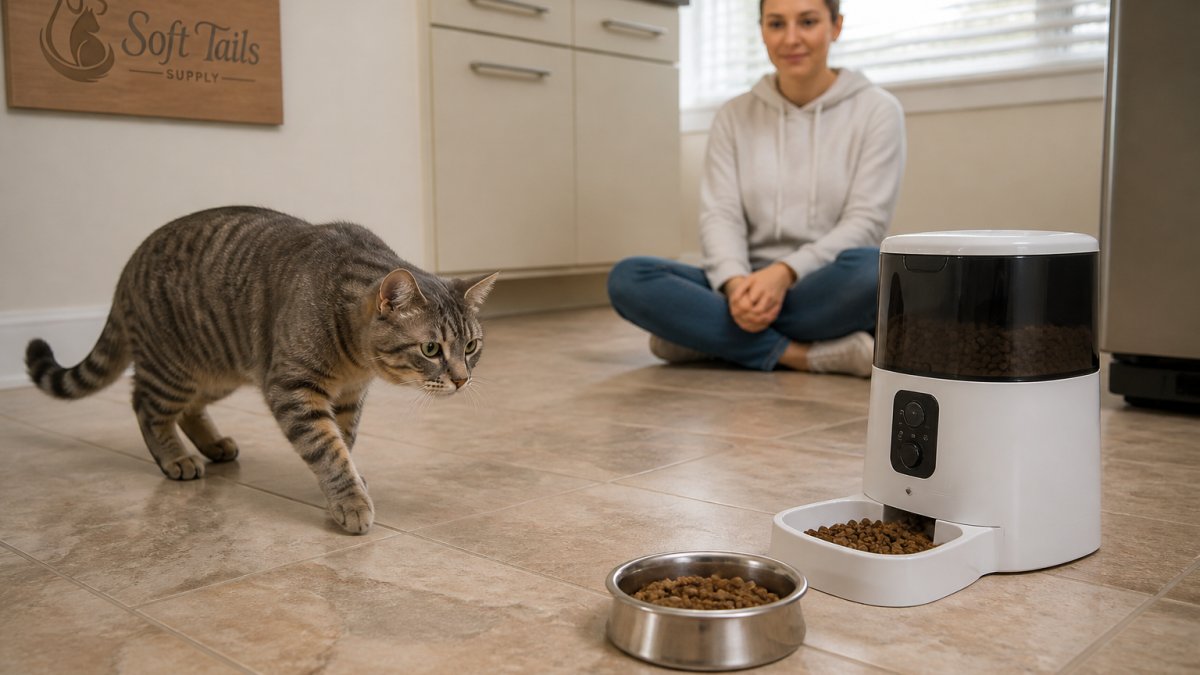
Step 1: Set up the feeding station first. Place the feeder where your cat already eats, with her food bowl, water, and a familiar blanket nearby to lower the fear response before the machine ever runs.
Step 2: Run the feeder empty, at a distance. Let it dispense with no food while your cat is in another room, repeating daily until the sound no longer causes hiding. This automatic feeder noise desensitization is the step most owners skip.
Step 3: Pair the sound with treats. Run the feeder, then immediately offer a high-value treat across the room so noise predicts good things. Stay relaxed and do not coax.
Step 4: Feed meals beside the feeder. Put her normal portion in a bowl next to the machine for several days. Same food, same schedule, new location.
Step 5: Let the feeder deliver one meal. Start with a single dispensed meal per day, keep the rest hand-fed, and watch her appetite closely.
Step 6: Add meals gradually. Move to two dispensed meals, then all of them, keeping portions identical.
Step 7: Hold the routine. Same times, same portion size, same spot. Patience beats speed.
If your cat is especially nervous, stretch steps 2 through 4 over a full week each. A staged plan for a fearful cat is slower, not different.
Multi-cat households need extra care: feed cats in separate rooms or use a feeder with a lid that only opens for one cat, since food competition can undo weeks of progress in a single meal.
How Long Does It Take a Cat to Adjust to an Automatic Feeder?
Most cats adjust to an automatic feeder in two to four weeks, but nervous cats often need four to six. The timeline depends on how quickly your cat stops showing fear signals, not on a calendar.
Slow down or pause the transition if you see: hiding when the feeder runs even after a week of desensitization, reluctance to eat for more than one meal, pacing or guarding the feeder between meals, or any weight loss or sudden drop in food intake.
Keep meals reliable during the transition. Never let a training step cause a missed meal. If she refuses the dispensed food, offer her normal bowl right away and try again tomorrow.
Monitor appetite daily. A cat that skips meals for more than 24 hours needs a call to your vet, not another training attempt. Cornell Feline Health Center guidance on appetite changes covers when a reduced appetite warrants professional advice.
Once she eats calmly from the feeder for a full week, the transition is done. Keep the schedule steady and check the dispensing mechanism weekly for jams.
Frequently Asked Questions
How do I get my nervous cat to use an automatic feeder?
Start with the feeder turned off and placed near the cat's current feeding station so it becomes part of the familiar routine. Run the dispensing mechanism without food for a few days so the noise stops predicting anything scary. Then dispense a small portion of dry food while you stand back, and add a treat or food topper to the bowl. Keep the regular bowl available during the transition, and only remove it once the cat eats from the automatic feeder without hiding or hesitating.
How long does it take a cat to get used to an automatic feeder?
Most cats settle into a timed feeder within one to two weeks, but nervous cats often need longer. Watch appetite and food intake rather than the calendar: a cat that eats most of each portion within 30 minutes and stops hiding at mealtime is adjusting. If your cat refuses food for more than 24 hours, or shows stress signs like pacing and hiding for several days, slow the transition and talk to your veterinarian before continuing.
Should I leave the automatic feeder turned off at first?
Yes. Leaving it off lets your cat investigate the food bowl, the dispenser, and the feeder's position without noise or movement. Once the cat eats calmly from a stationary feeder, trigger a single portion while it is nearby, then reward with a treat. This separates feeder noise from the food reward and makes the sound less startling. In multi-cat households, feed cats in separate rooms during this stage to prevent food competition and resource guarding.
A nervous cat can learn to trust an automatic feeder, but only at her pace. At SofttailSupply, we stock durable feeders and calm, well-made pet essentials, backed by fast 24-48 hour shipping and responsive support if something arrives damaged. Browse our pet essentials and find the gear that keeps mealtimes predictable for even the most cautious cat.