 how-to
Signs of Joint Pain in Senior Cats: What to Watch For
Table of Contents
- Signs of Joint Pain in Senior Cats You Might Be Missing
- Arthritis Symptoms in Older Cats and What They Look Like Day to Day
- Cat Limping and Stiffness: When It's More Than a Bad Landing
- Frequently Asked Questions
Last Updated: October 18, 2026
Signs of Joint Pain in Senior Cats You Might Be Missing
Joint pain in senior cats rarely looks like pain. Owners often spend months thinking their cat has simply "slowed down," because joint pain in senior cats shows up as small habit changes, not crying or yelping.
- Hesitation before jumping onto a couch or windowsill
- Sleeping in new, lower spots instead of favorite high perches
- Stiff, slow movement after a long nap
- Less grooming, especially around the lower back and hind legs
- Grumpy reactions to being picked up or touched near the hips
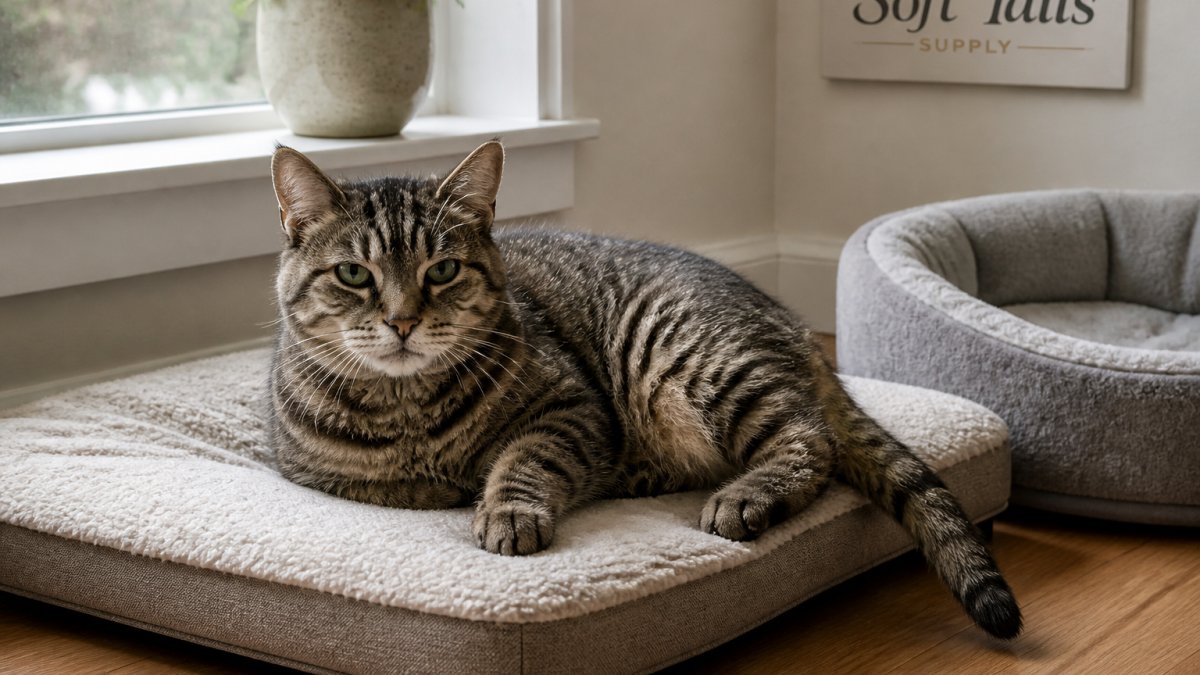
A cat that once leaped onto the counter and now pauses at the floor is telling you something. The Cornell Feline Health Center guide to arthritis in cats notes that arthritis is common in older cats and easy to overlook.
Arthritis Symptoms in Older Cats and What They Look Like Day to Day
Arthritis symptoms in older cats are cumulative, not dramatic. A pattern of stiff mornings, shorter jumps, and crankiness when touched tells a clearer story than one stiff morning.
| What You See | What It Often Means | What to Do |
|---|---|---|
| Avoids jumping | Hip or knee discomfort | Add steps or ramps |
| Sleeps more, moves less | Stiffness after rest | Encourage short play sessions |
| Mats on lower back | Can't reach to groom | Gentle brushing help |
| Irritable when lifted | Pain on handling | Support hind legs, see a vet |
The American Association of Feline Practitioners senior care guidelines recommend regular checkups for cats over ten, since owners often miss early arthritis signs at home.
Cat Limping and Stiffness: When It's More Than a Bad Landing
Cat limping and stiffness after a clumsy jump usually fades within a day or two. Limping that lingers, shifts legs, or returns every few weeks points to ongoing arthritis.
Warm & Cozy Plush Cat Bed – A Soft Little Retreat →
- Limping lasts more than 48 hours
- Your cat stops using the litter box or misses it
- Weight loss, hiding, or appetite changes appear
Never give human pain relievers, many are toxic to cats. Ask your vet about safe pain relief first. Start with easy changes: a warm, low-sided bed and ramps to replace big jumps. Our Warm & Cozy Plush Cat Bed gives stiff joints a soft landing, and the Cozy Nest Semi-Enclosed Pet Bed offers a quiet, draft-free retreat.


Frequently Asked Questions
Can cats hide joint pain?
Yes, and they are very good at it. Cats are prey animals by instinct, so showing weakness goes against their nature. A senior cat with joint pain may still eat, groom, and greet you at the door while quietly avoiding stairs or jumping less. That is why watching for small behavior changes matters more than waiting for obvious crying or yowling. Look for shifts in routine: sleeping in new spots, hesitating before a jump, or grooming less. These subtle clues often point to joint pain before anything dramatic shows up.
Why is my senior cat no longer jumping?
A cat that stops jumping onto the couch or windowsill is often protecting sore joints, not just slowing down with age. Landing puts force through the elbows, hips, and spine, so a cat with arthritis symptoms in older cats will start choosing lower spots. You can help by placing a sturdy step or a low, supportive bed like the Cozy Nest Semi-Enclosed Pet Bed ($39.99) at floor level so your cat can rest comfortably without a climb. If the reluctance appears suddenly or comes with limping, call your vet.
Are human pain medications safe for cats?
No. Common human pain relievers such as ibuprofen and acetaminophen are toxic to cats and can cause serious harm even in small amounts. Never give your cat a human medication without veterinary direction. Safe pain relief for cats has to come from your veterinarian, who can prescribe cat-specific options and set the right dose. If you suspect your cat swallowed a human pill, contact your vet or a pet poison hotline right away. Keep all medications locked away where a curious cat cannot reach them.
Aging cats deserve comfort, not just patience. If your senior cat is slowing down, SofttailSupply can help with supportive beds, fast 24-48 hour shipping, and responsive support if something isn't right. Browse our cozy cat beds and give your old friend a softer place to rest.