 listicle
Is an Automatic Pet Feeder Worth It for Busy Owners?
Table of Contents
- Automatic Pet Feeder Pros and Cons for Busy Owners
- Best Automatic Pet Feeder for Weight Management
- Automatic Feeder Maintenance Tips and Troubleshooting
- Frequently Asked Questions
Last Updated: September 12, 2026
Automatic Pet Feeder Pros and Cons for Busy Owners
Whether an automatic pet feeder is worth it depends on your schedule, your pet's health, and how much you value consistency. This SofttailSupply guide breaks down the real trade-offs, from portion control to power outages.
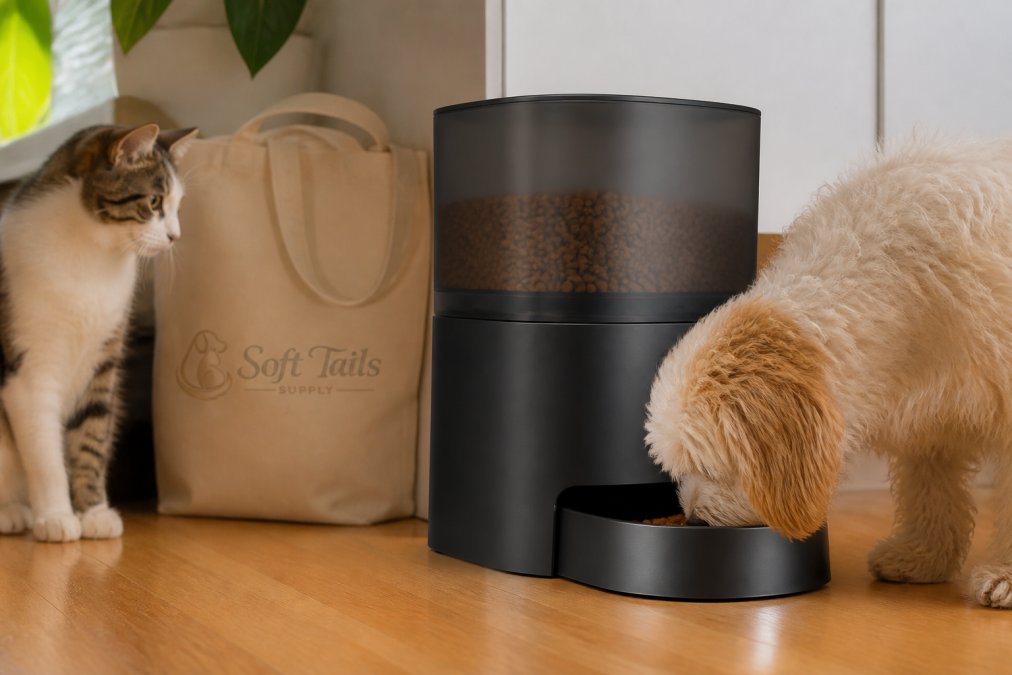
An automatic pet feeder dispenses a set amount of food at scheduled times without you present, so your pet eats consistently even when your day runs long.
Consistent meal times support portion control, weight management, and a calmer routine, and for owners who work late or travel, the peace of mind is hard to overstate (avma.org).
The drawbacks deserve equal attention: mechanical reliability varies by model, jamming prevention takes diligence, wet food compatibility is limited, and a power outage can interrupt dispensing unless the feeder has battery backup (petfoodinstitute.org).

| Factor | Automatic Feeder | Manual Feeding |
|---|---|---|
| Consistency | Scheduled, timer-based | Depends on your day |
| Portion accuracy | Measured per meal | Eyeballed |
| Power dependency | Needs battery backup | None |
| Best for | Busy owners, routines | Hands-on owners |
Best Automatic Pet Feeder for Weight Management
The best automatic pet feeder for weight management dispenses precise, consistent portions on a fixed schedule, because measured meals are the foundation of any obesity prevention plan (avma.org).
For dogs that gulp, pair a feeder with a slow-feeding approach: the Interactive Slow Feeder Toy for Dogs adds mental stimulation, while the Slow Feeder Dog Bowl uses raised obstacles to reduce gulping.


Weight management is not only about the feeder, behavioral reinforcement, treat timing, and your veterinarian's dietary requirements all shape the outcome.
Automatic Feeder Maintenance Tips and Troubleshooting
Automatic feeder maintenance comes down to three habits: clean the hopper and dispensing mechanism regularly, test the battery backup monthly, and watch for jamming before it becomes a missed meal.
Common mechanical failures and fixes:
- Kibble jams: Use dry kibble sized to the feeder's specification; oversized pieces clog the auger.
- Missed dispenses: Replace batteries and check the timer-based schedule after any power outage.
- Stale food: Empty and wash the hopper weekly.
Transitioning a pet takes patience: feed manually beside the device, let it dispense while you supervise, then gradually step away. App-controlled models let you adjust schedules remotely, though a simple timer-based unit is often more reliable.
Frequently Asked Questions
What are the disadvantages of an automatic pet feeder?
The main drawbacks are mechanical failure, portion inaccuracy, and limited wet food compatibility. A jammed dispensing mechanism can leave your pet without a meal, and many units are designed for dry kibble only. Automatic feeders also can't monitor whether your pet actually ate, and they may not suit pets with anxiety or those on prescription diets. Regular cleaning maintenance and a battery backup help reduce these risks.
Do vets recommend automatic feeders for weight management?
Veterinarians often support automatic feeders for portion control because they dispense consistent, measured meals at set times, which supports obesity prevention and a stable feeding schedule. That said, a veterinary recommendation usually comes with a caveat: the feeder must be calibrated correctly and paired with a proper dietary plan. For pets with medical conditions, confirm the portion size with your vet before relying on automated dispensing.
Can I leave my cat alone for 2 days with an automatic feeder?
Many owners do, but it depends on the feeder's capacity and reliability. A unit with a large food hopper, battery backup, and a tested dispensing mechanism can cover a weekend, though power outages or jamming can interrupt feeding. Cats still need fresh water and a clean litter box, so a 2-day absence is realistic only with a backup plan, such as a neighbor check-in or a smart connectivity alert if the feeder fails.
Deciding whether an automatic pet feeder earns its place in your home comes down to your routine and your pet's needs. SofttailSupply carries tested feeding and enrichment essentials, backed by fast 24-48 hour shipping, secure payment options, and responsive support. Explore our feeding and toy range, from slow feeders to interactive dispensers, and find the setup that fits your pet's daily rhythm.