 how-to
Stop Dog From Destroying Toys: A Training Guide
Table of Contents
- Why Does My Dog Rip Toys Apart
- Teach Your Dog to Play Gently With Toys
- Choose Durable Dog Toys for Heavy Chewers
- Stop Dog From Destroying Toys With Exercise and Mental Stimulation
Last Updated: August 22, 2026
Why Does My Dog Rip Toys Apart
Dogs destroy toys for several interconnected reasons. Boredom is the most common culprit, when dogs lack mental stimulation and physical exercise, they channel that energy into destructive behavior. Teething in puppies causes significant discomfort, and chewing provides relief (avma.org). Adult dogs may also chew intensely due to dental issues or anxiety. Separation anxiety drives some dogs to destroy toys as a self-soothing mechanism when left alone. Prey drive plays a role too; some breeds are genetically wired to chase and "kill" their prey, and a squeaky toy triggers this instinct. Understanding your dog's individual temperament helps you select toys and training approaches that match their needs.
Teach Your Dog to Play Gently With Toys
The foundation for preventing toy destruction is teaching your dog the "drop it" and "leave it" cues through positive reinforcement. Start in a low-distraction environment with a moderately interesting toy. Hold the toy, let your dog grab it gently, then immediately offer a high-value treat like chicken or cheese. Say "drop it" as they release the toy to grab the treat. Repeat this 5-10 times per session, several times weekly.
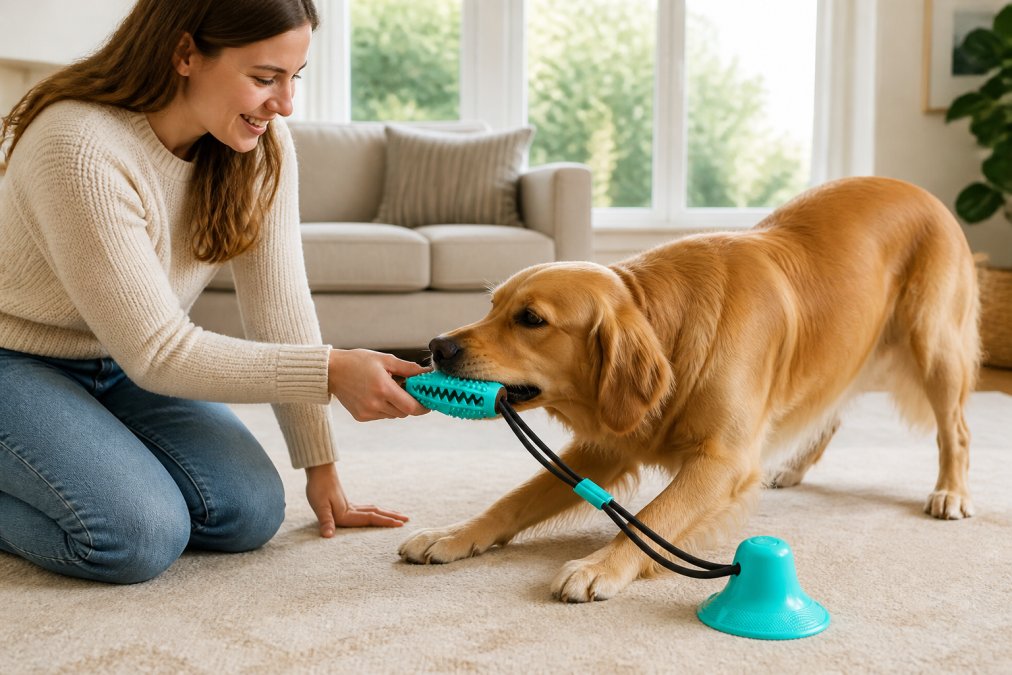
Once your dog reliably drops toys on cue indoors, practice in different environments and with higher-value toys. Always reward heavily when they comply. Supervised play is essential during this training phase. Never leave a toy with your dog unsupervised until you're confident they won't destroy it. During play sessions, watch for signs of escalating intensity, growling, vigorous shaking, or frantic chewing. Interrupt gently, redirect to a calmer activity, and praise the change in behavior.
Choose Durable Dog Toys for Heavy Chewers
Toy material makes an enormous difference for dogs prone to destruction. Rubber chews and nylon-based toys are significantly more durable than plush or rope toys. Look for toys made from non-toxic, food-grade rubber that can withstand sustained chewing without splintering (cpsc.gov). Double-stitched construction matters for any fabric-based toy, with tight, reinforced seams. Stuffing-free toys eliminate the temptation to tear open and ingest the filling, which poses a serious choking or blockage risk (aspca.org).
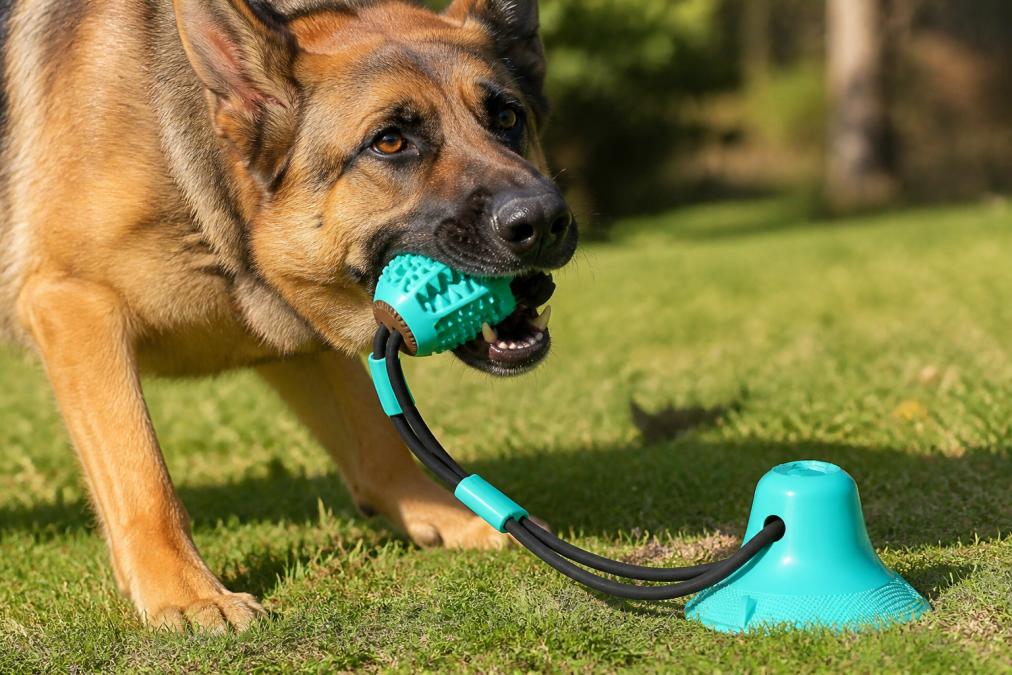
The Suction Ball Interactive Dog Toy from SofttailSupply attaches securely to flat surfaces and bounces back, providing interactive play that redirects chewing energy. For dogs that need constant oral stimulation, the Automatic Tennis Ball Launcher keeps them engaged with fetch, reducing the urge to destroy stationary toys.

Stop Dog From Destroying Toys With Exercise and Mental Stimulation
A dog that destroys toys is often an under-stimulated dog. Aim for at least 30-60 minutes of daily physical activity appropriate to your dog's age and breed, plus 15-30 minutes of dedicated mental work like scent work, puzzle solving, or training sessions. Interactive toys that require problem-solving prevent boredom more effectively than passive chew toys. The Smart Rolling Pet Ball from SofttailSupply uses sensors to move unpredictably, mimicking prey behavior and keeping dogs mentally engaged. The Dog Slow Feeder Toy Dish turns mealtime into a brain-stimulating challenge.

Toy rotation systems prevent habituation. Instead of leaving the same toys available constantly, rotate them weekly. This keeps novelty high and maintains interest in toys rather than driving your dog to destroy them out of boredom.
Dogs that destroy toys need structure, engagement, and the right tools. SofttailSupply's curated selection of interactive and durable toys is designed specifically to redirect destructive energy toward productive play. With proper training, appropriate toy selection, and consistent mental and physical stimulation, most dogs learn to play appropriately. Start with teaching the "drop it" cue, invest in toys built for heavy chewers, and ensure your dog gets adequate daily exercise and mental challenge.
Frequently Asked Questions
Is it normal for dogs to destroy their toys?
Yes, destructive play is common, especially in puppies and high-energy breeds. Dogs may shred toys due to boredom, teething, prey drive, or simply the satisfaction of tearing. However, excessive destruction can signal separation anxiety, inadequate exercise, or insufficient mental stimulation. If your dog stops dog from destroying toys when given proper outlets and training, the behavior is likely manageable through redirection and positive reinforcement.
What should I do if my dog starts shredding a toy during play?
Stop the session immediately and use the 'drop it' command. Reward compliance with treats or praise. Remove the damaged toy to prevent ingestion of stuffing or small pieces, which pose choking hazards. Rotate in a fresh toy and resume supervised play with gentler redirection. This teaches your dog that rough play ends the fun, making them more likely to play gently to keep the game going.
How do I know if my dog is bored or just likes destroying toys?
Bored dogs typically destroy toys when left alone and show other signs like excessive barking, pacing, or chewing furniture. Dogs with high prey drive or chewing intensity may destroy toys even with regular exercise. The difference matters: boredom requires more physical exercise and mental stimulation through puzzle toys and interactive play. Destructive tendencies rooted in prey drive need durable materials and supervised play with positive reinforcement for gentle behavior.
This article was written using GrandRanker