 how-to
How to Help a Senior Dog With Arthritis Walk
Table of Contents
- How Long to Walk a Dog With Arthritis: A Gentle Daily Plan
- Low-Impact Exercise for Senior Dogs: Beyond the Daily Walk
- Choosing a Dog Walking Harness for Mobility Support
- Building a Weekly Walking Schedule That Adapts
- Frequently Asked Questions
Last Updated: October 13, 2026
How Long to Walk a Dog With Arthritis: A Gentle Daily Plan
Helping a senior dog with arthritis walk starts with one number: 10 minutes, two or three times a day.
Arthritis is cartilage breakdown inside a joint, causing pain, stiffness, and limping. It does not go away, but daily walks keep muscles strong and joints mobile. The trick is dose, not distance.
For senior dog arthritis: start at 10 minutes twice a day, add 5 minutes only after a week with no increased stiffness, cap walks at 15 to 20 minutes, keep a slow pace on soft surfaces, and skip walks on bad days for light stretching. Regularity beats intensity.
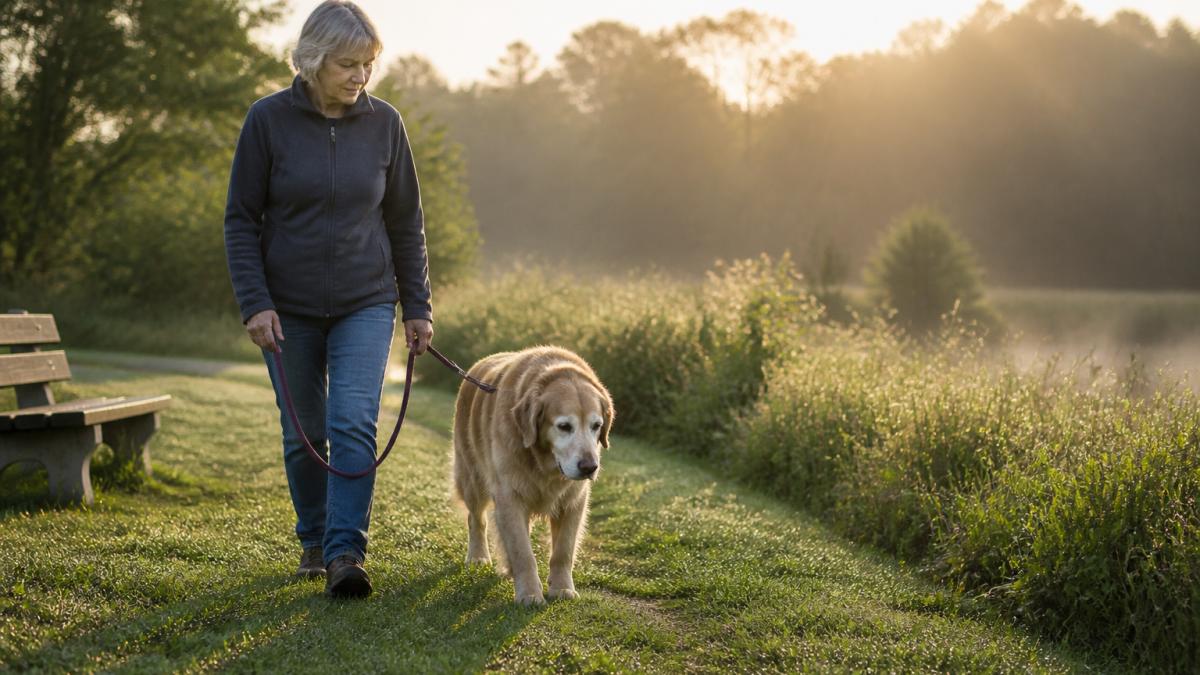
Track each walk for two weeks, duration, surface, and how your dog moves that evening.
Low-Impact Exercise for Senior Dogs: Beyond the Daily Walk
Low-impact exercise for senior dogs works muscles without pounding joints. Daily walks are the base, but swimming and hydrotherapy are the gold standard, water holds the body up so legs move freely with almost no joint stress. Other options: light stretching, slow sniff walks, flat routes, and short play on carpet or grass. Skip high-impact activity like jumping off furniture or fetch on hard ground.
Weight management is the other half: ask your vet for a target weight and calorie plan, keep treats small and counted, and your dog will move easier with less pain relief. Joint supplements like glucosamine and omega-3s are common for arthritis pain relief for dogs, but evidence varies, ask your vet first.
Strong hind legs take pressure off joints. If your dog struggles on smooth floors, our Self-Adhesive Anti-Slip Paw Pads for Dogs add grip on hardwood, tile, and laminate.

Choosing a Dog Walking Harness for Mobility Support
A dog walking harness for mobility support spreads pressure across the chest instead of the neck, which matters for a senior dog with joint pain, neck pressure pulls the front legs and shoulders forward and can worsen limping. Look for a no-pull chest design, breathable mesh lining, adjustable straps, and a strong top handle for steadying your dog on stairs or slick floors.
Self-Adhesive Anti-Slip Paw Pads for Dogs →
Our Adjustable Dog Harness for Outdoor Training checks those boxes, with a top handle that gives you control when your dog needs a lift over a curb or is moving slowly. Terrain and weather change the plan: hot pavement burns paws, ice and snow hide slick spots. On rough ground, Protective Hind Leg Sleeves for Dogs add soft coverage for dogs prone to scrapes or licking.


How do you know when a walk is too much?
Three signals tell you to stop: heavy panting that does not settle within minutes, a limp that worsens during the walk, or lagging behind and refusing to move. Any one means the walk ends now, rest two days, then restart at half the usual time. If your dog is stiffer the next morning, the last walk was too long.
Building a Weekly Walking Schedule That Adapts
A fixed schedule fails because arthritis changes day to day. Build a flexible week instead.
| Day | Walk Plan | Duration | Watch For |
|---|---|---|---|
| Monday | Two flat walks | 10 min each | Normal gait |
| Wednesday | One walk, light stretching | 10 min | Limping |
| Sunday | Rest, stretching only | 5 min | Recovery |
Adapt to your dog's tolerance: mild arthritis may handle 20 minutes twice a day, while severe joint pain may do best with three 5-minute walks. Your vet's assessment should guide the starting point.
What about a dog that cannot walk far at all?
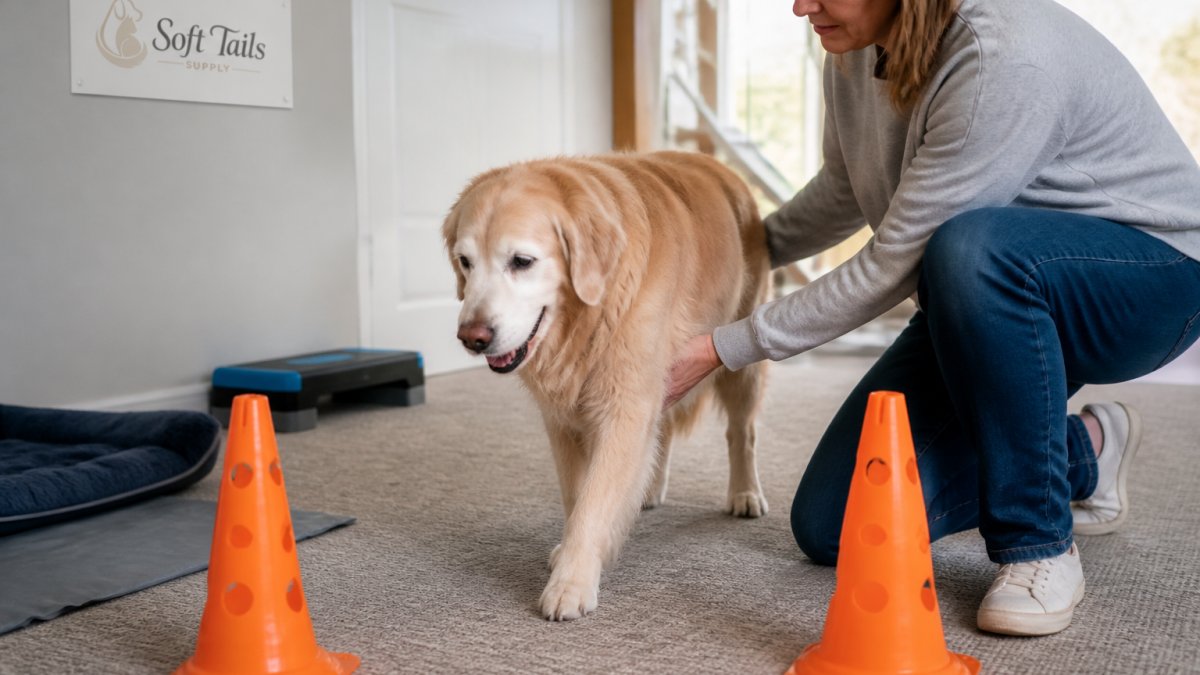
Switch to indoor movement. Short walks down a hallway. Light stretching on a non-slip rug. Water therapy if your vet offers it. A dog that cannot manage a full walk still needs daily movement. It just looks different.
Frequently Asked Questions
How long should I walk a senior dog with arthritis?
Most senior dogs with arthritis do best with two to three short walks a day, starting around 10 minutes each and building gradually toward 15 to 20 minutes if your dog tolerates it. Watch for limping, joint stiffness, or lagging behind, and cut the walk short on bad days. A slow, steady pace on soft surfaces puts less stress on joints than one long outing.
Can a harness help a dog with arthritis walk?
Yes. A no-pull harness spreads pressure across the chest instead of the neck, which matters when joint pain makes your dog unsteady. The Adjustable Dog Harness for Outdoor Training ($34.99) has breathable mesh and a top handle that lets you steady your dog on stairs or slick floors. Pair it with Self-Adhesive Anti-Slip Paw Pads ($22.99) indoors for extra grip.
How can I tell if a walk is making my dog's arthritis worse?
Watch for increased stiffness after the walk, reluctance to get up, more limping, or your dog stopping and refusing to move. These signs mean the walk was too long or too intense. Shorten the next walk, slow the pace, and stick to soft surfaces. If stiffness lasts more than a day or your dog seems in pain, call your veterinarian for an assessment.