 how-to
How to Verify Pet Toy Safety: A 2026 Guide
Table of Contents
- Why Pet Toy Safety Matters and What You're Up Against
- How to Identify Choking Hazards in Pet Toys
- Non-Toxic Dog Toy Materials: What to Look For and What to Avoid
- Pet Toy Safety Standards ASTM and Other Regulatory Guidance
Last Updated: August 10, 2026
Why Pet Toy Safety Matters and What You're Up Against
Unsafe pet toys cause thousands of injuries to dogs and cats yearly, including choking, intestinal blockages, toxic chemical exposure, and structural failures. Unlike children's toys, there's no universal federal safety standard for pet toys. The Consumer Product Safety Commission oversees some pet products, but regulations are fragmented, leaving manufacturers with varying quality control standards.
At SofttailSupply, we understand this frustration. You don't need to be a toxicologist to assess toy safety, you need to know what to look for and which red flags should stop you from buying.
How to Identify Choking Hazards in Pet Toys
Choking is the most immediate risk with pet toys. Start by physically handling the toy the way your pet would: squeeze it, tug it, and flex it repeatedly. If stuffing comes out easily, squeakers detach with minimal force, or seams separate, the toy isn't safe for unsupervised play.
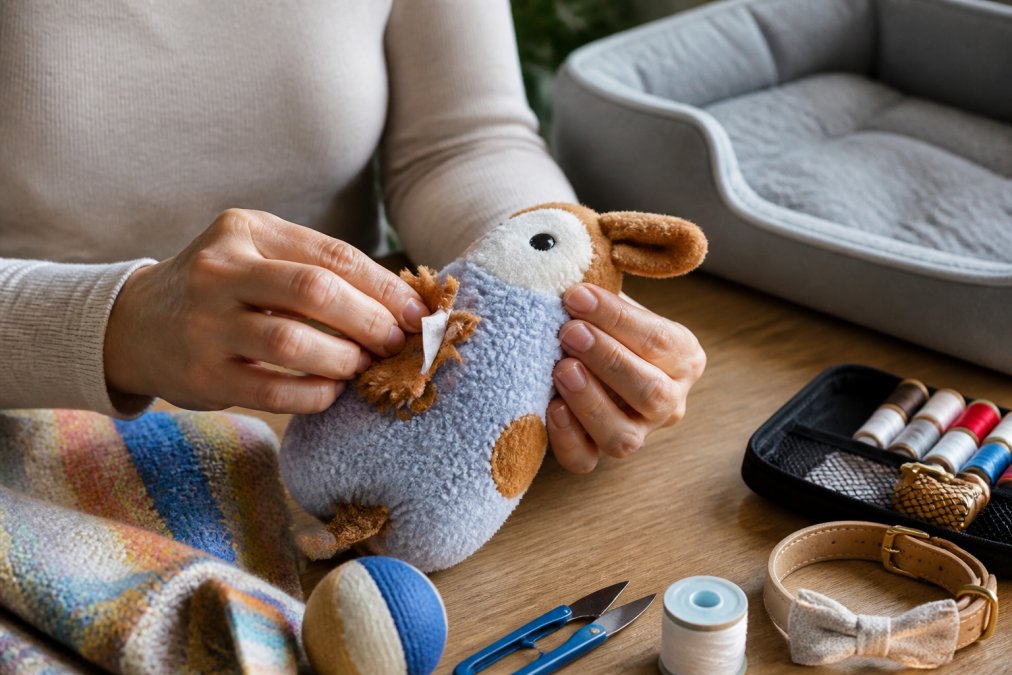
Look at construction quality. Quality toys use reinforced seams with multiple rows of stitching. Small parts like eyes, noses, or bells should be permanently attached, not glued. A toy that fits entirely inside your dog's mouth creates higher choking risk than one too large to swallow, especially for smaller pets and kittens.
Non-Toxic Dog Toy Materials: What to Look For and What to Avoid
Natural rubber and natural fibers like wool or cotton are generally safer choices and break down safely if ingested in small amounts. Synthetic materials require more scrutiny.
Polyvinyl chloride (PVC) and certain plastics can contain phthalates and Bisphenol A (BPA), which leach into a pet's mouth during chewing. Look for toys labeled phthalate-free and BPA-free. Avoid toys with heavy dyes or paints that might chip off, lead content has been found in imported pet toys. If color seems unusually vibrant or paint is peeling, that's a warning sign.
Toys with strong chemical or plastic odors should be avoided, as that odor often indicates off-gassing from volatile organic compounds. Synthetic rubber toys can be safe if from reputable manufacturers who test for toxins.
Pet Toy Safety Standards ASTM and Other Regulatory Guidance
The American Society for Testing and Materials (ASTM) develops standards for pet product safety, including mechanical testing and chemical content analysis. ASTM standards test for hazard assessment, durability, tear resistance, lead content, and phthalates.
The Consumer Product Safety Commission (CPSC) has jurisdiction over some pet toys and maintains a database of recalled products. When shopping, look for toys that reference ASTM compliance or CPSC testing, usually found on packaging or the manufacturer's website. If a manufacturer doesn't mention standards or testing, they likely haven't invested in formal safety verification.
Toys from manufacturers with strong reputations for quality control are generally safer than unknown brands, particularly for imported products.
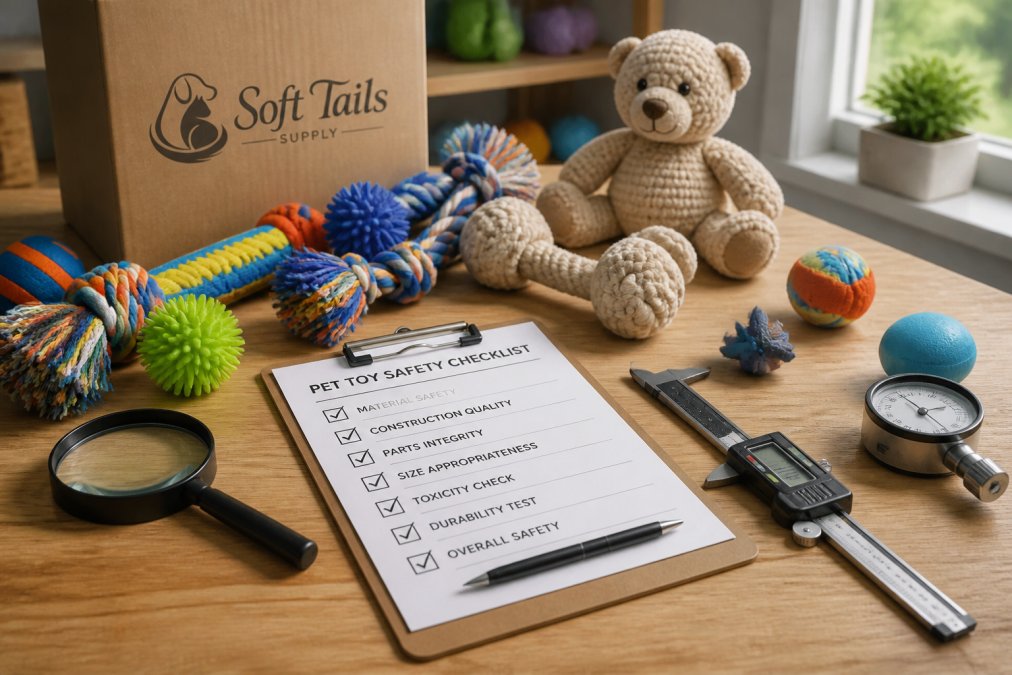
Your DIY Pet Toy Safety Inspection Checklist
A systematic hands-on inspection catches most problems without expensive equipment.
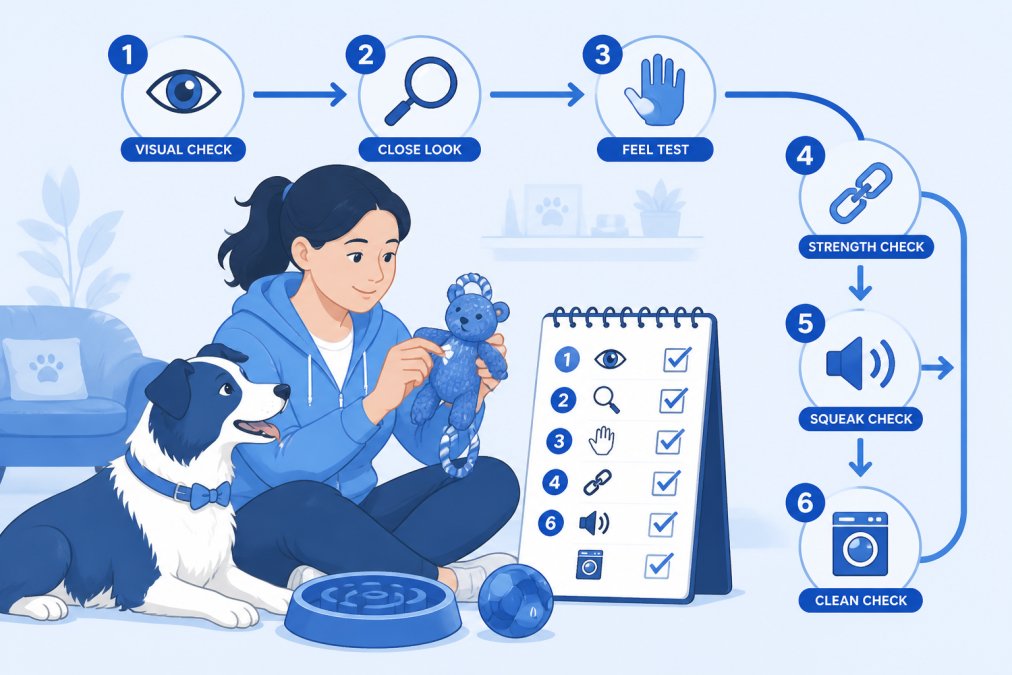
- Squeeze test: Does stuffing come out? Do seams separate?
- Tug test: Do seams hold? Do attached parts stay attached?
- Size assessment: Can the entire toy fit in your pet's mouth?
- Seam inspection: Are seams reinforced? Are threads already loose?
- Attached parts check: Are eyes, noses, bells, and squeakers permanently bonded?
- Surface condition: Look for cracks, peeling paint, or rough surfaces.
- Smell test: Does it have a strong chemical odor?
- Material identification: Can you identify what the toy is made from?
- Packaging information: Does it mention safety standards or non-toxic materials?
- Manufacturer reputation: Can you find customer reviews or safety information online?
This checklist takes five minutes per toy and determines whether a toy is safe for unsupervised play.
Pet toy safety is manageable with the right approach. When you're ready to shop, SofttailSupply offers a carefully curated selection of pet toys. Our fast 24-48 hour shipping gets tested, reliable toys to your door quickly, with the confidence that comes from working with a retailer that prioritizes your pet's well-being.
Frequently Asked Questions
How can I tell if a dog toy is non-toxic?
Check the product label for certification marks and material composition. Look for toys made from natural rubber, rope, or canvas without dyes. Request a Material Safety Data Sheet (MSDS) from the manufacturer if available. Avoid toys with strong chemical smells, which may indicate harmful substances like phthalates or BPA. Contact the retailer directly if materials aren't clearly listed, reputable sellers like SofttailSupply provide full transparency on what's in their products.
What does ASTM International certification mean for pet products?
ASTM International sets voluntary standards for product safety, including mechanical testing, chemical analysis, and durability requirements. Pet toys meeting ASTM standards have undergone testing for bite strength, tear resistance, and hazardous material content. While ASTM certification isn't legally mandatory for pet toys in the US, it demonstrates the manufacturer prioritizes safety and quality assurance. Always ask retailers whether their products meet ASTM standards.
How do I check for potential choking hazards in pet toys?
Inspect the toy for small detachable parts like buttons, bells, or plastic eyes. Tug gently on all seams and edges to test structural integrity. Try the 'squeeze test', if the toy compresses easily and doesn't return to shape, it may tear quickly. Check for loose stitching or fraying. For balls and solid toys, ensure they're large enough that your pet cannot swallow them. If any part comes loose or tears during inspection, the toy is unsafe.
What materials should I avoid when buying pet toys?
Avoid toys containing polyvinyl chloride (PVC), which may contain phthalates linked to health issues. Stay away from toys with lead-based paints or dyes, particularly vintage or imported items. Synthetic rubber toys should be checked for BPA (bisphenol A). Avoid toys with small plastic parts, metal components that rust, or stuffing that can be ingested. Look for natural fibers like untreated rope, organic cotton, or sustainably sourced rubber instead.
This article was written using GrandRanker