 how-to
How to Train a Puppy to Sleep in a Crate
Table of Contents
- Choose the Best Crate Size for Your Puppy
- Set Up a Puppy Crate Training Schedule
- How to Stop Puppy from Crying in Crate at Night
- Make the Crate a Safe Space Your Puppy Wants to Enter
Last Updated: August 30, 2026
Choose the Best Crate Size for Your Puppy
The right crate size is the foundation of successful crate training. Your puppy needs enough room to stand, turn around, and lie down comfortably, but not so much space that they can eliminate in one corner and sleep in another. A crate that's too large defeats the purpose of housebreaking because it removes the natural den instinct that makes puppies reluctant to soil their sleeping area.
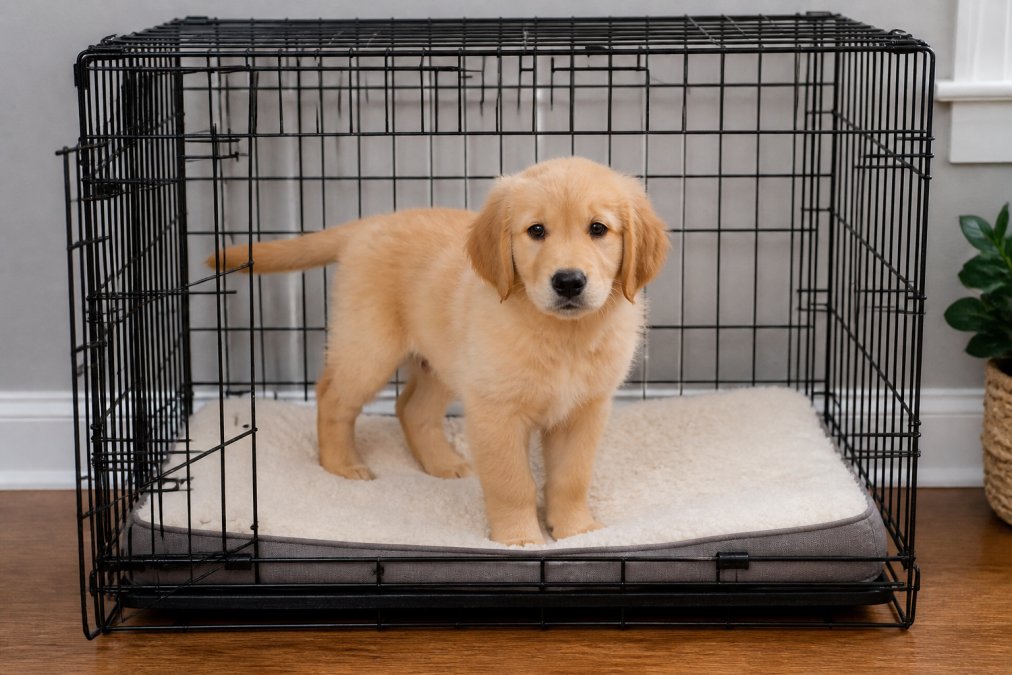
Measure your puppy's length from nose to tail, then add 2-4 inches. For height, measure from the top of their head to the floor when standing normally, then add 2-3 inches. Wire crates with adjustable dividers are ideal for growing puppies since you can expand the space as they develop. Most puppies graduate to their adult crate size by 12-18 months, depending on the breed.
Set Up a Puppy Crate Training Schedule
Consistency is essential when crate training. A predictable schedule helps regulate bladder control and reduces anxiety. Establish set times for crate entry, meals, potty breaks, and playtime. Puppies typically need to eliminate 15-30 minutes after eating, so schedule crate time strategically around their natural bathroom needs (aafco.org).
For young puppies under 12 weeks, take them out every 2-3 hours during the day and once at night (akc.org). Between 3-6 months, extend intervals to every 4-6 hours during the day (akc.org). By 6 months, most puppies can hold it for 6-8 hours overnight. Create a bedtime routine that signals sleep is coming: a final potty break, a calming chew toy, and consistent crate placement in a quiet area. The routine itself becomes the cue that tells your puppy it's time to settle.
How to Stop Puppy from Crying in Crate at Night
Whining and howling are normal when puppies first enter a crate, especially at night when separated from littermates. If your puppy needs a potty break, take them out immediately and return them without fanfare. If they're protesting confinement, resist the urge to comfort or scold them.
Ignoring whining teaches your puppy that crying doesn't produce results. Your puppy will eventually settle, and the moment they do, offer quiet praise. Never reward whining by letting them out or giving excessive attention. Tire your puppy out before bedtime through physical exercise and mental stimulation, an exhausted puppy is far more likely to sleep through the night.
Place the crate in your bedroom initially so your puppy knows you're nearby. This reduces separation anxiety while maintaining the boundary of the crate itself. Gradually move it to its permanent location once your puppy sleeps through the night consistently.
Make the Crate a Safe Space Your Puppy Wants to Enter
The crate should feel like a den, not a prison. Introduce it gradually using positive reinforcement. Leave the door open and toss treats inside, allowing your puppy to explore at their own pace. Never force them in.
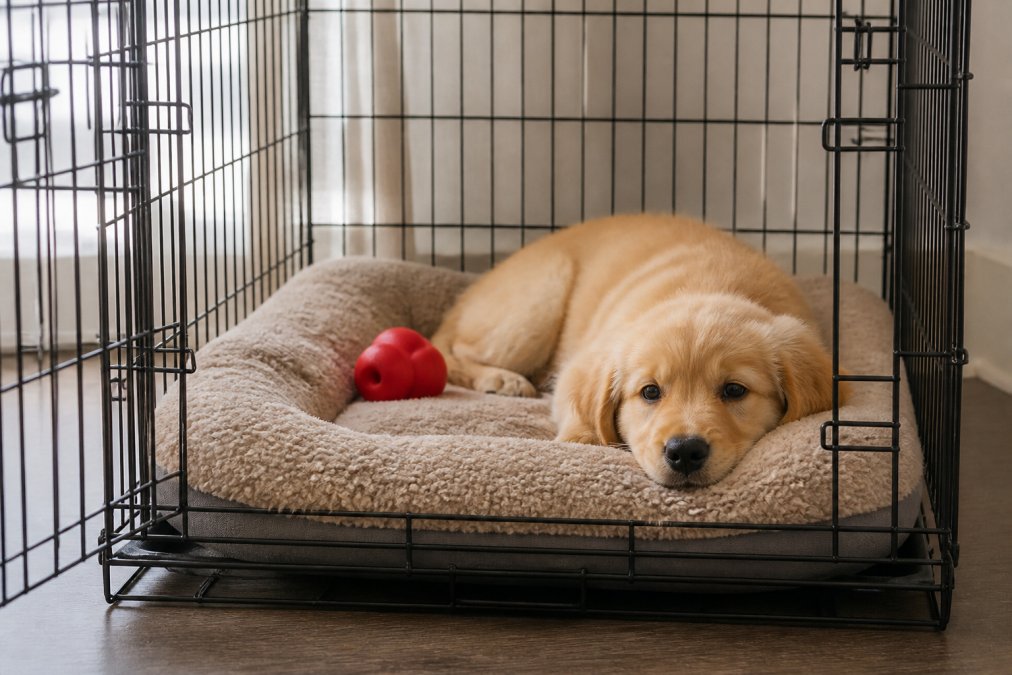
Once your puppy enters voluntarily, start closing the door for short intervals while you're present. Reward calm behavior with treats and praise. Gradually extend the duration and distance you're away. Use a crate cover to create a den-like environment that feels secure. Add soft bedding and a safe chew toy to encourage relaxation. Many puppies respond well to puzzle toys or Kongs filled with treats, which provide mental stimulation and redirect nervous energy.
Avoid using the crate as punishment. If your puppy associates it with negative consequences, they'll resist entering it. Use it exclusively for positive experiences: meals, treats, quiet time, and sleep. When your puppy enters willingly and settles without distress, you've achieved the goal.
At SofttailSupply, we understand that creating a comfortable sleep environment is crucial for successful crate training. Our Universal Dog Bed with Washable Cushion ($159.61) fits perfectly inside standard crates and provides the plush, supportive surface puppies need for quality rest. The removable, washable cushion makes cleanup easy during the training process, and the ultra-soft plush surface encourages your puppy to view the crate as their safe space rather than a confining area.

Frequently Asked Questions
How long does it take a puppy to get used to sleeping in a crate?
Most puppies adapt to crate sleeping within 2-4 weeks of consistent training. Some adjust faster, while others need more time. The key is patience and positive reinforcement. Start with short periods during the day, then gradually extend nighttime crate time. Puppies have a natural den instinct, so once they feel safe inside, many come to see the crate as their own secure space.
What should I put in the crate to make it comfortable for my puppy?
Include a soft bed or blanket to cushion the floor and provide warmth. A washable pet bed like the Plush Thickened Warm Pet Bed ($69.99) works well. Add a safe chew toy or Kong to keep your puppy occupied. Avoid toys with small parts that could be swallowed. Some puppies benefit from a crate cover to create a den-like feel. Keep the crate at a comfortable temperature and ensure it's in a quiet area away from household chaos.
Can you leave an 8-week-old puppy in a crate all night?
An 8-week-old puppy typically cannot hold their bladder all night. Plan for nighttime potty breaks every 3-4 hours. Most puppies can sleep 6-8 hours by 3-4 months old. Set a bedtime routine and take your puppy out immediately after crate time, before bed, and first thing in the morning. Consistency with your nighttime schedule helps establish bladder control faster. If your puppy whines, it may signal a genuine need for a potty break rather than separation anxiety.
Crate training your puppy takes patience, but the payoff is a confident dog who feels secure in their den and a household where accidents are minimized. The foundation you build now shapes your puppy's relationship with the crate for life. Start with the right size, maintain a consistent schedule, manage nighttime crying without reinforcing it, and make the space genuinely inviting. Get started with SofttailSupply's comfort products and watch your puppy settle into their crate with confidence.
This article was written using GrandRanker