 how-to
How to Spot Durable Dog Toys: A Buyer's Guide
Table of Contents
- What Makes a Dog Toy Durable
- Best Materials for Aggressive Chewers
- How to Choose the Right Size Dog Toy
- Signs a Dog Toy Is Unsafe
Last Updated: August 5, 2026
What Makes a Dog Toy Durable
A durable dog toy resists tearing, puncturing, and shredding under consistent chewing pressure without breaking apart or releasing small pieces that pose a choking hazard. Durability combines material density, reinforced stitching, and tear-resistant construction to withstand aggressive chewing while keeping your dog safe from swallowing risks and internal blockages.

When evaluating durable dog toys, assess three things: the material's structural integrity, construction quality, and whether it can handle your dog's chewing intensity. The most common mistake is confusing "thick" with "durable." True durability comes from the right combination of rubber composition, nylon construction, or reinforced rope weaving, not just size.
Best Materials for Aggressive Chewers
Natural rubber and reinforced nylon stand out as the top materials for dogs with serious chewing habits, offering the combination of toughness and resilience that power chewers demand.
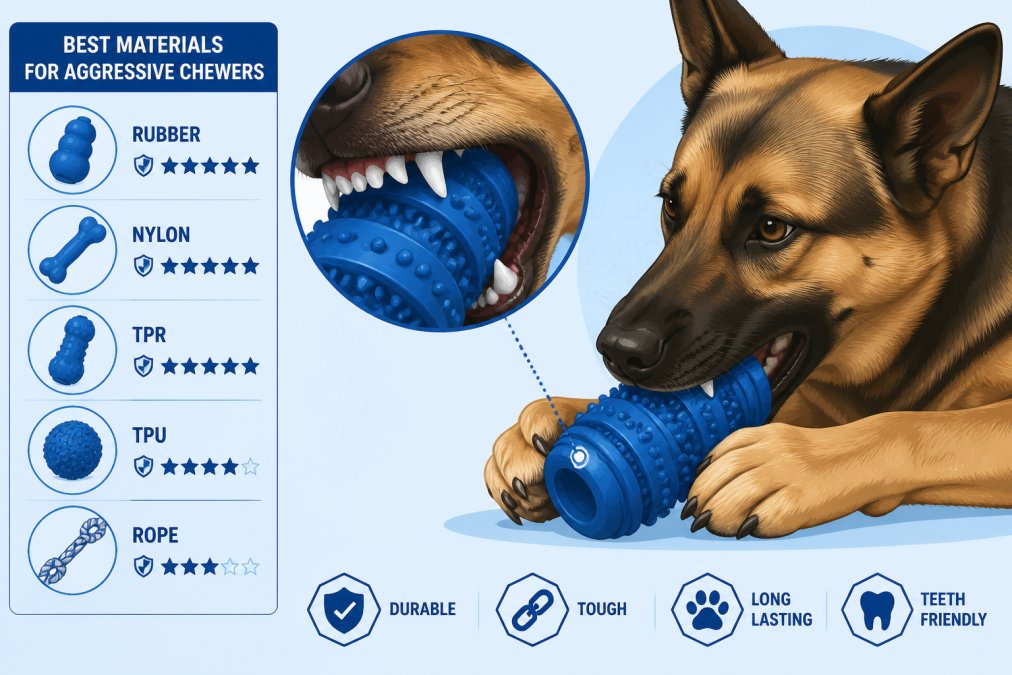
Natural rubber provides excellent puncture resistance and doesn't splinter like softer plastics. Look for toys labeled food-grade or BPA-free to ensure they're non-toxic and safe for prolonged contact with your dog's mouth. The slightly textured surface grips teeth naturally, appealing to aggressive chewers.
Reinforced nylon offers exceptional durability for heavy-duty chewing. The material's density resists tearing, and quality nylon toys feature reinforced stitching along stress points. The SofttailSupply Nylon Pup Set ($19.99) combines nylon construction with reinforced design specifically engineered for durability. However, nylon requires supervision, as some determined dogs can still break off small pieces.

Rope toys work well for interactive play but require careful monitoring. Braided or twisted rope provides some resistance to shredding, but aggressive chewers can unravel the fibers. Supervise play sessions and remove the toy if strands start separating.
Avoid soft plastics, thin rubber, and toys with loose buttons or decorative elements. These materials lack structural integrity and create immediate choking hazards.
How to Choose the Right Size Dog Toy
Selecting the correct size is critical for both safety and engagement. The toy should be larger than your dog's mouth, your dog should be able to pick it up and carry it, but not fit the entire toy in their mouth at once. For aggressive chewers, err on the side of larger, as a bigger toy gives your dog more material to work with and reduces swallowing risk.
Consider your dog's breed and chewing style. Larger breeds with powerful jaws need bigger, denser toys than small breeds. A toy appropriate for a 20-pound dog won't provide enough resistance for a 70-pound power chewer.
Interactive toys like the SofttailSupply Suction Ball Interactive Dog Toy ($23.99) work well because they're designed with size in mind, large enough to prevent swallowing but engaging enough to hold attention. Weight also matters: a toy should feel substantial in your dog's mouth, not so light that it's easily destroyed, but not so heavy that it causes jaw fatigue.
Signs a Dog Toy Is Unsafe
Knowing when to retire a toy is just as important as choosing the right one initially. A worn-out toy transforms from entertainment into a hazard.
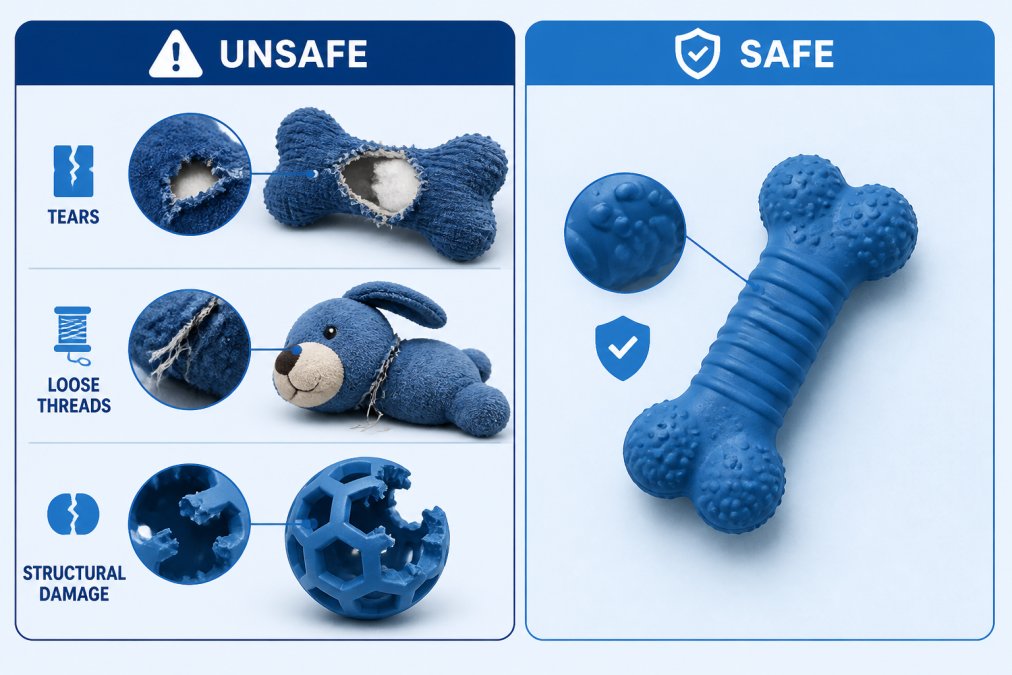
Visible tears or punctures are the clearest warning sign. Even small tears expand quickly under continued chewing. Remove the toy immediately, as small pieces can separate during play and become choking hazards.
Loose threads or fibers indicate structural failure. Frayed rope, unraveling stitching, or separated material strands mean your dog can ingest small pieces, especially dangerous with rope toys where fiber separation happens gradually.
Chunks missing or broken off means the toy has already failed. Don't assume the remaining piece is safe; if one section broke away, other sections are weakened and likely to follow.
Discoloration or odor can signal material degradation or bacterial growth. A toy that smells off or shows dark stains may have developed mold or bacterial colonies unsafe for your dog's mouth.
Squeakers or plastic parts exposed create immediate choking risks. If the squeaker mechanism is loose or the plastic casing is cracked, remove the toy.
Flattened or compressed material suggests the toy has lost its structural density. If the material no longer springs back when pressed, it's no longer providing needed resistance.
Regular inspection prevents accidents. Check toys weekly for damage, especially with aggressive chewers. Many pet owners wait until a toy completely falls apart, exposing their dog to hazards for days or weeks.
Choosing durable dog toys protects your dog from choking hazards and keeps them safely entertained. By understanding materials, selecting appropriate sizes, and recognizing wear patterns, you can confidently pick toys that withstand your dog's chewing style. At SofttailSupply, we offer carefully selected and tested pet products. Continue shopping for toys engineered to last, backed by fast shipping and customer support you can trust.
Frequently Asked Questions
What is the toughest material for durable dog toys?
Natural rubber and reinforced nylon rank among the toughest materials for durable dog toys. Natural rubber offers puncture-resistant properties and resilience, while nylon provides tear-resistant durability and withstands intense chewing. The choice depends on your dog's chew intensity, power chewers benefit most from heavy-duty nylon or solid rubber construction. Look for toys labeled BPA-free and phthalate-free to ensure non-toxic materials. Food-grade rubber toys add an extra safety layer for aggressive chewers.
How long do durable dog toys usually last?
High-quality durable dog toys typically last 3-6 months with regular supervised play, though this varies based on chew intensity and material. Heavy chewers may wear through toys faster, requiring more frequent replacement. Inspect toys weekly for signs of wear and tear, loose fibers, punctures, or structural damage signal replacement time. Interactive toys like puzzle feeders may need replacement every 2-3 months if heavily used. Establish a replacement schedule based on your dog's specific chewing profile to prevent safety issues.
Can aggressive chewers destroy toys labeled 'indestructible'?
Yes, power chewers can eventually destroy even heavy-duty toys. No toy is truly indestructible, material density and construction quality determine how long they resist aggressive chewing. The Fingernail Test helps identify genuinely durable toys: if you can't puncture the material with your fingernail, it's likely to withstand most chewing. However, supervised play and regular inspection remain essential. Rotate toys to extend durability and reduce destructive behavior through varied interactive play.
How do I know if a dog toy is safe for my pet?
Check for reinforced stitching, tear-resistant material, and absence of small parts that pose choking hazards. Verify the toy is food-grade, BPA-free, and phthalate-free. Perform the Fingernail Test: press your fingernail firmly against the material, if it resists puncturing, the toy has adequate structural integrity. Inspect regularly for wear and tear, loose threads, or punctures. Size-appropriate toys prevent swallowing risk; the toy should be larger than your dog's mouth. Always supervise play with new toys and remove damaged ones immediately.
This article was written using GrandRanker