 how-to
How to Clean Dog Toys Properly: A Step-by-Step Guide
Table of Contents
- Why Cleaning Dog Toys Matters for Your Pet's Health
- How Often to Wash Dog Toys
- How to Clean Dog Toys Properly by Material Type
- Best Dog-Safe Cleaners for Toys
Why Cleaning Dog Toys Matters for Your Pet's Health
Dog toys accumulate bacteria, mold, and debris from your pet's mouth and saliva, creating a breeding ground for harmful microorganisms that can cause infections, digestive upset, or allergic reactions (the CDC). Mold spores can trigger respiratory problems, and bacterial growth can lead to skin infections or gastrointestinal issues (peer-reviewed research). Regular cleaning removes these contaminants, extends toy life, and maintains structural integrity by preventing material degradation.
At SofttailSupply, we understand that pet owners want their dogs to have safe, clean toys. Clean toys stay soft, durable, and enjoyable for your dog.
How Often to Wash Dog Toys
Most dog toys should be washed every 1-2 weeks, depending on how frequently your dog plays with them and whether they're used outdoors (aafco.org). For toys your dog uses daily, aim for weekly washing. If your dog has a rotating toy collection, every two weeks is sufficient. Pay special attention to plush toys, which trap moisture and bacteria more easily than rubber or plastic options. If you notice visible mold, slobber buildup, or a musty smell, wash immediately.
How to Clean Dog Toys Properly by Material Type
The material of your toy determines the safest cleaning method.
Plush and Soft Toys
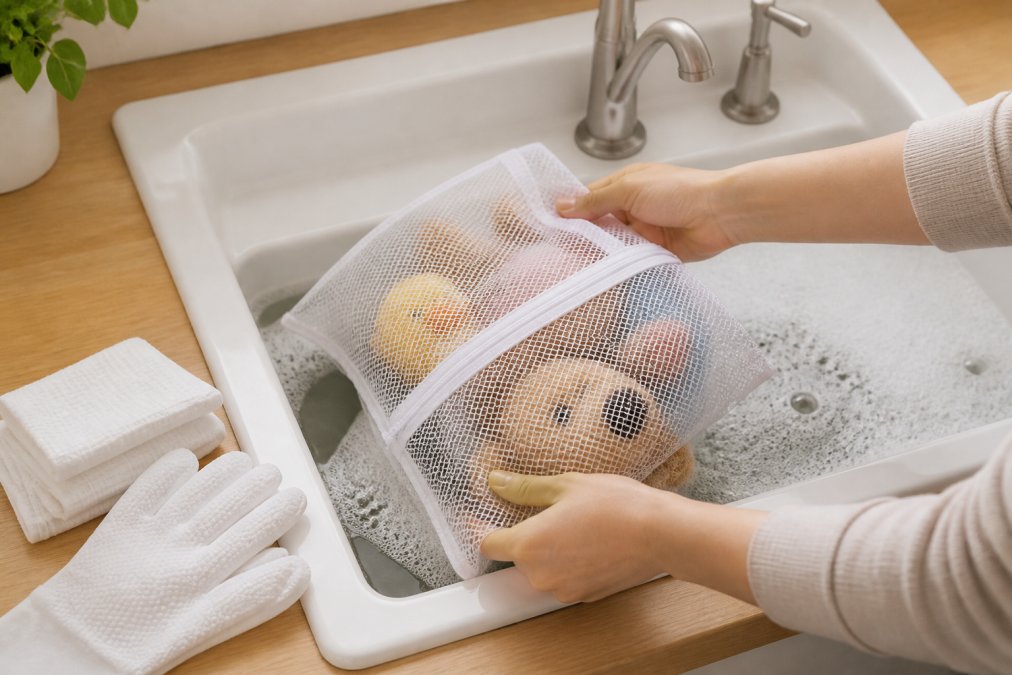
Machine-washable plush toys are the easiest to clean. Place them in a laundry bag or pillowcase to protect them during the wash cycle. Use warm water on a gentle cycle with pet-safe detergent or white vinegar as a natural alternative. Skip fabric softener and scented products, which can irritate your dog's skin. Air dry completely on a clean towel in natural sunlight when possible, as UV light provides additional sanitizing benefits.
Rope Toys
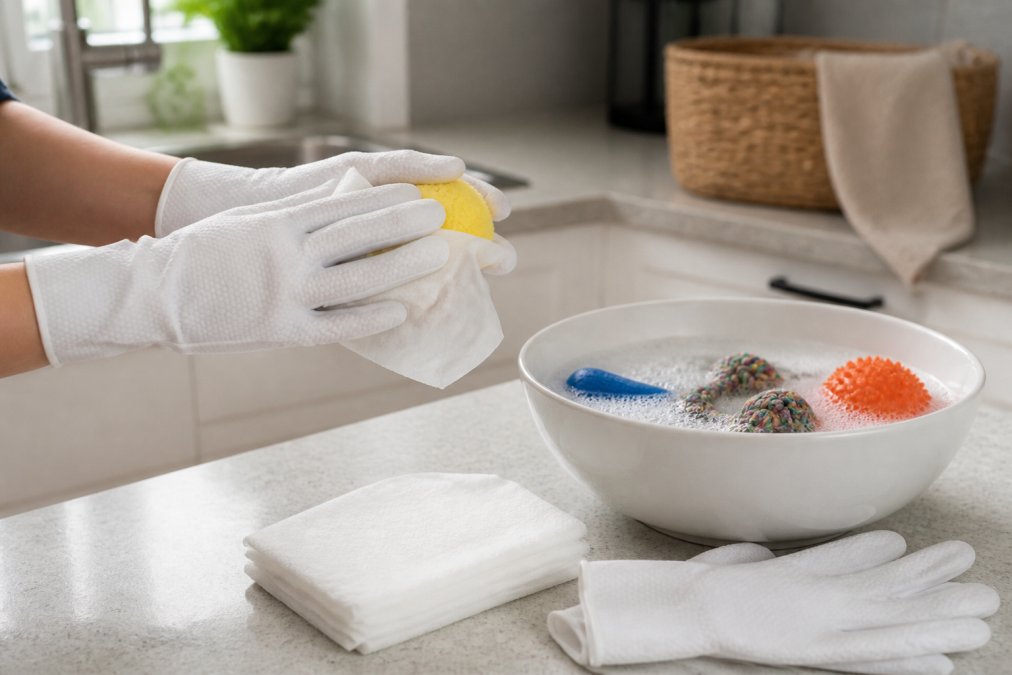
Rope toys require hand washing. Soak them in warm water with pet-safe detergent for 10-15 minutes to loosen debris. Use a soft brush to gently scrub between the rope fibers. Rinse thoroughly under running water until no soap residue remains. Hang rope toys to air dry completely, as moisture trapped inside creates an ideal environment for mold growth.
Rubber and Plastic Toys
These durable toys handle aggressive cleaning well. Soak them in warm water with white vinegar or baking soda for 15-20 minutes. Use a soft brush to scrub caked-on debris from crevices. Rinse thoroughly and air dry. For toys with hollow sections, use a bottle brush to reach interior areas and ensure no water remains trapped inside.
Best Dog-Safe Cleaners for Toys
Avoid harsh chemicals like bleach, ammonia, or phenol-based cleaners. White vinegar is your best natural option, it disinfects without toxins and leaves no harmful residue. Use a 1:1 ratio of white vinegar to water. Baking soda works as a gentle abrasive for scrubbing and helps neutralize odors.
Pet-safe laundry detergents formulated without dyes, perfumes, or phosphates are safe for washing plush toys. Look for hypoallergenic, fragrance-free options. Never use human laundry detergent, fabric softener, or scented products.
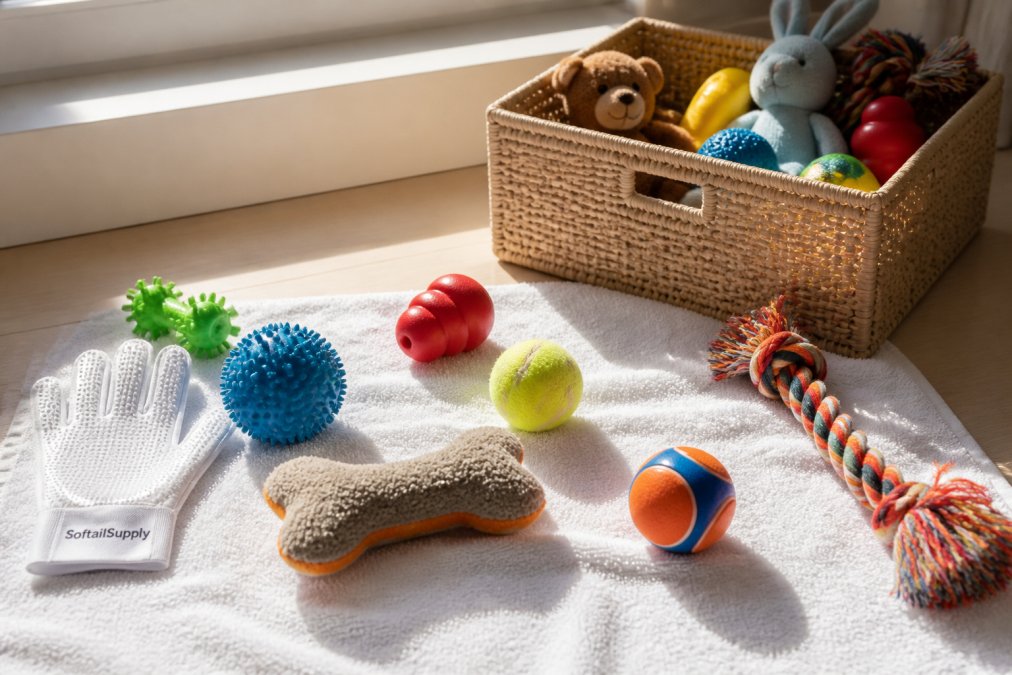
For quick cleanups between washes, Pet Cleaning Gloves & Wipes offer a convenient option to remove surface dirt and slobber safely.

Keeping your dog's toys clean protects their health and extends toy lifespan. By matching your cleaning method to the toy's material and using pet-safe products, you ensure your dog stays safe while enjoying their favorite toys. Start with a weekly cleaning routine and adjust based on your dog's play habits and the toy's condition.
| Toy Material | Cleaning Method | Frequency | Drying Time |
|---|---|---|---|
| Plush toys | Gentle machine wash or hand wash | Weekly | 4-6 hours air dry |
| Rope toys | Hand wash with soft brush | Every 1-2 weeks | 6-8 hours air dry |
| Rubber/plastic toys | Soak and scrub | Weekly to bi-weekly | 2-3 hours air dry |
Frequently Asked Questions
How often should you wash dog toys?
Wash dog toys weekly or every 7-10 days for toys your dog uses daily. Toys that collect slobber, dirt, or caked-on debris need more frequent cleaning to prevent bacterial growth and mold. Adjust frequency based on your dog's chewing habits and how dirty the toys get.
What is the safest way to sanitize dog toys?
Use pet-safe, non-toxic cleaners like white vinegar mixed with warm water or baking soda solutions. Avoid toxic chemicals, bleach, and harsh detergents that can harm your dog. For machine-washable toys, use a gentle cycle with fragrance-free, hypoallergenic detergent. Always rinse thoroughly to remove any residue, and air dry completely to prevent mold and bacterial growth.
Can you put dog toys in the dishwasher?
Only machine-washable rubber and plastic toys can go in the dishwasher on a gentle cycle with hot water. Check the toy's label first. Plush and rope toys should never go in the dishwasher, as high heat can damage their structural integrity and create micro-tears. Always hand wash delicate toys to preserve their durability and safety.
This article was written using GrandRanker