 how-to
How to Choose Durable Dog Toys: A 2026 Guide
Table of Contents
- Assess Your Dog's Chewing Style and Strength
- Best Toys for Aggressive Chewers and Power Chewers
- Safe Materials for Dog Toys and What to Avoid
- How to Tell If a Dog Toy Is Safe Before and After Purchase
Last Updated: August 25, 2026
Assess Your Dog's Chewing Style and Strength
Understanding your dog's individual chewing behavior is the foundation of choosing durable dog toys. Not all dogs chew the same way, what works for a gentle chewer will be destroyed by an aggressive chewer in minutes.
Observe how your dog engages with current toys. Does your dog shake toys violently or work methodically with their molars? Aggressive chewers apply sustained force requiring fundamentally different materials than casual players. If your dog tears through toys within days, leaving punctures or holes, you're dealing with a destructive chewer who needs reinforced construction.
Size matters too. The toy should be large enough that your dog cannot fit the entire thing in their throat, but small enough to carry and manipulate comfortably (aafco.org).
Best Toys for Aggressive Chewers and Power Chewers
Aggressive chewers need toys built with ballistic nylon, natural rubber, or reinforced composite materials that resist puncturing and tearing. Ballistic nylon is the standard because its tighter weaving and greater density means it takes longer for teeth to penetrate or shred it (peer-reviewed research).
Look for toys with reinforced seams and multiple stitching layers. Single-stitched toys fail quickly under aggressive chewing. Double or triple-stitched construction with reinforced seams at stress points dramatically extends toy life.
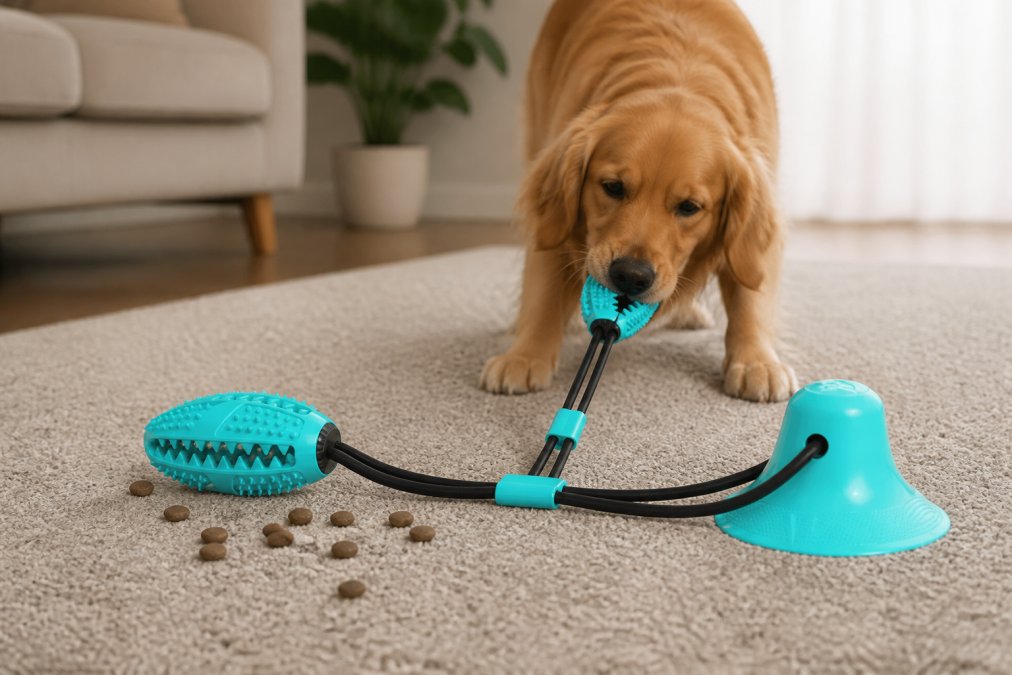
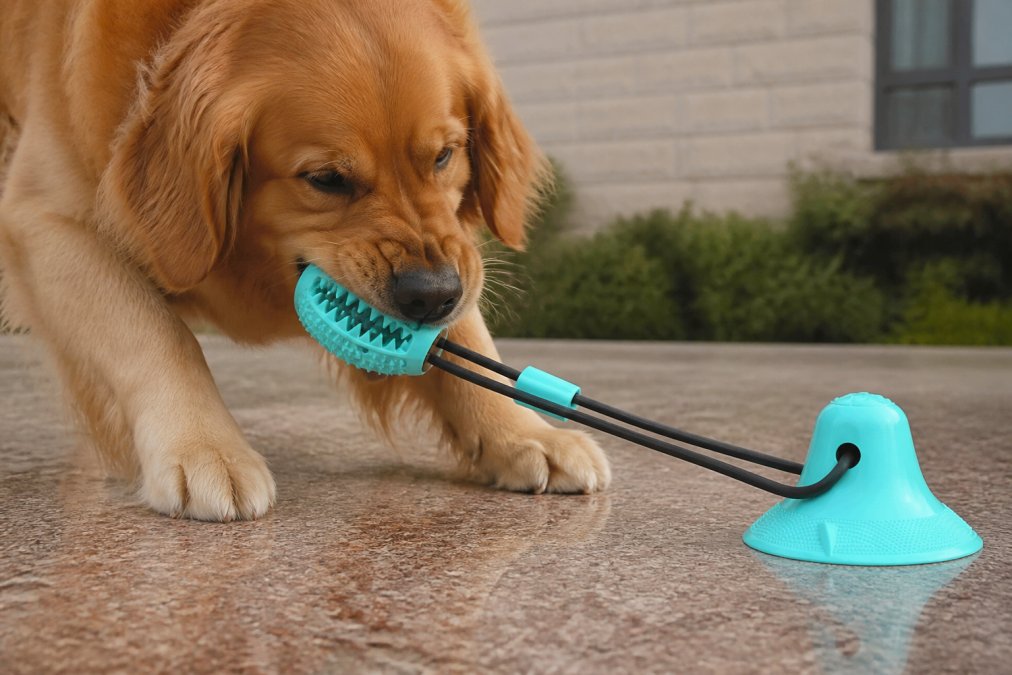
Interactive toys that engage your dog's mind often hold their attention longer, reducing destructive behavior. The Suction Ball Interactive Dog Toy from SofttailSupply sticks to any flat surface and bounces back with each bat, keeping power chewers engaged through active play rather than destructive chewing.

Toy rotation is a practical durability hack. If you rotate toys every few days, your dog stays interested longer because each toy feels "new" when it reappears. A toy that might last two weeks with constant access can last six weeks with strategic rotation.
Safe Materials for Dog Toys and What to Avoid
Non-toxic rubber is one of the safest options available. Natural rubber toys are biodegradable, won't leach chemicals if your dog chews through them, and offer genuine durability (the FDA). Avoid cheap synthetic rubbers that break down into small pieces.
Ballistic nylon and reinforced canvas are excellent choices because they resist shredding. The tight weave means pieces don't separate easily, reducing the risk of intestinal blockages.
Materials to avoid include soft plastics that break into small chunks, thin nylon that shreds easily, and anything with small decorative elements that can be chewed off and swallowed. Never use toys with loose threads, small bells, beads, or plastic eyes that can detach.
Check for material toxicity before purchase. Legitimate manufacturers test their materials against safety standards and will provide documentation about material sourcing and safety testing.
How to Tell If a Dog Toy Is Safe Before and After Purchase
Before you buy, inspect the toy carefully for construction quality. Feel the seams, they should be tight and reinforced, not loose or thin. Check that any openings are appropriately sized for your dog's mouth and that there are no small parts that could detach.
Read product descriptions carefully for material composition. Legitimate manufacturers clearly state what their toys are made from. If a product is vague about materials or uses terms like "durable plastic" without specifics, that's a red flag.
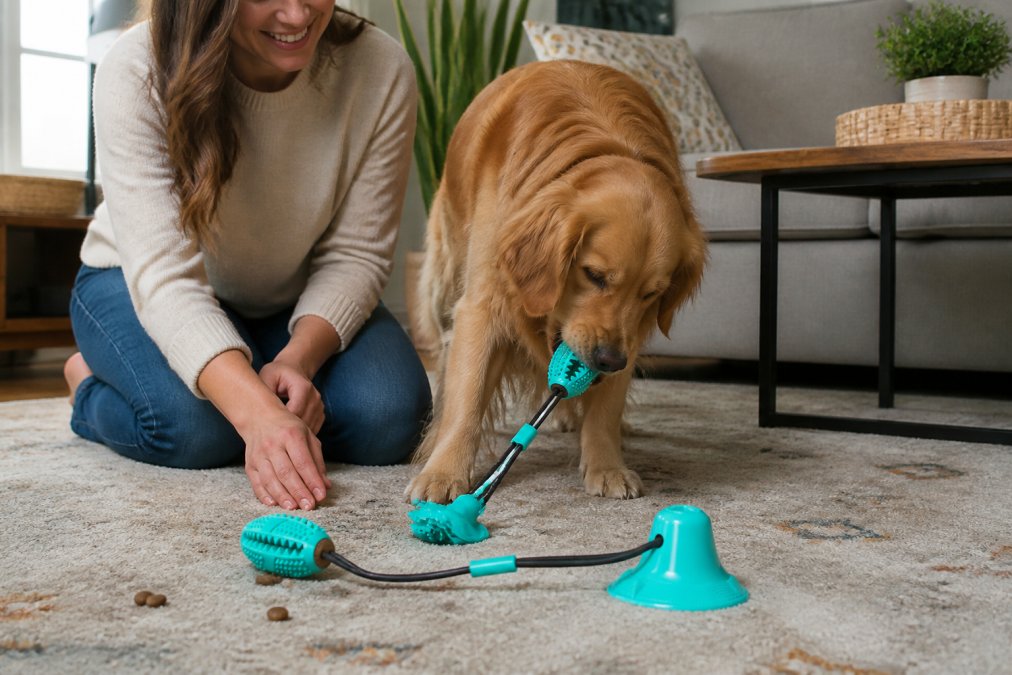
After purchase, test the toy during a short supervised session. Watch for how your dog interacts with it and whether they can tear into the material easily. If the toy shows damage within the first few minutes, it's not suitable for your dog's chewing strength.
Monitor wear and tear regularly. Check weekly for developing holes, loose stitching, or pieces starting to separate. Remove the toy as soon as damage becomes visible, don't wait until it's falling apart.
Choosing durable dog toys means matching materials and construction to your dog's actual chewing behavior. The toys that last are built with reinforced materials, properly constructed seams, and appropriate sizing for your dog's mouth. At SofttailSupply, we understand that durable dog toys aren't just about saving money on replacements, they're about keeping your dog safe during play. Our carefully selected toys like the Automatic Tennis Ball Launcher are tested for durability and safety, backed by fast shipping and responsive customer support so you can shop with confidence.

Frequently Asked Questions
Q: What materials are safest for durable dog toys?
A: Natural rubber, ballistic nylon, and reinforced rope with stitched seams are among the safest durable options. Avoid toys with small parts that can become choking hazards, toys with toxic dyes, or materials that shred easily. Inspect seams and edges regularly to ensure they remain intact during play.
Q: How do I know if a dog toy is safe for my aggressive chewer?
A: Check for reinforced seams, thick material density, and absence of small detachable parts. Safe toys for aggressive chewers should have no loose stitching, no squeakers that can be torn out, and no thin areas prone to puncture. Test the toy's flexibility, it should resist tearing when pulled firmly. Read reviews from owners with similarly powerful chewers, and watch your dog during initial play sessions to spot wear and tear early.
Q: Can indestructible dog toys really withstand any chewing?
A: No toy is truly indestructible. Even the most durable dog toys will eventually show wear and tear with aggressive chewing. The term 'indestructible' is marketing language; what matters is durability relative to your dog's bite force and chewing habits. Heavy chewers will destroy any toy given enough time, so rotate toys regularly, supervise play sessions, and replace toys showing signs of damage to prevent choking hazards and maintain safety.
This article was written using GrandRanker