 how-to
How to Choose Cat Bed Size: A Practical Guide
Table of Contents
- How to Measure a Cat for a Bed
- Best Cat Bed Types for Sleeping Positions
- Sizing by Cat Age and Health
- Signs Your Cat Hates Their Bed
Last Updated: August 13, 2026
How to Measure a Cat for a Bed
Accurate measurement eliminates guesswork when selecting the right cat bed size. Measure your cat from nose to tail when fully stretched, then measure from head to tail base when curled in their typical sleeping position, and finally measure width across the body at the widest point. These three measurements form the foundation for choosing a bed that fits your cat's actual needs.

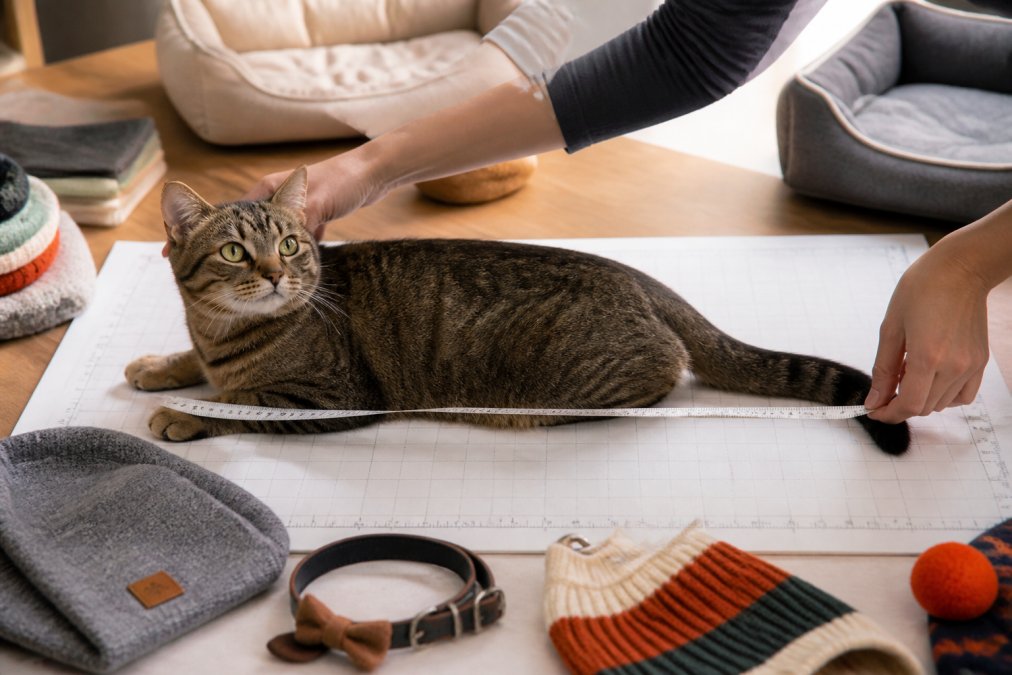
A common mistake is choosing a bed based on weight alone. Two cats of the same weight can have very different body dimensions. When a bed is too small, cats avoid it entirely. When it's too large, it fails to provide the security and comfort that makes a bed appealing.
Best Cat Bed Types for Sleeping Positions
Understanding your cat's preferred sleeping position guides you toward the bed shape that will actually get used. Cats typically fall into two categories: sprawlers and curlers.
Sprawling cats stretch out fully and benefit from rectangular mat beds or low-profile cushioned surfaces. The Warm and Cozy Cat Bed from SofttailSupply ($25.99) offers this flat, spacious design for cats who like to stretch without constraint.
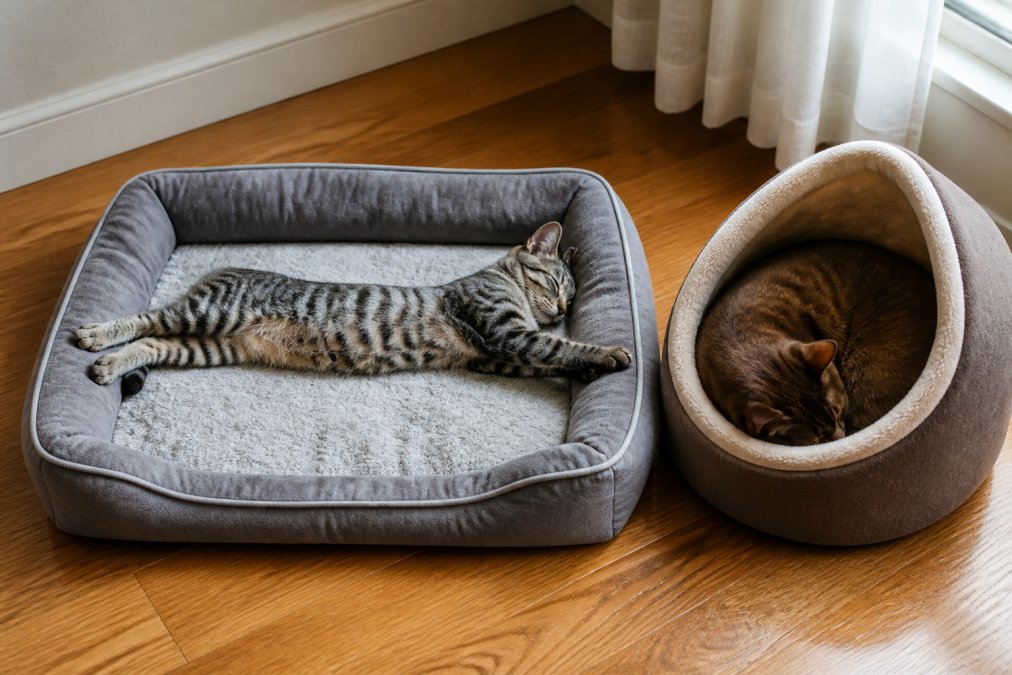
Curling cats prefer to ball up and seek beds with raised edges or semi-enclosed designs that create containment. The Cozy Nest Semi-Closed Pet Bed ($34.99) delivers this nesting instinct with its partially enclosed structure providing security.

Some cats alternate between sprawling and curling depending on temperature and mood. The Banana Pet Bed ($29.99) combines a semi-enclosed design with enough internal space for both positions. Material and padding density also matter: cats in cooler environments benefit from thicker insulation, while cats in warm rooms may prefer thinner, breathable surfaces. The Plush Thickened Warm Pet Bed ($69.99) offers substantial padding for cats seeking thermal regulation and orthopedic support, particularly useful for cats with joint concerns.
Sizing by Cat Age and Health
Kittens grow rapidly, so a bed sized to their current dimensions becomes cramped within weeks. For growing kittens, a moderately sized bed that fits their current measurements works better than oversizing.
Senior cats and cats with arthritis require specific considerations. As cats age, they spend more time sleeping and become more sensitive to joint pressure. A bed with orthopedic support and thicker padding becomes genuinely therapeutic. Cats with feline arthritis benefit from raised edges that reduce the effort required to climb in and out. For senior cats, size the bed to fit their curled measurement closely. A slightly snug fit provides warmth and reduces the feeling of a large, empty space. Older cats also appreciate non-slip bases that prevent the bed from shifting when they climb in, reducing the risk of falls or strain.
Overweight cats need beds with higher weight capacity and firmer support to prevent sagging.
Signs Your Cat Hates Their Bed
A cat that ignores their bed is sending a clear message: the sizing, shape, or placement is wrong. Common signs include your cat sleeping anywhere except the bed, on the floor, the couch, your bed, or windowsills.
A bed that's too small creates a cramped feeling. If you notice your cat's body parts extending beyond the bed's edges, go up a size. A bed that's too large feels insecure, and cats may perch on the edge or ignore it entirely in favor of tighter spots. If your cat gravitates toward closets or under-bed spaces, they prefer enclosed or semi-enclosed designs.
Placement also determines whether a bed gets used. A bed in a high-traffic area, near loud appliances, or in direct sunlight may be perfectly sized but still ignored due to location. Material matters too, some cats dislike certain textures, and a slippery surface might feel unstable while minimal padding may feel too firm.
Practical Sizing Summary
Use this table to translate your measurements into bed selection:
| Cat Measurement | Bed Type | Best For | SofttailSupply Option |
|---|---|---|---|
| Nose-to-tail under 18 inches | Compact mat or small nest | Small, young, or petite cats | Warm and Cozy Cat Bed |
| Nose-to-tail 18-24 inches | Standard rectangular or semi-closed | Most adult cats, sprawlers | Banana Pet Bed or Cozy Nest |
| Nose-to-tail over 24 inches | Large rectangular or spacious nest | Large breeds, sprawlers | Plush Thickened Warm Pet Bed |
| Curled measurement + nesting behavior | Semi-enclosed or cave bed | Security-seeking cats | Cozy Nest Semi-Closed Pet Bed |
| Senior cat or arthritis diagnosis | Orthopedic with raised edges | Pain relief, joint support | Plush Thickened Warm Pet Bed |
The right cat bed size transforms a neglected purchase into your cat's favorite sleeping spot. Measure accurately, match the bed type to your cat's sleeping position, and account for age and health. A bed that fits properly gets used and improves your cat's rest quality, reduces stress, and often translates to better behavior and health outcomes.

Choosing the wrong bed size wastes money and leaves your cat without the comfort they deserve. At SofttailSupply, we understand that sizing matters. Start with accurate measurements, select a bed type that matches your cat's sleeping style, and place it in a quiet spot your cat already gravitates toward. Most cats respond immediately to a properly sized bed. If yours doesn't, the solution is usually one adjustment away, whether that's a different size, shape, or location.
Frequently Asked Questions
What is the ideal size bed for a cat?
The ideal cat bed size allows your cat to stretch out fully in one direction while still feeling secure. Measure your cat from nose to tail, then add 4-6 inches for comfort. A typical adult cat needs a bed at least 18-24 inches long and 12-16 inches wide. Kittens and senior cats may have different needs based on their mobility and growth stage. Your cat should be able to curl up or sprawl without any part hanging over the edge.
How do I know if my cat's bed is too small?
Signs your cat hates their bed include refusing to use it, sitting on the edge instead of inside, or choosing the floor or furniture over the bed. If your cat's tail hangs over the edge when curled up, or they can't fully extend their legs when stretched out, the bed is cramped. A bed that feels too small causes anxiety and discomfort, reducing the security and comfort your cat needs. Watch for avoidance behavior as a clear indicator to size up.
Should a cat bed be big enough for them to stretch out?
Yes, your cat bed should accommodate both curling up and stretching. Cats alternate between these sleeping positions throughout the day, and a bed that's too small forces them into one posture, causing discomfort and potential joint strain. A rectangular mat or bolster bed works well for sprawlers, while curlers may prefer cave beds with raised edges. The best cat bed size balances security with enough sleeping surface for natural movement and thermal regulation.
Do kittens need a different size bed than adult cats?
Yes, growing kittens need beds sized for their current size, not their adult size. A bed that's too large makes a kitten feel insecure and exposed. Start with a smaller bed (12-16 inches long) and upgrade as your kitten grows. Monitor your kitten's growth monthly and plan to transition to an adult-sized bed around 9-12 months of age. For senior cats with arthritis, orthopedic support and padding density become more important than sheer size, though adequate length remains essential for comfortable stretching.
This article was written using GrandRanker