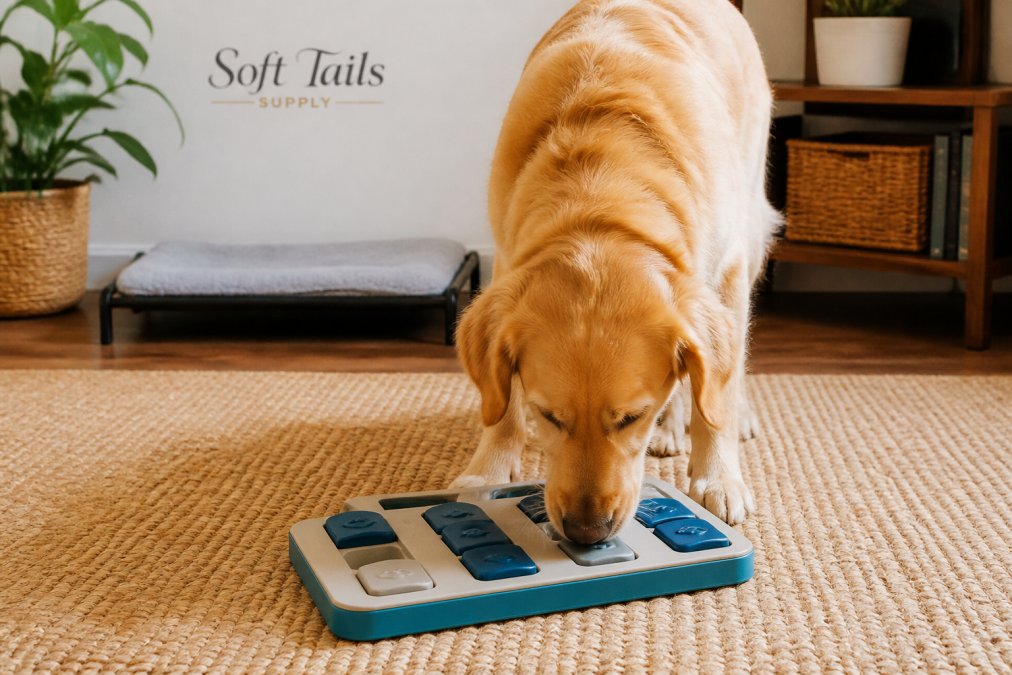
 ultimate-guide
Why Dogs Need Mental Stimulation Daily | SofttailSupply
Table of Contents
- Why Daily Mental Stimulation Matters for Your Dog
- Mental Stimulation Toys for Dogs: Interactive Options That Work
- Dog Enrichment Activities: Simple Daily Habits for a Happier Pet
- Frequently Asked Questions
Last Updated: September 11, 2026
Why Daily Mental Stimulation Matters for Your Dog
Mental stimulation is the daily cognitive engagement that gives a dog's brain meaningful work, and a tired brain produces a calmer dog. Owners who walk their dog twice a day still come home to chewed furniture, exercise alone rarely fixes that.
Canine enrichment through scent work, puzzle toys, and short training sessions supports cognitive function, reduces destructive behavior, and builds mental agility (avma.org).
Signs Your Dog Is Bored or Under-Stimulated
The clearest signs of a bored dog are destructive chewing, excessive barking, pacing, and a sudden drop in responsiveness to commands, behaviors that look identical to disobedience, so owners respond with discipline and the cycle tightens (aspca.org).
How Physical Exercise and Mental Health Connect
Physical exercise and mental health reinforce each other but are not interchangeable: a long run burns energy, a puzzle toy builds mental fatigue, and most owners over-deliver on one. A high-energy dog can return from a two-hour hike and still pace the hallway because the body is tired, the brain is not.
How Much Mental Stimulation Does a Dog Need Each Day?
Most dogs need roughly 15 to 30 minutes of focused cognitive engagement daily, split across two or three short sessions; the daily habit matters more than total minutes (avma.org). Working and herding breeds need the upper end, companion breeds the lower end, and senior dogs shorter, gentler sessions built around scent work.
| Dog Type | Daily Cognitive Time | Best Format |
|---|---|---|
| Herding and working breeds | 30-45 minutes | Puzzle toys, training, scent work |
| Sporting and terrier breeds | 20-30 minutes | Interactive play, problem-solving |
| Companion breeds | 15-20 minutes | Short training sessions, food puzzles |
| Senior dogs with mobility limits | 10-15 minutes | Nose games, stationary puzzles |
Mental Stimulation Toys for Dogs: Interactive Options That Work
The best mental stimulation toys for dogs require the dog to solve something, not just chase something: a treat dispenser that releases only when the dog presses the right part is a cognitive workout.

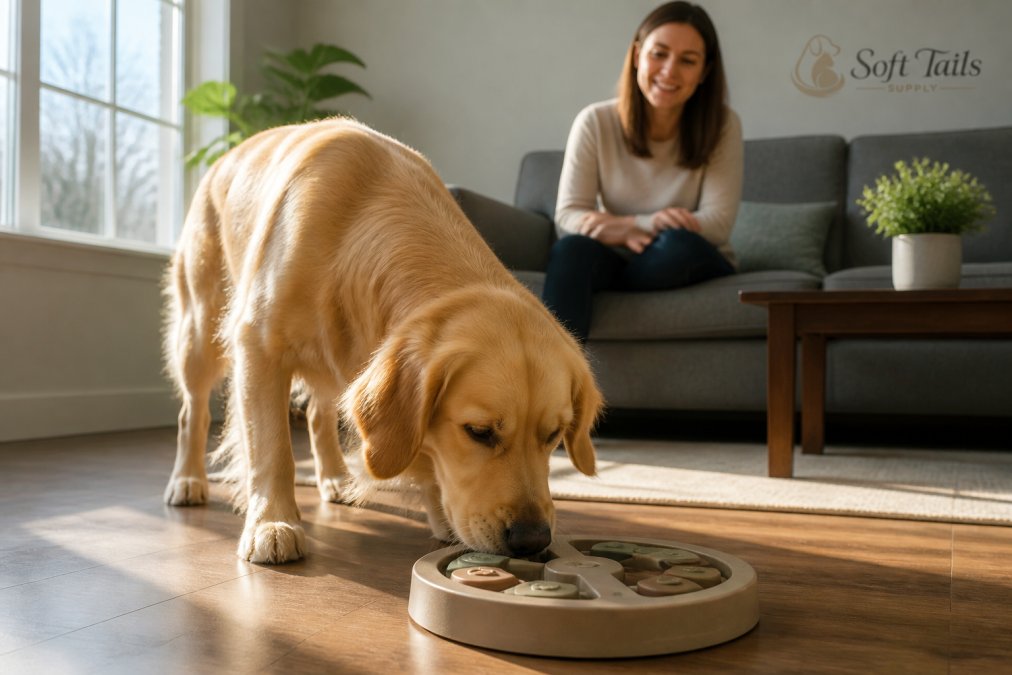
Interactive puzzle toys fall into a few categories, and matching the category to your dog's motivation makes them effective: treat dispensers reward problem-solving directly, slow feeders turn mealtime into a task, and rolling and motion toys provide unpredictable movement that keeps attention engaged when you are busy.
A common mistake is buying one puzzle toy, watching the dog solve it in four minutes, and concluding the whole category does not work. Dogs learn puzzles quickly. The fix is rotation, not replacement.
For dogs needing more than a stationary puzzle, the Smart Rolling Pet Ball with Rope changes direction on its own, so the dog tracks and predicts movement; the attached rope adds tug play.

Treat-motivated dogs respond fastest to dispensers. The Interactive Baseball Treat Dispenser for Dogs releases a reward when your dog presses or nudges the moving part, turning a snack into a genuine problem to solve.
Mealtime is the most underused enrichment window. The Interactive Slow Feeder Toy for Dogs uses different tray and ball configurations so your dog works for each bite, slowing fast eaters while adding a mental task to a routine moment.

For dogs that never tire of fetch, the Automatic Tennis Ball Launcher sends a compatible ball forward without you throwing; the anticipation and tracking add a cognitive layer.
The Over-Stimulation Threshold
More enrichment is not always better. Over-stimulation looks almost identical to under-stimulation: pacing, panting, and restlessness at night. The tell is timing: a bored dog acts out when nothing is happening, while an over-stimulated dog stays wired after activity ends. If your dog cannot settle within 20 to 30 minutes after a session, shorten the next one.
Dog Enrichment Activities: Simple Daily Habits for a Happier Pet
Dog enrichment activities work best as small daily habits rather than occasional big efforts. Ten minutes of scent work before work, a puzzle feeder at dinner, and a short evening training session cover the day without adding an errand, attach enrichment to things you already do, like feeding and walks.
Five daily habits worth building:
- Scatter feed one meal. Toss kibble across the floor and let your dog sniff out each piece, the cheapest scent work there is.
- Run a two-minute training session. Five reps of a known cue plus one new one.
- Rotate the toy bin. Pull two toys out each week and reintroduce two others.
- Hide a few treats before you leave. A quick hide-and-seek turns an empty house into a puzzle.
- End the day calm. A chew, snuffle mat, or slow feeder signals that activity is over.
Scent work is the most accessible cognitive engagement for dogs of any age or mobility level: the nose works while the body stays still, making nose games ideal for senior dogs and small apartments. A five-minute training session does more for behavioral health than a long unstructured walk, because it requires the dog to think, focus, and control impulses.
Making It Stick
Consistency beats intensity. A dog that gets a short puzzle session every day is calmer than one that gets a marathon enrichment day on the weekend and nothing during the week. Start with one habit, add a second once the first is automatic, and within a couple of weeks most owners notice less destructive behavior and a dog that settles faster after activity.
Frequently Asked Questions
How much mental stimulation does a dog need daily?
Most dogs need 15-30 minutes of focused mental stimulation daily, split into short sessions. This can include puzzle toys, training, or scent games. High-energy breeds may need more, while seniors often do well with 10-15 minutes. Pair mental work with physical exercise for best results.
What are the signs that a dog is not getting enough mental stimulation?
Common signs of a bored dog include destructive chewing, excessive barking, digging, pacing, and ignoring commands. Some dogs become clingy or anxious. If your dog seems restless or gets into trouble when alone, adding daily enrichment activities like puzzle feeders or training sessions can help.
Can mental stimulation help with dog behavioral problems?
Yes. Boredom-related anxiety and destructive behavior often improve when dogs get regular cognitive engagement. Puzzle toys and training sessions provide outlets for excess energy and reduce stress. For serious issues, consult a veterinarian or behaviorist alongside daily enrichment.
A dog that chews the couch, barks at every sound, and paces the hallway is usually not a bad dog. It is an under-stimulated one. SofttailSupply carries the puzzle feeders, treat dispensers, and motion toys that turn that excess energy into daily problem-solving, backed by fast 24 to 48 hour shipping, secure payment options, and a hassle-free return process if something does not suit your dog. Browse the collection and build a daily enrichment routine your dog will actually look forward to.