 ultimate-guide
Safe Materials for Heavy Duty Dog Toys: What to Know
Table of Contents
- Safe Materials for Heavy Duty Dog Toys: A Quick Comparison
- Natural Rubber vs Nylon Dog Toys: Which Lasts Longer?
- How to Tell If a Dog Toy Is Safe: 5 Checks Before You Buy
- Materials to Avoid in Heavy Duty Dog Toys
- Chemical Leaching and Heat Exposure
- Maintenance and Cleaning Protocols
- Material-Specific Allergy Symptoms
- Disposal and Environmental Impact
- Signs of a Worn-Out Toy
- Frequently Asked Questions
Last Updated: September 20, 2026
Safe Materials for Heavy Duty Dog Toys: A Quick Comparison
Safe materials for heavy duty dog toys come down to a short list: natural rubber, durable nylon, food-grade silicone, and tightly woven hemp or organic cotton. These resist tearing, avoid BPA and phthalates, and outlast cheap plastic or stuffed fabric.
Most toy failures trace back to material composition: natural rubber flexes and springs back, while thin synthetic polymers crack and shed swallowable chunks.
"Indestructible" is marketing, not a material spec. Match material integrity to your dog's chew intensity and retire toys before they become a swallowing hazard.
| Material | Chew Resistance | Best For | Watch Out For |
|---|---|---|---|
| Natural rubber | High | Moderate to heavy chewers | Not for power chewers who shred |
| Durable nylon | Very high | Aggressive chewers | Too hard for sensitive teeth |
| Food-grade silicone | Medium | Teething, light chewers | Tears under sustained biting |
| Hemp and organic cotton | Low to medium | Tug and fetch | Not a solo chew toy |
Natural rubber and durable nylon anchor the heavy-duty category.
Natural Rubber vs Nylon Dog Toys: Which Lasts Longer?
Durable nylon outlasts natural rubber in almost every test, but "longer lasting" and "better" aren't the same: nylon wins on abrasion resistance, natural rubber on flexibility, which does less damage to enamel.
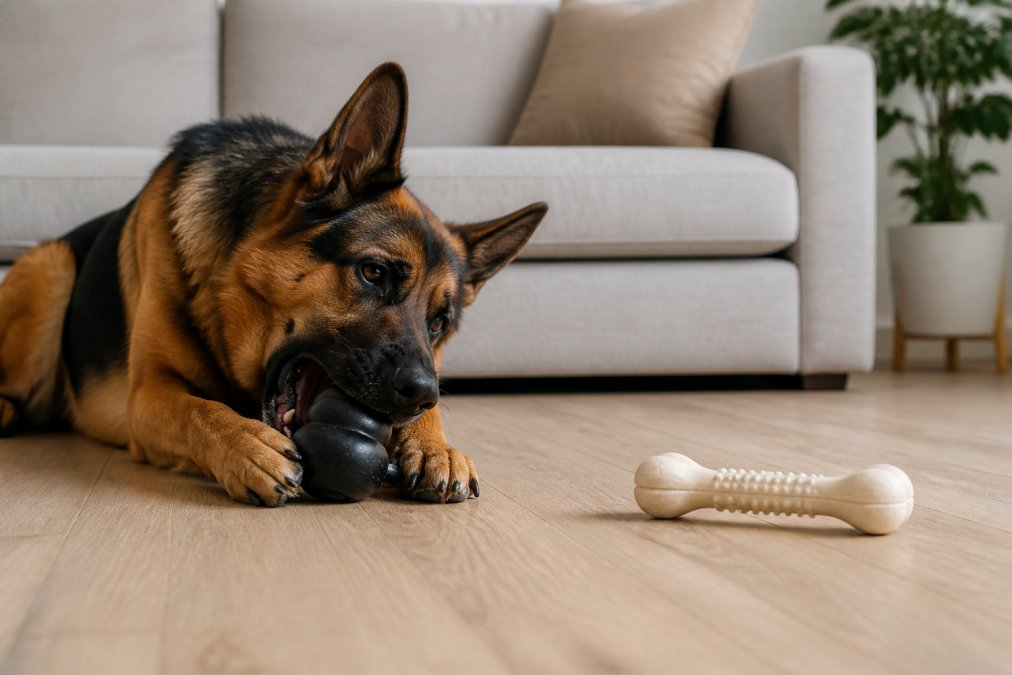
For most households, own both: nylon for the dog that destroys everything, natural rubber for daily chewing and tugging. SofttailSupply's Suction Cup Interactive Dog Toy is a pliable design that attaches to smooth surfaces for supervised tug and chew energy.

How to Tell If a Dog Toy Is Safe: 5 Checks Before You Buy
You can tell if a dog toy is safe by checking five things: the material label, absence of BPA and phthalates, construction seams, size relative to your dog's throat, and condition after the first session.
- Read the material label. Food-grade, BPA-free, and phthalate-free are the terms that matter. No material named? Put it back.
- Squeeze the seams. No gaps, glue lines, or squeakers poking through, loose seams fail first.
- Check the size. A toy that fits fully behind the molars is a swallowing hazard. Size up, not down.
- Smell it. A faint rubber smell is normal; a sharp or chemical odor can signal toxic additives.
- Inspect it after session one. Ten minutes of supervised chewing tells you more than any product description.
Materials to Avoid in Heavy Duty Dog Toys
Avoid materials that break down into sharp or swallowable pieces: cheap synthetic polymers top the list, followed by anything with undisclosed additives.
Suction Cup Interactive Dog Toy →
- Thin, brittle plastics that crack into shards
- Toys with hidden squeakers inside fabric, the plastic bladder is a choking risk once the fabric tears
- Rawhide and pressed bone substitutes that soften into gummy pieces
- Painted or dyed toys without a lead-free or food-grade claim
Chemical Leaching and Heat Exposure
This is where food-grade materials earn their price: food-grade rubber and silicone resist leaching under normal use.
Maintenance and Cleaning Protocols
A clean toy is a safer toy, and cleaning is where most owners cut corners. Heavy-duty toys collect saliva, food residue, and bacteria in every gouge and seam.
- Wash rubber and nylon toys in warm water with mild, pet-safe soap, then rinse thoroughly
- Skip the dishwasher for anything with a squeaker or suction cup
- Dry completely before returning the toy, trapped moisture feeds bacteria
- Inspect during every wash to spot wear early
Material-Specific Allergy Symptoms
Some dogs react to specific toy materials rather than dirt or bacteria, with symptoms where the toy contacts skin and mouth.
Disposal and Environmental Impact
Heavy-duty toys are, by design, hard to break down, a feature during the toy's life and a problem at the end of it.
Signs of a Worn-Out Toy
Retire a toy the moment it shows deep gouges, cracks, exposed squeakers, separated seams, missing chunks, or a tacky surface. Any one is enough.
Frequently Asked Questions
What is the safest material for dog toys?
Natural rubber and durable nylon are among the safest choices for heavy duty dog toys. Natural rubber is pliable, bounces back after chewing, and resists tearing. Durable nylon is harder and works well for power chewers who destroy softer toys. Both should be labeled non-toxic, BPA-free, and phthalate-free. Avoid toys with unknown plastics, lead-based paints, or strong chemical smells, since those can indicate toxic additives or chemical leaching.
What do vets recommend for heavy chewers?
Vets generally steer owners toward natural rubber toys with some give, because they flex under pressure instead of cracking into sharp pieces. Hard materials like bones or antler-style chews can fracture teeth. Look for toys labeled food-grade, lead-free, and non-toxic, and match the toy's toughness to your dog's chew intensity. Rotate toys and inspect them weekly, since even durable construction wears down over time.
Are rubber dog toys safer than plastic ones?
Rubber toys are usually safer than plastic for aggressive chewers. Natural rubber stretches and rebounds, so it is less likely to splinter into swallowing hazards. Many plastic toys contain synthetic polymers that can crack under heavy chew pressure, creating sharp edges. If you choose plastic, look for BPA-free and phthalate-free labels. Rubber still wins on abrasion resistance and material integrity for most strong chewers.