 ultimate-guide
How to Choose Long-Lasting Cat Toys
Table of Contents
- Understand Your Cat's Play Style and Instincts
- Evaluate Safe Materials for Cat Toys
- Identify Durable Cat Toys for Aggressive Chewers
- Recognize Signs a Cat Toy Is Worn Out
Last Updated: August 19, 2026
Understand Your Cat's Play Style and Instincts
Your cat's natural prey drive determines which toys will hold their attention and withstand aggressive play. Cats are hunters by instinct, and understanding how your specific cat plays is the first step toward selecting long-lasting cat toys that actually survive daily use.
Some cats are sprinters who chase and pounce in short bursts. Others are stalkers who prefer slow, methodical play. A few are ambush hunters who wait for the perfect moment to attack. Watch how your cat plays for a few sessions. Does she attack toys immediately, or does she bat them around first? Does she carry toys in her mouth and shake them violently, or does she prefer to swat and chase? A destructive chewer who thrashes toys needs reinforced stitching and durable materials.
Interactive play sessions reveal the most about your cat's style. When you dangle a wand toy, notice whether your cat lunges from a distance or creeps closer before attacking. Some cats prefer toys that mimic bird movement, while others respond to erratic patterns that simulate injured prey. Mental stimulation matters as much as physical exercise. Cats that lack enrichment become bored and destructive, often damaging toys out of frustration rather than play.
Evaluate Safe Materials for Cat Toys
Material choice is where durability and safety intersect. The wrong material leads to torn seams, detached parts, and potential choking hazards.
Natural sisal rope resists shredding better than synthetic alternatives and provides satisfying texture for cats that like to claw and chew. Synthetic fibers like polyester and nylon hold up well under repeated biting and shaking, but they must be tightly woven to prevent fraying. Rubber and silicone materials offer excellent durability for toys that endure aggressive chewing and don't splinter like plastic can.
Avoid materials with loose decorations, bells, or plastic components that can detach easily. Feathers should be securely glued or stitched, not just hot-glued to the toy surface. Plastic eyes and noses are choking hazards if they're not permanently attached.
The Flapping Bird Cat Toy from SofttailSupply uses durable synthetic materials with reinforced stitching to mimic real bird movement without detachable parts that pose a safety risk. Look for toys made with non-toxic dyes and materials that meet safety standards.

Identify Durable Cat Toys for Aggressive Chewers
Aggressive chewers need toys engineered specifically for destructive behavior. These cats will destroy standard toys within days, so material selection and construction quality become critical.
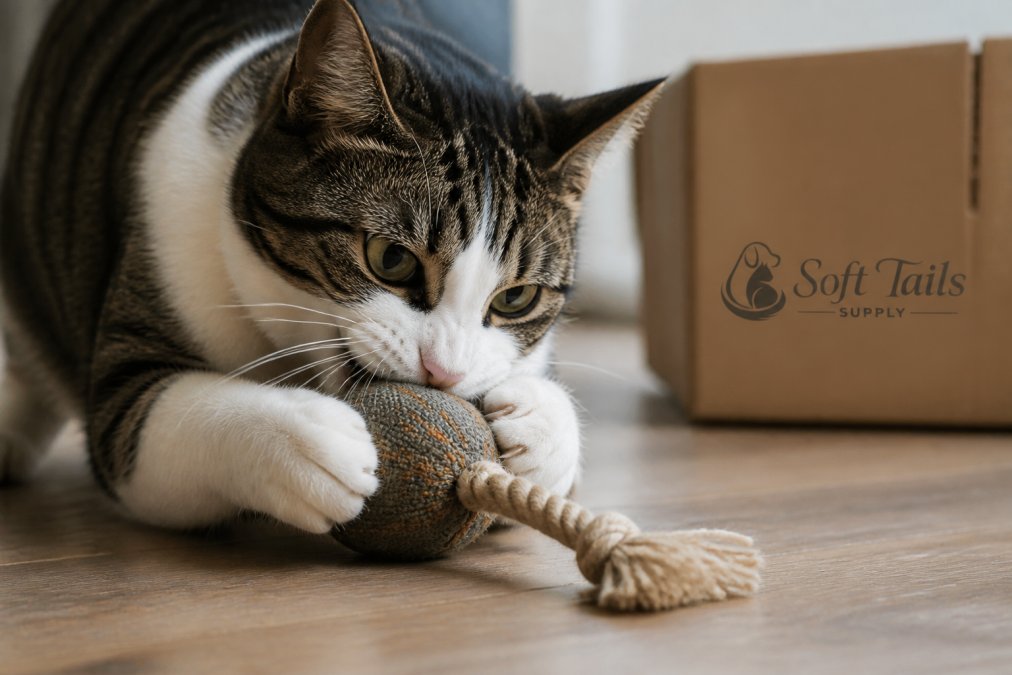
Reinforced stitching is non-negotiable for aggressive chewers. Look for toys with double or triple-stitched seams that run the entire length of the toy. Heavy-duty materials like thick rubber or reinforced nylon hold up best against destructive behavior. Thin fabrics will tear regardless of stitching quality.
Avoid toys with stuffing that can be pulled out and ingested. Aggressive chewers will tear through fabric to reach the stuffing, creating a choking hazard. Solid construction toys without internal filling last significantly longer.
Wand toys and interactive toys often last longer than solo play toys for aggressive chewers because they're used during supervised sessions. The Smart Rolling Pet Ball from SofttailSupply works well for aggressive chewers because its solid construction means there's nothing to tear open or ingest.

Rotate toys regularly to prevent your aggressive chewer from focusing on destroying a single toy. When a toy shows minor damage, remove it immediately rather than waiting for complete destruction. Some aggressive chewers respond better to toys that satisfy their need to shred, like cardboard scratchers and crinkle toys designed for destruction.
Recognize Signs a Cat Toy Is Worn Out
Worn-out toys become safety hazards. Regular inspection prevents injuries and tells you when replacement is necessary.
Fraying seams are the first sign of deterioration. When stitching starts to unravel, the toy is losing structural integrity and should be removed immediately. Detached parts indicate the toy has reached the end of its safe lifespan, if bells, feathers, or plastic components are loose or missing, the toy poses a choking hazard.
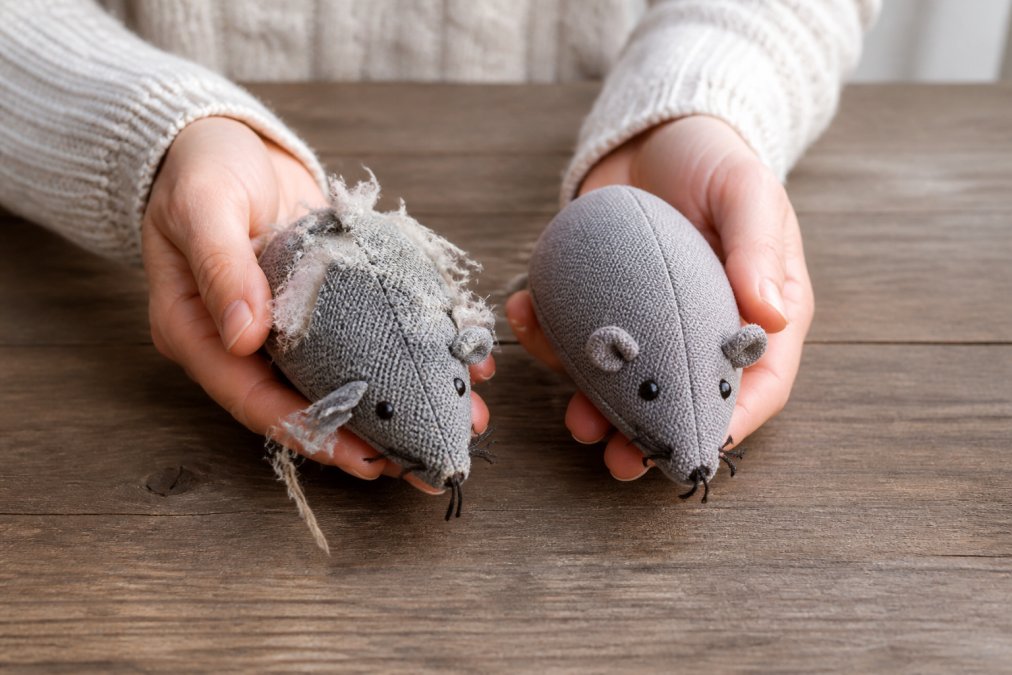
Material degradation shows as thinning fabric, worn areas, or discoloration that indicates structural weakness. Holes or tears in the fabric mean internal stuffing can be accessed, creating a choking hazard. Odor changes can indicate mold or bacterial growth, especially for toys that get wet during play.
Inspect toys weekly during play sessions. Gently pull on seams and check for loose components. If any part of the toy feels unstable or weak, remove it from rotation. Track which toys last longest for your cat's specific play style to inform future purchases.
Choosing long-lasting cat toys requires understanding your cat's natural instincts, evaluating material durability, and recognizing when toys become unsafe. The most durable toys combine reinforced construction with materials that withstand aggressive play without releasing detachable parts. SofttailSupply's carefully curated selection of toys, including the Flapping Bird Cat Toy and Smart Rolling Pet Ball, are tested for durability and safety, designed to keep your cat engaged while standing up to daily use. Start by observing your cat's play style, select toys with reinforced stitching and non-toxic materials, and inspect regularly for wear.
Frequently Asked Questions
How often should you replace cat toys for safety?
Replace toys every 4-6 weeks or immediately if you notice fraying, loose seams, detachable parts, or choking hazards. Cats with destructive behavior may need replacements every 2-3 weeks. Regular inspection during play sessions helps catch damage early. Even durable toys degrade with heavy use, so monitor for wear signs and prioritize your cat's safety over toy lifespan.
What materials make cat toys more durable?
Natural sisal, reinforced synthetic fibers, and thick rubber hold up best against daily activity and aggressive play. Look for toys with reinforced stitching and strong seam construction. Avoid thin plush materials and toys with easily detachable parts. Quality construction matters as much as material choice, toys with double-stitched seams and non-toxic materials last significantly longer and keep your cat safe during enrichment play.
How do I know if a cat toy is high-quality before buying?
Check for reinforced stitching, secure seams, and non-toxic materials that meet safety standards. Read customer reviews mentioning longevity and durability. Look for toys designed for interactive play or mental stimulation, which often use heavier-duty construction. Avoid toys with small detachable parts or weak construction. Brands that test products with real cats and provide clear material information typically offer better durability and safety.
Are there specific cat toys designed for aggressive chewers?
Yes. Look for toys labeled as durable or heavy-duty, made from natural sisal, thick rubber, or reinforced synthetic fibers. Wand toys and interactive toys often withstand aggressive chewing better than plush toys. The Flapping Bird Cat Toy ($26.99) mimics natural prey movement without easily detachable parts, making it ideal for destructive behavior. Toys with catnip-infused materials in reinforced construction also resist aggressive play while maintaining enrichment value.
This article was written using GrandRanker