 listicle
Grooming Gloves for Sensitive Skin Dogs: SofttailSupply Review
Table of Contents
- Why Grooming Gloves for Sensitive Skin Dogs Beat Standard Brushes
- How to Groom a Dog with Skin Allergies: A Gentle Routine
- Silicone vs Rubber Grooming Gloves: Which Is Safer for Sensitive Skin?
- Sizing, Fit and Safety by Coat Type
- Cleaning, Dander and Coat Health Between Sessions
- Frequently Asked Questions
Last Updated: September 28, 2026
Why Grooming Gloves for Sensitive Skin Dogs Beat Standard Brushes
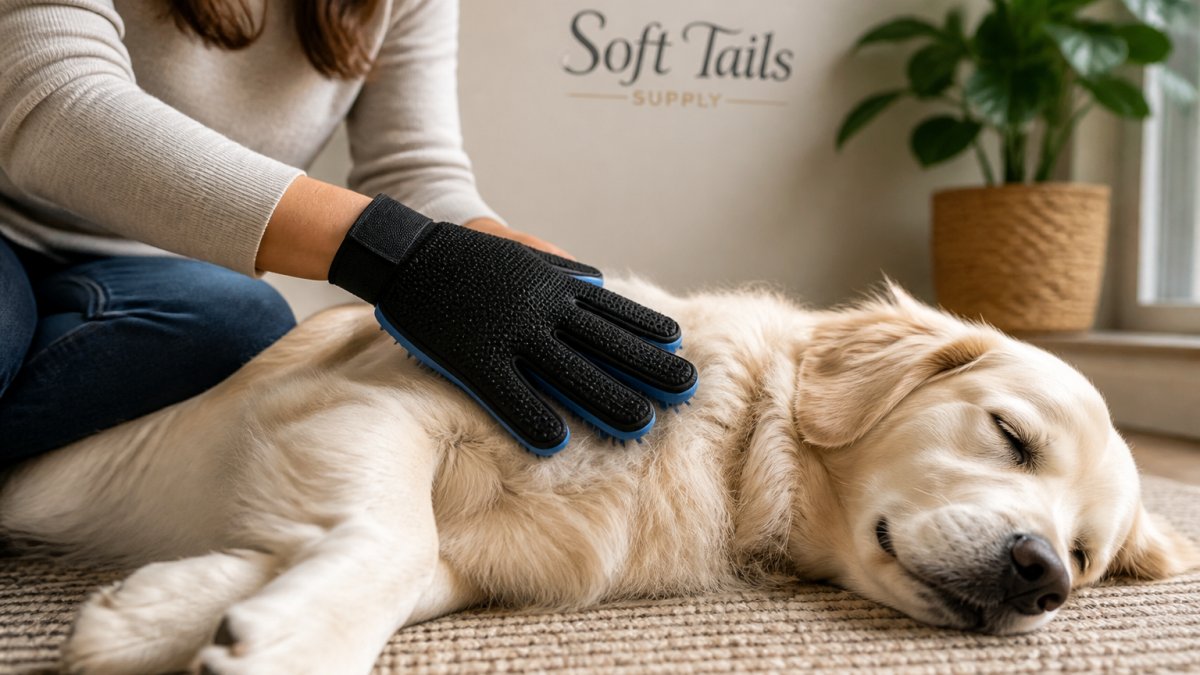
Grooming gloves for sensitive skin dogs lift loose fur with soft silicone tips instead of stiff metal bristles, cutting scraping, friction and post-brush redness. Slicker brushes drag across the skin barrier, so an allergy-itchy dog learns to dread grooming.
A brush concentrates force on a few dozen pins; a glove spreads the same pressure across your palm, so each stroke feels closer to a massage.
SofttailSupply stocks tools built around this idea, including the Deshedding Grooming Brush for Dogs & Cats, which lifts loose undercoat hair without tugging skin.

How to Groom a Dog with Skin Allergies: A Gentle Routine
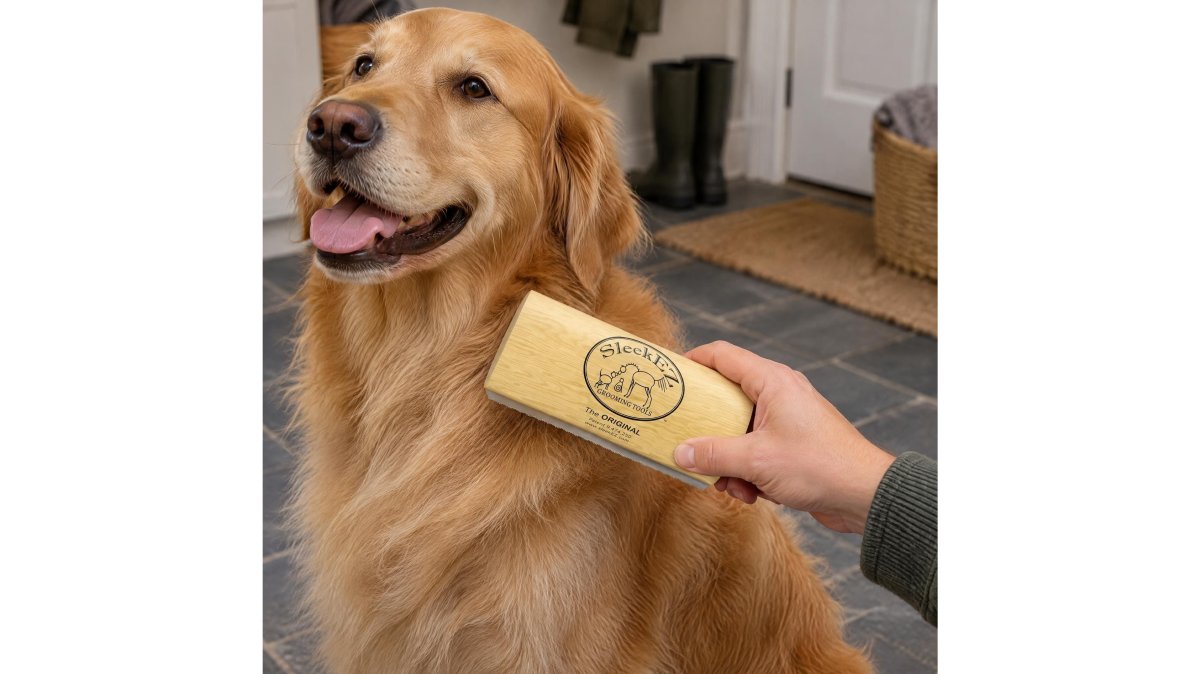
Learning how to groom a dog with skin allergies starts with shorter sessions: ten calm minutes beat thirty minutes of wrestling, and a dog that links grooming to relief will let you work longer over time.
A routine that works for most sensitive dogs: brush dry, use short strokes in the coat's direction, keep one hand flat on the body, and stop at the first lip lick, yawn or turn away, ignoring those signals turns mild aversion into real pet anxiety.
Silicone vs Rubber Grooming Gloves: Which Is Safer for Sensitive Skin?
Silicone grooming gloves are safer for most sensitive dogs: tips stay soft and flexible, rinse clean easily and are usually latex-free. Rubber grips fur harder, good on thick double coats, harsh on thin or irritated skin.
| Feature | Silicone Tips | Rubber Tips |
|---|---|---|
| Feel on skin | Soft, flexible, low friction | Firmer, more drag |
| Best coat type | Short, fine, thin or patchy | Thick double coats |
| Cleaning | Rinses clean, dries fast | Holds hair, needs more scrubbing |
| Allergy risk | Commonly latex-free | Latex blends are common |
| Best for | Sensitive skin, daily use | Heavy deshedding sessions |
Neither material replaces veterinary care. If your dog has a diagnosed skin condition, ask your vet which tools are safe alongside medicated shampoo.
Sizing, Fit and Safety by Coat Type
Fit decides whether a grooming glove helps or hurts. A loose glove slides instead of lifting fur, so you press harder, exactly the pressure you were avoiding.
Disposable Pet Cleaning Gloves & Wipes →
Measure your dominant hand at its widest point against the size chart. Most gloves run small; a snug palm gives control without a tight wrist band.
Coat type changes the risk: short, smooth coats tolerate almost any soft tool, but curly and wool coats mat close to the skin where a glove cannot reach, so they still need a comb.
For mats, a Pet Grooming Comb reaches the undercoat a glove glides over. For paws and small sensitive spots, the Paw Hair Trimmer with LED Light has a compact head and quiet operation for nervous pets.


Cleaning, Dander and Coat Health Between Sessions
A dirty glove redistributes dander, debris and loose fur onto the skin. Rinse the tips under warm water after every session, work in a drop of gentle soap weekly, and air dry completely, a damp glove grows bacteria.
Consistency beats intensity: a few minutes every other day controls loose fur better than one long weekly session.
Frequently Asked Questions
Are grooming gloves safe for dogs with sensitive skin?
Yes, when you choose the right material. Soft silicone or rubber tips with rounded ends glide over the coat without scratching the skin barrier. Avoid stiff bristles or metal combs that can cause micro-abrasions. For dogs with diagnosed allergies, start with short sessions and watch for redness. SofttailSupply's Pet Hair Spray Brush uses soft, flexible bristles and a light mist to reduce friction, making it a gentle option for sensitive pups.
How do I groom a dog that has skin allergies?
Use a two-step approach: first, a gentle deshedding tool like the Deshedding Grooming Brush ($34.99) to remove loose fur without tugging, then a soft cloth or disposable glove to wipe away dander. Keep sessions under 10 minutes and avoid hot water. If your vet prescribed medicated shampoo, apply it first, rinse thoroughly, and wait 24 hours before brushing to let the skin barrier recover. Always patch-test new tools on a small area.
Are silicone grooming gloves better than rubber for sensitive skin?
Silicone tips are typically softer and more flexible, which reduces friction and irritation during grooming. Rubber gloves offer more durability but can tug on fine hair. For dogs with thin coats or active skin conditions, silicone is the safer pick. The Pet Hair Spray Brush ($29.99) combines a light mist with soft-tip bristles to minimize pulling. Whichever you choose, look for rounded tips and a snug ergonomic fit to avoid hand fatigue.
Sensitive-skin grooming comes down to soft contact, short sessions and tools you actually keep clean. SofttailSupply carries grooming gloves, combs and trimmers chosen for exactly that kind of careful daily care, with fast 24 to 48 hour shipping, secure payment options and responsive customer support if something is not right for your dog. Continue shopping with SofttailSupply and build a grooming routine your pet stops hiding from.