 listicle
7 Best Interactive Toys for Dogs Left Alone in 2026
Table of Contents
- Quick Comparison: 7 Best Interactive Toys for Dogs Left Alone
- Best Toys for Dogs Home Alone: Top Picks Reviewed
- Safe Toys for Dogs to Play With Alone: Safety-First Criteria
- How to Keep a Dog Entertained While at Work
- Toys for Dogs with Separation Anxiety
- DIY Enrichment Alternatives
- Frequently Asked Questions
Last Updated: October 6, 2026
Quick Comparison: 7 Best Interactive Toys for Dogs Left Alone
Finding the 7 best interactive toys for dogs left alone means matching the toy to your dog's play style, toys that reward play without a person driving it.
Quick Picks:
- Best Overall: Interactive Baseball Treat Dispenser for Dogs ($49.99)
- Best for Mealtime: Interactive Slow Feeder Toy for Dogs ($29.99)
- Best for Chewers: Suction Cup Interactive Dog Toy ($23.99)
| Toy | Price | Best For | Play Type |
|---|---|---|---|
| Interactive Baseball Treat Dispenser | $49.99 | Treat-motivated dogs | Problem-solving |
| Interactive Slow Feeder Toy | $29.99 | Fast eaters | Mealtime enrichment |
| Suction Cup Interactive Dog Toy | $23.99 | Chew and tug energy | Solo tugging |
| Smart Rolling Pet Ball with Rope | $19.99 | Short supervised chases | Movement |
Best Toys for Dogs Home Alone: Top Picks Reviewed
The best toy for a dog home alone rewards the dog for acting on its own, a toy that needs a human fails the test.

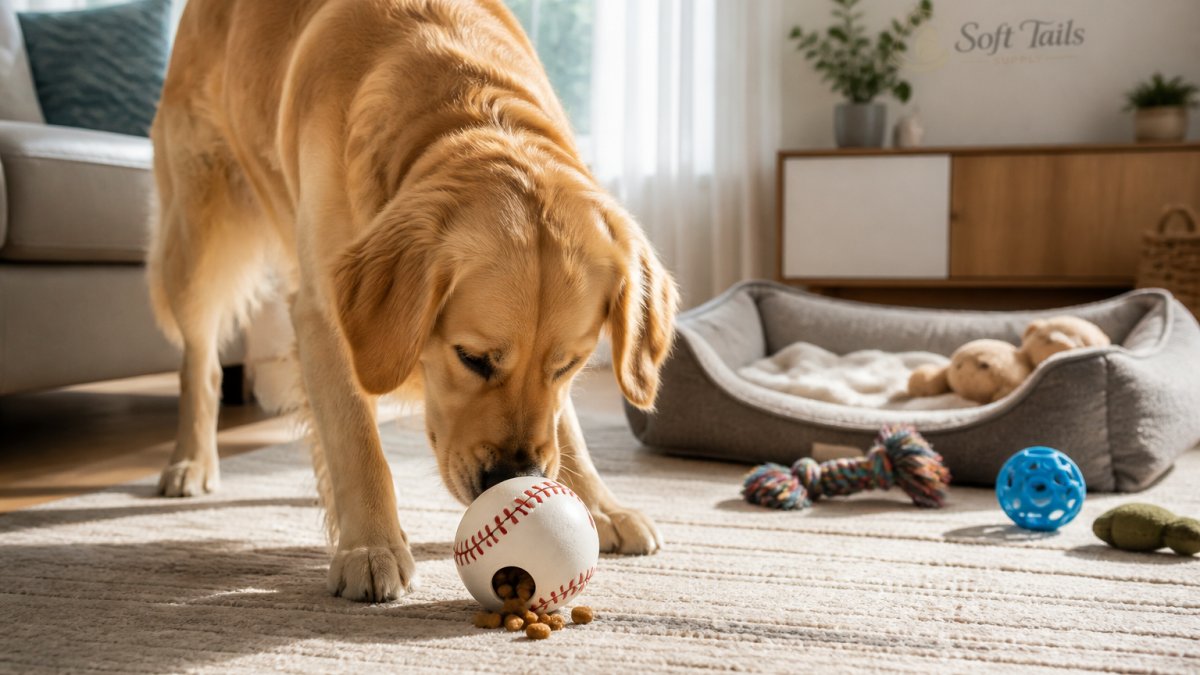
1. Interactive Baseball Treat Dispenser for Dogs: Best Overall
Our top pick rewards effort: your dog presses or nudges the moving component and treats drop out, the action-then-reward loop that keeps a dog working. It handles enthusiastic pawing, suits treat-motivated dogs of all sizes, and refills in seconds.
Pros: Encourages problem-solving; sturdy for vigorous pawing; works for treat-motivated dogs of any size; easy to refill. Cons: Best with a dog who already cares about treats; not a chew toy.
2. Interactive Slow Feeder Toy for Dogs: Best for Mealtime Enrichment
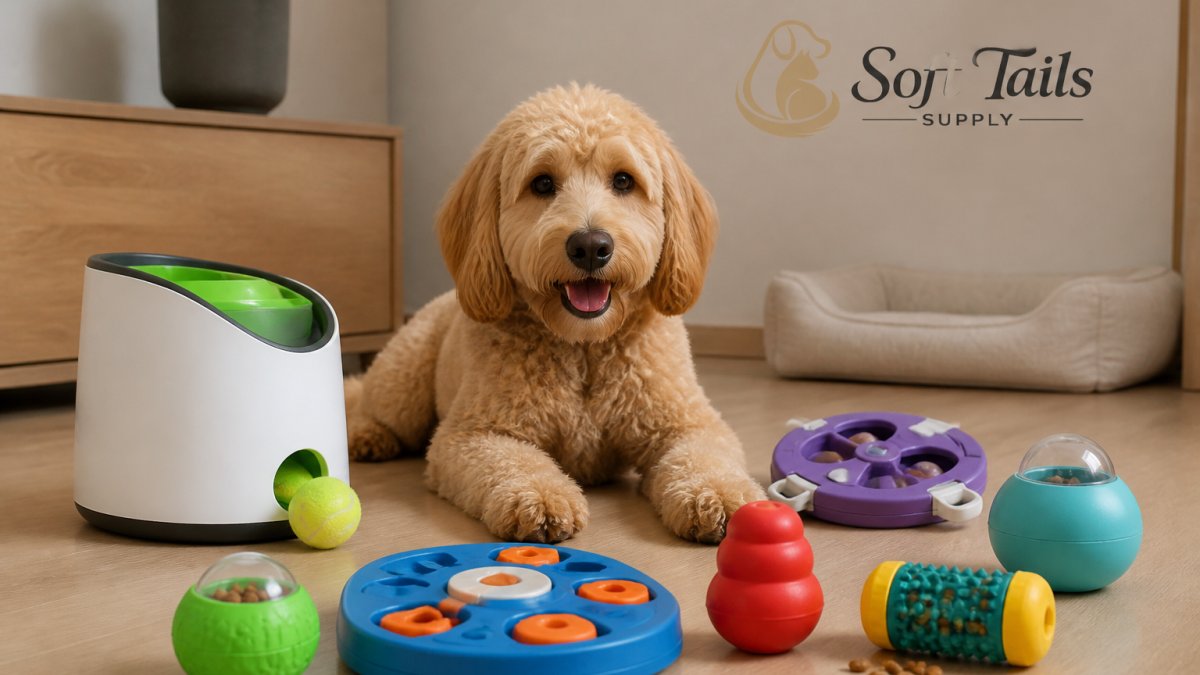
Fast eaters get a second job at dinner: different tray and ball configurations make your dog work for each bite, slowing gulping and adding mental stimulation. It wipes clean between meals.
Pros: Slows fast eating; adds mental stimulation; multiple tray and ball setups; easy to clean. Cons: A feeding tool, not a fetch toy.
3. Suction Cup Interactive Dog Toy: Best for Chew and Tug Energy
Attach it to a clean, smooth surface and the flexible top gives your dog something to tug, chew, and pull against, redirecting chew energy onto a toy instead of your furniture.
Pros: Strong suction base; flexible top handles hard tugging; good chew outlet; multiple colors. Cons: Needs a clean, smooth surface; supervise heavy chewers.
4. Smart Rolling Pet Ball with Rope: Best for Short Chases
This ball rolls and changes direction on its own, turning a small indoor space into a moving target, with a rope attachment for extra interest. It is compact and easy to store, the pick for a dog who needs a burst of activity, not an all-day puzzle.
Pros: Automatic rolling with changing directions; rope adds interest; compact; lowest price of the four. Cons: Short, supervised sessions only; not a chew toy.
Smart Rolling Pet Ball with Rope →
Safe Toys for Dogs to Play With Alone: Safety-First Criteria
Safe toys for dogs to play with alone share three traits: no small parts that detach, no pieces a dog can swallow, and a size that matches the dog's mouth. The ASPCA's pet care guidance on safe chews and toys is a solid starting reference for what to avoid.
Before leaving any toy with a dog, check: no loose rope ends, buttons, or squeakers; toy larger than the dog can swallow; no sharp edges or exposed seams; non-toxic material with no small detachable parts; matches your dog's chew strength; and you have watched your dog use it at least once.
How to Keep a Dog Entertained While at Work
The answer is rotation, not one perfect toy. Dogs habituate to a toy they see every day, so Monday's fascinating puzzle gets ignored by Thursday. Keep three or four toys in a closet and swap which ones are out. The American Kennel Club's enrichment resources describes this as novelty, and it is the cheapest upgrade you can make to a bored dog's day.
For a full workday, build a simple schedule:
| Time Block | Toy | Why |
|---|---|---|
| Morning | Slow feeder at breakfast | Slows eating, starts the day with a task |
| Mid-morning | Treat dispenser | Peak energy needs a puzzle |
| Early afternoon | Suction cup toy | Chew outlet during the long stretch |
| Late afternoon | Rolling ball | Short supervised burst before you are home |
Toys for Dogs with Separation Anxiety
No toy replaces training for true separation anxiety. What a toy can do is give an anxious dog something to do in the first ten minutes after you leave, usually the hardest part.

Calming techniques that pair well with a toy include leaving a worn t-shirt nearby, keeping departures low-key, and starting with very short absences. The Humane World for Animals guidance on separation anxiety outlines how to build up absence time gradually.
If your dog paces, drools, or destroys door frames every time you leave, that is a behavior problem, not a toy problem. Talk to your vet or a certified trainer.
DIY Enrichment Alternatives
You do not need to buy anything: a muffin tin with treats under tennis balls, a cardboard box with kibble, or a towel rolled with food all create the same work-for-food loop. Snuffle mats and hide-and-seek games are easy to make with fabric scraps or hidden kibble, the cheapest way to test whether your dog likes puzzle play before investing.
Frequently Asked Questions
What are the best interactive dog toys for dogs left alone?
The best interactive dog toys for dogs left alone combine mental stimulation with safe, durable construction. Treat-dispensing puzzles like the Interactive Baseball Treat Dispenser ($49.99) keep dogs problem-solving, while slow feeders ($29.99) turn mealtime into a calming activity. For heavy chewers, the Suction Cup Interactive Dog Toy ($23.99) offers a tug outlet. Always match the toy to your dog's size, chewing style, and energy level, and supervise initial sessions before leaving them alone with any new toy.
Are interactive toys safe for dogs left home alone?
Interactive toys can be safe for unsupervised play if they have no small parts, loose ropes, or weak seams. Check the toy's materials and construction before leaving your dog alone with it. The Smart Rolling Pet Ball with Rope, for example, is designed for supervised play only because of its rope attachment. Rotate toys and inspect them regularly for damage. Remove any toy with cracks, tears, or detached pieces immediately to prevent choking hazards.
How do I keep my dog entertained while at work?
Set up a rotation of 2-3 interactive toys before you leave. Fill a treat dispenser with kibble, freeze a stuffed slow feeder for longer engagement, and leave a durable chew toy for solo play. A toy rotation schedule (swapping toys every few days) prevents boredom. Pair toys with a consistent pre-departure routine: a short walk, then a calm goodbye. This combination of physical exercise and mental enrichment reduces destructive behavior and helps dogs self-soothe while you're away.