 listicle
Best Indestructible Chew Toys for Puppies (2026 Guide)
Table of Contents
- What Makes a Chew Toy Indestructible (and Safe) for Puppies?
- Safe Materials for Puppy Chew Toys: Rubber vs. Nylon
- Best Chew Toys for Teething Puppies and Furniture Protection
- How to Stop Puppy from Chewing Furniture with Toy Rotation
- Frequently Asked Questions
Last Updated: September 6, 2026
What Makes a Chew Toy Indestructible (and Safe) for Puppies?
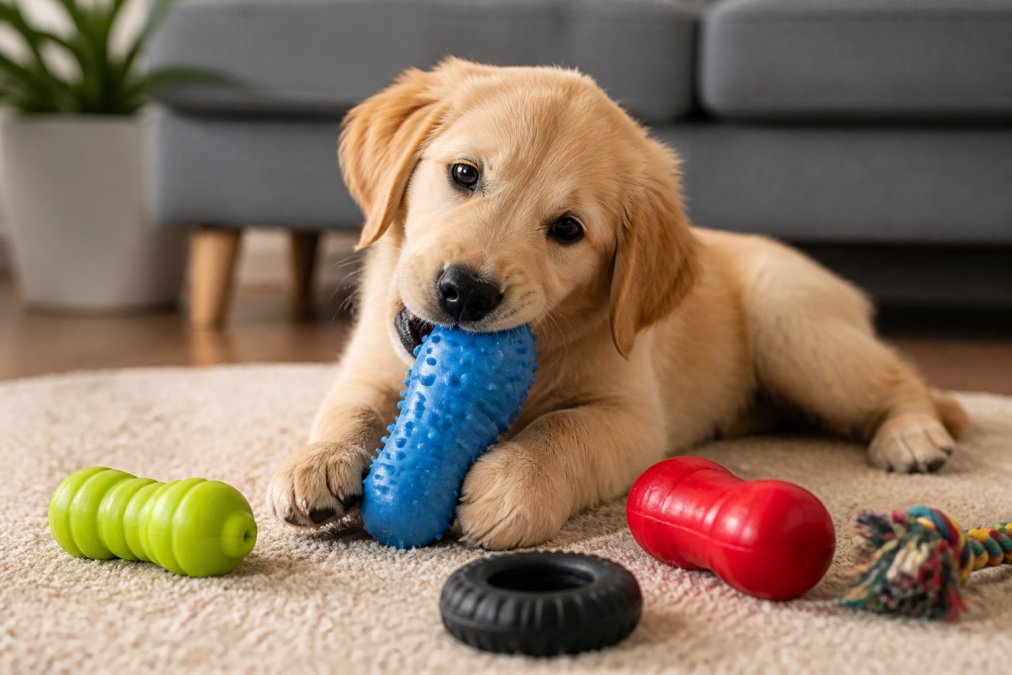
The search for the best indestructible chew toys for puppies usually starts after the first pair of shoes gets destroyed. Puppy chewing is normal, but the destruction doesn't have to be. An indestructible chew toy resists shredding while remaining safe for a puppy's developing teeth and digestive system.
"Indestructible" is a marketing term, not a guarantee. No toy survives every dog, but high-density materials designed for aggressive chewers come close. A toy that fails is not just an expense; it becomes a choking hazard or causes intestinal blockages. American Veterinary Medical Association guidance on chew toys recommends choosing toys that are too big to swallow and inspecting them regularly for damage.
Safe Materials for Puppy Chew Toys: Rubber vs. Nylon
Safe materials come down to two options: high-density rubber and tough nylon. High-density rubber is superior for most puppies because it flexes under pressure, which is gentler on emerging adult teeth. Tough nylon is harder and lasts longer, but it can be too rigid for a teething puppy.
The key difference is how the material fails. Rubber wears down gradually, while nylon can splinter or develop sharp edges. Look for materials labeled non-toxic and free of BPA, phthalates, and lead. FDA guidance on substances in contact with food and mouth provides a baseline for mouth safety, though pet toys are not strictly regulated. If a toy smells strongly of plastic or chemicals, skip it.
| Material | Best For | Watch Out For | Replacement Cycle |
|---|---|---|---|
| High-density rubber | Teething puppies, moderate chewers | Gradual wear, surface gouges | Replace when chunks detach |
| Tough nylon | Aggressive chewers, adult dogs | Splintering, sharp edges | Replace at first sign of cracking |
| Natural rubber | Light chewers, puppies under 6 months | Can be torn by strong jaws | Replace when torn |
Best Chew Toys for Teething Puppies and Furniture Protection
Teething typically begins around 3 to 4 months of age when adult teeth push through the gums. A rotation of two or three toys is more effective than a single "super toy." Offer a chilled rubber toy for gum relief, a textured option for cleaning teeth, and an interactive toy for engagement. The American Kennel Club's guide to puppy teething notes that redirecting chewing to appropriate items is the most effective way to protect your home. For indoor play, the Suction Cup Interactive Dog Toy ($23.99) attaches to a smooth floor and gives your puppy something to nudge and pull. It is not a chew toy, so use it under supervision and remove it if any part loosens.


How to Stop Puppy from Chewing Furniture with Toy Rotation
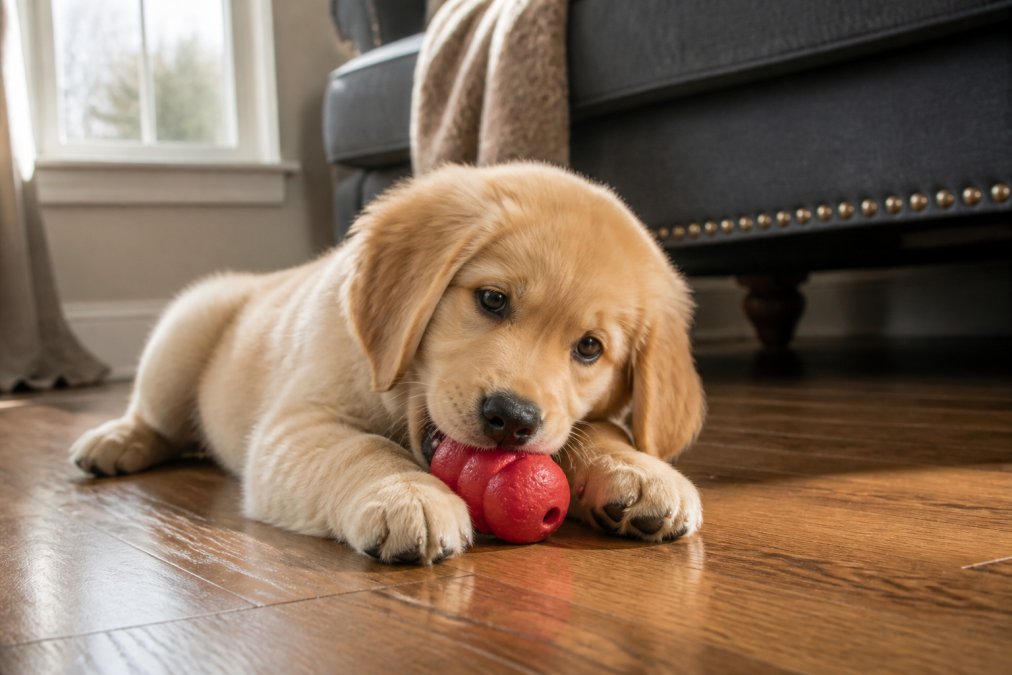
How to stop puppy from chewing furniture starts with management, not punishment. Puppies chew because it feels good, relieves stress, or because they are bored. Scolding after the fact does not work because they cannot connect punishment to the act.
Keep three to four toys in circulation and swap one out every two to three days. When you catch your puppy chewing something inappropriate, say "no" once and immediately hand them an appropriate toy. Praise them the moment they take it.
Interactive toys add another layer of protection by tiring out a puppy's mind. The Smart Rolling Pet Ball with Rope ($19.99) rolls unpredictably to encourage chasing, which burns energy that might otherwise go into destructive chewing. The Interactive Slow Feeder Toy for Dogs ($29.99) turns mealtime into a puzzle, providing enrichment that satisfies a puppy's need to work for food.

For more demanding chewers, treat-dispensing toys can reinforce positive habits. The Interactive Baseball Treat Dispenser for Dogs ($49.99) rewards your puppy for engaging with the toy rather than your furniture.
Choosing the right indestructible chew toys for puppies is about matching the material to your puppy's age and chewing intensity. High-density rubber suits most puppies through teething, while tough nylon is reserved for aggressive chewers with adult teeth. No toy replaces supervision, and every toy has a replacement cycle. SofttailSupply carries interactive toys like the Suction Cup Interactive Dog Toy and the Smart Rolling Pet Ball with Rope that support healthy play, backed by fast 24-48 hour shipping and responsive customer support.
Frequently Asked Questions
Are indestructible chew toys safe for young puppies?
No toy is truly indestructible, and safety always comes first. For young puppies, choose high-density rubber toys labeled for puppy use. Always supervise first play sessions to confirm the toy is size-appropriate and that your puppy cannot bite off pieces. Remove any toy showing deep gouges or tears immediately, as sharp edges can cause injury. Teething puppies have strong jaws, so check toys regularly for wear and replace them at the first sign of damage.
What do vets recommend for puppies to chew on?
Veterinarians typically recommend high-density rubber toys that flex slightly under pressure, as they are gentle on developing teeth while satisfying the urge to chew. Avoid toys harder than your fingernail, since they can crack puppy teeth. Look for non-toxic, BPA-free materials and choose a size too large for your puppy to swallow. For teething relief, cooling a rubber toy in the fridge (never the freezer) can soothe sore gums. Rotate toys to keep your puppy engaged and prevent boredom-related chewing.
How do I choose a chew toy that won't break?
Focus on material and construction. High-density rubber and tough nylon are the most durable options for aggressive chewers. Check the manufacturer's stated chew-resistance level and match it to your puppy's bite force. Avoid toys with seams, stitching, or small parts that can be pulled apart. Choose a size-appropriate toy that your puppy cannot fit entirely in its mouth. Finally, inspect the toy after every play session for wear and tear, and replace it once the surface shows significant damage.