 listicle
Best Grooming Tools for Shedding Cats: 2026 Guide
Table of Contents
- Best Grooming Tools for Shedding Cats: Quick Comparison
- How to Reduce Cat Shedding with the Right Routine
- Frequently Asked Questions
Last Updated: October 2, 2026
Best Grooming Tools for Shedding Cats: Quick Comparison
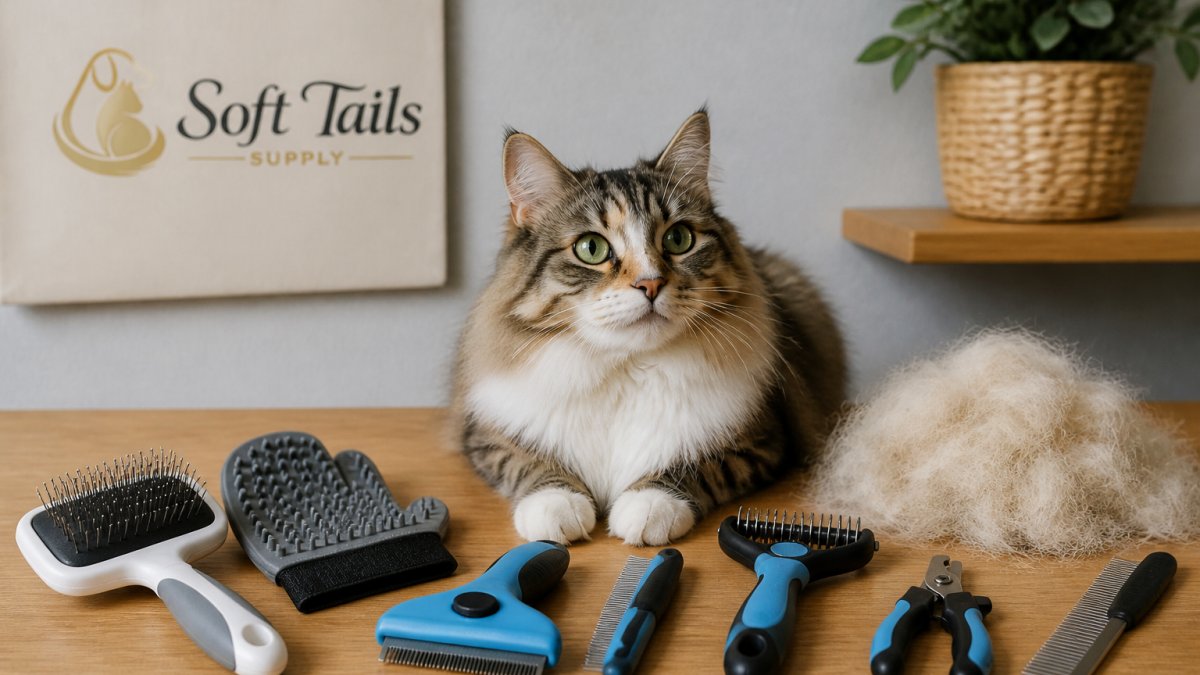
No single brush handles every coat type, and the wrong pick makes shedding worse. Here are the grooming tools that work.
| Tool | Price | Best For | Coat Type | Key Feature |
|---|---|---|---|---|
| Deshedding Grooming Brush | $34.99 | Heavy shedding | All coats | Reaches undercoat |
| Pet Hair Spray Brush | $29.99 | Sensitive cats | All coats | Built-in mist |
| Pet Grooming Comb | $18.99 | Long-haired cats | Medium to long | Detangling teeth |
| Cat Self-Grooming Corner Brush | $19.99 | Independent cats | Short to medium | Wall-mounted |
| Paw Hair Trimmer with LED Light | $22.99 | Touch-ups | All coats | LED visibility |
| Pet Hair Removal Broom | $24.99 | Home cleanup | Not applicable | Rubber bristles |
1. Deshedding Grooming Brush for Dogs & Cats, Best Overall

Our top pick removes loose undercoat hair and tangles without tugging skin. It works on all coats; start with short strokes and let your cat set the pace.
2. Pet Hair Spray Brush, Best for Sensitive Cats
Most cats who hate brushing hate the static shock and flyaway fur more than the bristles.
3. Pet Grooming Comb, Best for Long-Haired Cats
Long-haired cats need a comb before a brush. This handheld comb separates loose fur and works through small tangles; severe matting needs a professional groomer.
4. Cat Self-Grooming Corner Brush, Best Budget Pick
Some cats refuse human hands entirely. This textured silicone brush mounts to any wall corner with the included adhesive base, letting your cat rub and massage themselves.
5. Paw Hair Trimmer with LED Light, Best for Touch-Ups
Shedding gets attention, but paw tufts and sanitary areas need trimming too.
6. Pet Hair Removal Broom, Best for Home Cleanup
Grooming catches most loose hair, but some always lands on the floor.
7. Disposable Pet Cleaning Gloves & Wipes, Best for Between Baths
Not every grooming session needs a brush. These disposable gloves and wipes freshen paws, coat, and everyday messes without a full bath, which matters for cats who panic around water.
How to Reduce Cat Shedding with the Right Routine
Reducing cat shedding comes down to the right tool, the right frequency, and a calm cat.
Deshedding Grooming Brush for Dogs & Cats →
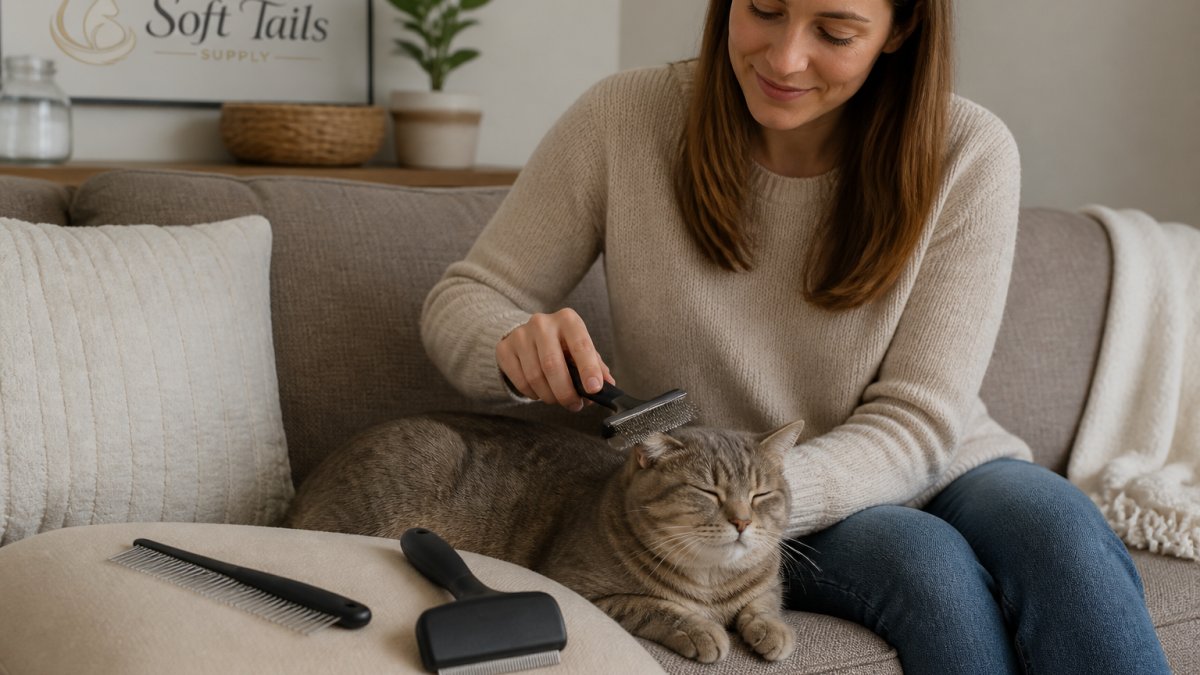
Match the tool to the coat. Long-haired cats need a comb first, then a deshedding tool.
Brush with the grain. Back-brushing irritates hair follicles and can cause skin sensitivity.
Set a grooming frequency. Short-haired cats need one or two sessions weekly; long-haired cats need daily combing during seasonal shedding, which peaks in spring and fall.
Watch for warning signs. Excessive shedding, bald patches, or a dull coat can signal diet gaps or skin issues, check with your veterinarian.
Desensitize gradually. Start with 30-second sessions and a treat, increasing duration only when your cat stays relaxed.
How to use a deshedding tool safely
Use light pressure, short strokes, and stop before your cat protests. Use a deshedding tool no more than twice a week, clearing the head every few strokes, and skip irritated or broken skin.
Cat grooming frequency guide
| Coat Type | Weekly Sessions | Seasonal Shedding | Tool Priority |
|---|---|---|---|
| Short-haired | 1-2 | Daily | Rubber curry or corner brush |
| Medium | 2-3 | Daily | Slicker brush, then comb |
| Long-haired | 5-7 | Twice daily | Comb first, then deshedding brush |
| Senior cats | 3-4 | Daily, gentle | Soft bristle or spray brush |
Why regular grooming pays off

Consistent grooming spreads natural oils, stimulates skin, and gives you a weekly chance to spot lumps, fleas, or skin changes early.
What most guides miss
Kittens need short, playful introductions; senior cats need softer tools and shorter sessions.
Frequently Asked Questions
Are deshedding brushes painful for cats?
A deshedding brush should never hurt when used correctly. The key is gentle, short strokes that follow the direction of the coat, never pressing down hard against the skin. Stop if you see redness or your cat flinches. Tools with rounded bristle tips, like the SofttailSupply Deshedding Grooming Brush, are designed to remove loose undercoat hair without tugging. Start with two-minute sessions and build up as your cat gets comfortable.
How often should you brush a cat that sheds a lot?
Most heavy shedders need brushing two to three times per week, while long-haired cats often need daily sessions to prevent matting and tangles. Short-haired cats can usually get by with once or twice a week. During seasonal shedding in spring and fall, increase frequency temporarily. A consistent grooming routine keeps loose hair off your furniture and helps distribute natural oils for a shinier coat.
What is the difference between a slicker brush and a deshedding tool?
A deshedding tool reaches deeper into the undercoat to pull out dead hair before it lands on your floors. Use a deshedding tool once or twice a week during heavy shedding seasons.
Shedding season does not have to mean fur on every surface. SofttailSupply curates grooming tools built for real routines, from the deshedding brush that reaches the undercoat safely to the self-grooming corner brush that lets your cat handle the easy work. Every order ships within 24 to 48 hours, and our team is ready if a tool is not the right fit for your cat's coat. Continue shopping with SofttailSupply and build a grooming kit that finally keeps up with the fur.