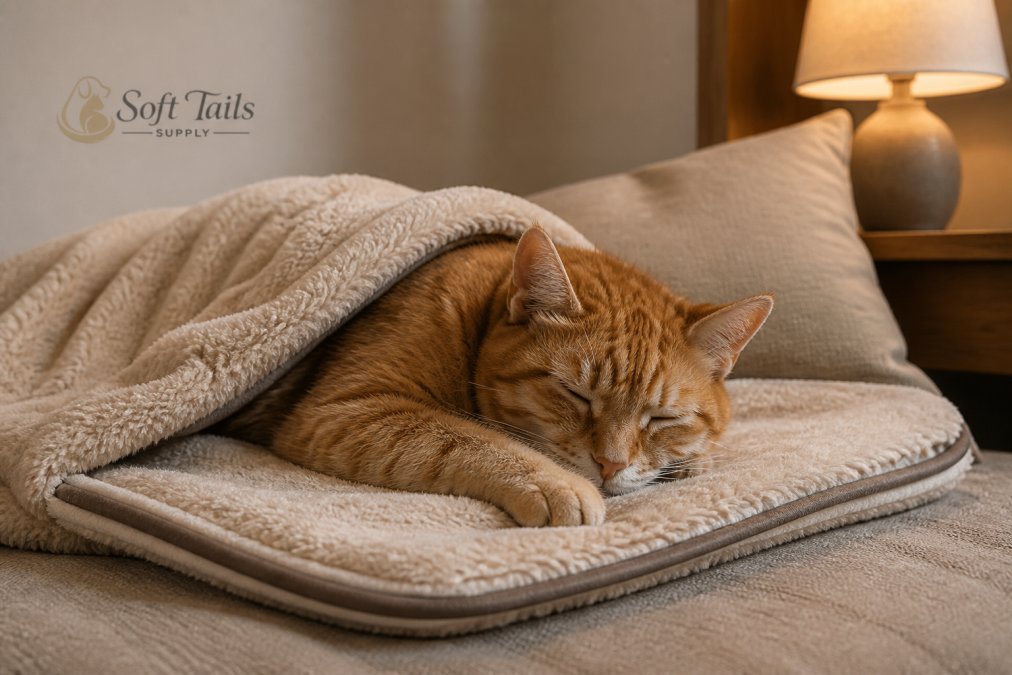
 ultimate-guide
Benefits of Heated Pet Blankets for Older Cats
Table of Contents
- Why Heated Pet Blankets Help Older Cats
- Self-Warming vs Electric Cat Beds
- Heated Cat Bed Safety Tips
- How Heat Helps With Arthritis and Joint Pain
- Choosing the Right Size and Style
- Placement Tips for Maximum Comfort
- Behavioral Transition Strategies
- Energy Efficiency and Long-Term Cost
- DIY Safety Checks Before You Buy
- Frequently Asked Questions
Last Updated: September 21, 2026
Why Heated Pet Blankets Help Older Cats
As cats age, their ability to regulate body temperature declines, and the benefits of heated pet blankets for older cats come down to one fact: warmth eases stiff joints and supports thermoregulation.
Older cats lose muscle mass and body fat that hold in heat, making hypothermia prevention a real concern in cold months.
Self-warming beds reflect your cat's own body heat via foil or insulating material; electric beds generate heat through a low-voltage element.
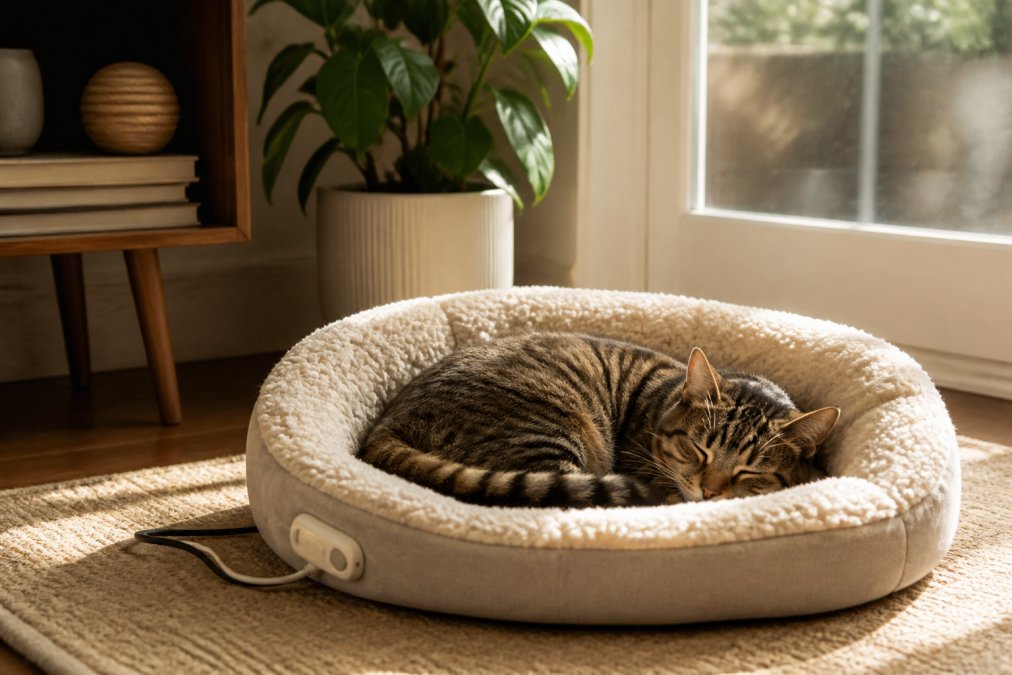
Self-Warming vs Electric Cat Beds
Self-warming cat beds use no electricity, reflecting body heat through thermal foil or insulating fabric. Electric cat beds plug into a wall outlet and warm through a low-voltage element, usually with built-in temperature control.
| Feature | Self-Warming Beds | Electric Heated Beds |
|---|---|---|
| Heat source | Reflected body heat | Low-voltage heating element |
| Best for | Mild chill, unsupervised use | Arthritis, chronic pain management |
| Cord safety | No cord | Needs a chew-proof cord and placement care |
For mild stiffness, a self-warming bed like the Warm & Cozy Plush Cat Bed may be enough.

For diagnosed arthritis or significant mobility issues, an electric bed with adjustable temperature control is usually better.
The Cozy Nest Semi-Enclosed Pet Bed traps warmth while staying breathable, suiting cats that burrow but overheat easily.

Heated Cat Bed Safety Tips
The most important heated cat bed safety tip: never leave an electric bed running unattended with a cat that has reduced sensation or mobility.
Before your cat touches the bed: check for a chew-proof cord sleeve routed out of reach; place it on a flat, hard surface; keep it away from heaters, radiators, and direct sun; wash the cover before first use; and inspect the cord and plug monthly.
New beds can carry a chemical smell from dyes or adhesives. Air out a new bed in a well-ventilated room for a day or two before use.
Signs your cat is too hot include panting, restlessness, seeking cool floors, and excessive grooming.
How Heat Helps With Arthritis and Joint Pain
Warmth relaxes muscles and improves circulation around stiff joints, which is why heat therapy is standard for chronic pain in older animals.
Arthritis signs in senior cats are easy to miss because cats hide discomfort (pubmed.ncbi.nlm.nih.gov).
Warm & Cozy Plush Cat Bed – A Soft →
A heated bed makes rest more comfortable and reduces stiffness that builds during long naps. The Plush Round Pet Bed offers a padded 75 cm surface with room to curl or stretch.

For cats that run cold indoors, the Thickened Tricolor Knit Sweater adds warmth for cats that tolerate clothing.
Choosing the Right Size and Style
Match the bed to how your cat sleeps: curlers want semi-enclosed beds that trap body heat; sprawlers need open, flat beds a few inches longer than your cat; stretchers need large beds with a firm base; nesters need plush, high-sided beds with low-entry access.
Low-entry design matters: a senior cat with mobility issues shouldn't have to climb into bed.
Placement Tips for Maximum Comfort
Place the bed where your cat already sleeps, keep it out of drafts, avoid direct sun for electric beds, place it near but not against a radiator, and give a senior cat a low-traffic spot away from loud activity and other pets.
If your cat ignores a new bed, give it a week in one good spot, and add a worn t-shirt for scent.
Behavioral Transition Strategies
Most cats don't take to a new bed on day one. Place it unplugged where your cat already frequents, add a familiar-smelling blanket, and let your cat investigate with no pressure.
Energy Efficiency and Long-Term Cost
Low-voltage elements draw little power, so an electric cat bed typically costs only a small amount per month. Choose a washable cover and turn it off in warm months. Self-warming beds cost nothing to run.
DIY Safety Checks Before You Buy
Before buying, run these five-minute checks: flex the cord for stiff or thin spots; confirm the cover is machine washable; smell the bed for chemical odor; check the base for non-slip surface; and verify size against your cat's stretched-out length.
Choosing the right warmth for an aging cat comes down to matching heat to need and safety to supervision. SofttailSupply carries cozy sleeping solutions built for this stage, from the plush Warm & Cozy Plush Cat Bed for mild chill to semi-enclosed designs that hold body heat without power. With fast 24-48 hour shipping, secure payment options, and responsive customer support, getting your senior cat a warmer place to rest is straightforward.
Frequently Asked Questions
Is it safe to leave a heated cat bed on all the time?
Check the cord for chew damage before each use, and place the bed on a flat, non-slip surface away from curtains.
Do heated beds help cats with arthritis?
Yes. The gentle warmth improves blood flow to stiff joints and eases chronic pain, especially for cats with mobility issues. Pair a heated bed with orthopedic support and a low-entry design so your senior cat can step in without strain.
Why do cats like heated blankets?
Cats seek thermal comfort because their natural body temperature runs higher than ours. Older cats lose body heat retention, so a heated blanket or self-warming bed helps with hypothermia prevention and keeps them cozy during naps.