 listicle
Are Automatic Laser Toys Good for Cats? A 2026 Review
Table of Contents
- Are Automatic Laser Toys Good for Cats? The Honest Verdict
- Cat Laser Toy Safety Guidelines: What You Need to Know
- How to Prevent Laser Pointer Frustration in Cats
- Best Interactive Cat Toys for Indoor Exercise
- The Role of Physical Exercise and Mental Stimulation
- Frequently Asked Questions
Last Updated: September 16, 2026
Are Automatic Laser Toys Good for Cats? The Honest Verdict
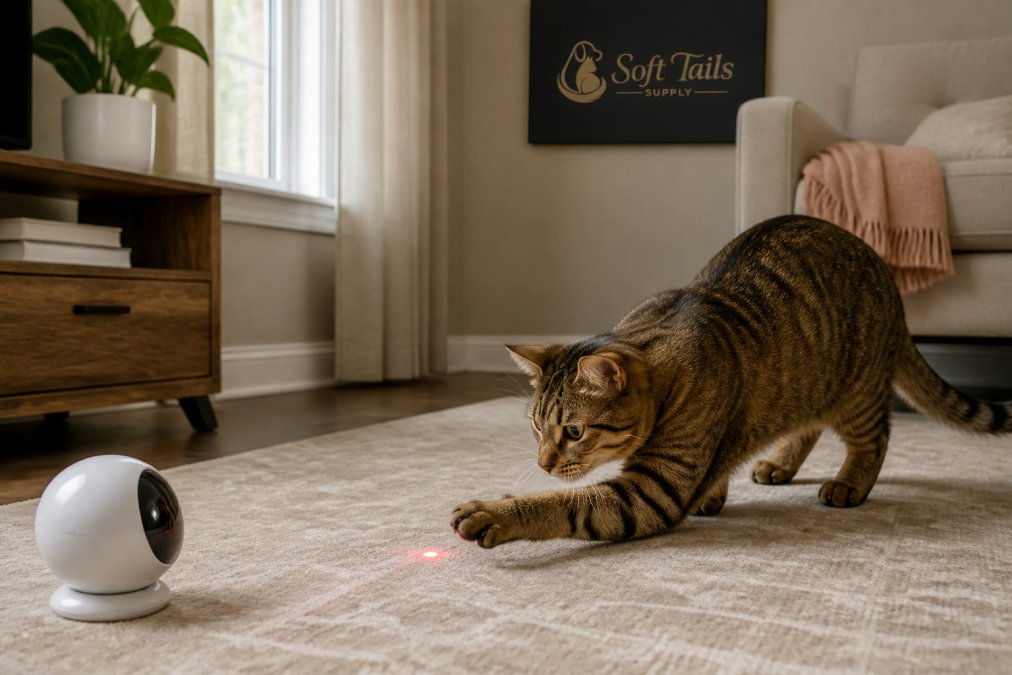
Automatic laser toys can be good for cats, but only with supervision and a physical reward at the end of each session. The red dot alone never satisfies a cat's hunting instinct: cats love the chase, then walk away tense when they never catch anything.
Automatic laser toys are motorized devices that move a laser beam on a timer or random pattern, letting a cat chase without a human holding the pointer.
Cats hunt in stages: stalk, chase, pounce, catch, kill, eat. A laser stops the sequence at "chase," and repetition without a catch builds frustration, laser-induced anxiety that shows up as tail twitching, dilated pupils, and obsessive staring at walls.
Cat Laser Toy Safety Guidelines: What You Need to Know
Cat laser toy safety guidelines cover three things: eye risk, play duration, and session structure. The American Veterinary Medical Association offers general guidance on pet toy safety and supervision, and laser pointers sold as pet toys should never be pointed at a cat's face.
Eye safety matters most: a laser aimed at a cat's eye can cause retinal damage, especially at close range. Point the beam at the floor or wall, never at the animal, and skip any toy without a classification label.
Keep sessions short: five to ten minutes, once or twice a day. Never leave an automatic laser toy running unattended for hours: the cat learns the pattern, stops engaging, and the toy becomes background noise.
How to Prevent Laser Pointer Frustration in Cats
Preventing laser pointer frustration comes down to one rule: always end the session with a catch. The "Completion Protocol": after two or three minutes of chasing the dot, land the beam on a real toy, a treat, or a piece of food the cat can physically grab.
A common mistake is letting the dot vanish, repeated unresolved hunts push some cats toward obsessive-compulsive behavior. The sequence: two minutes of erratic laser movement, slow the beam toward a physical object, land the dot there and let the cat pounce, reward with a treat, then put the laser away.
Best Interactive Cat Toys for Indoor Exercise
Interactive cat toys for indoor exercise work best when they deliver a physical catch. Laser play covers the chase. These toys cover the rest.
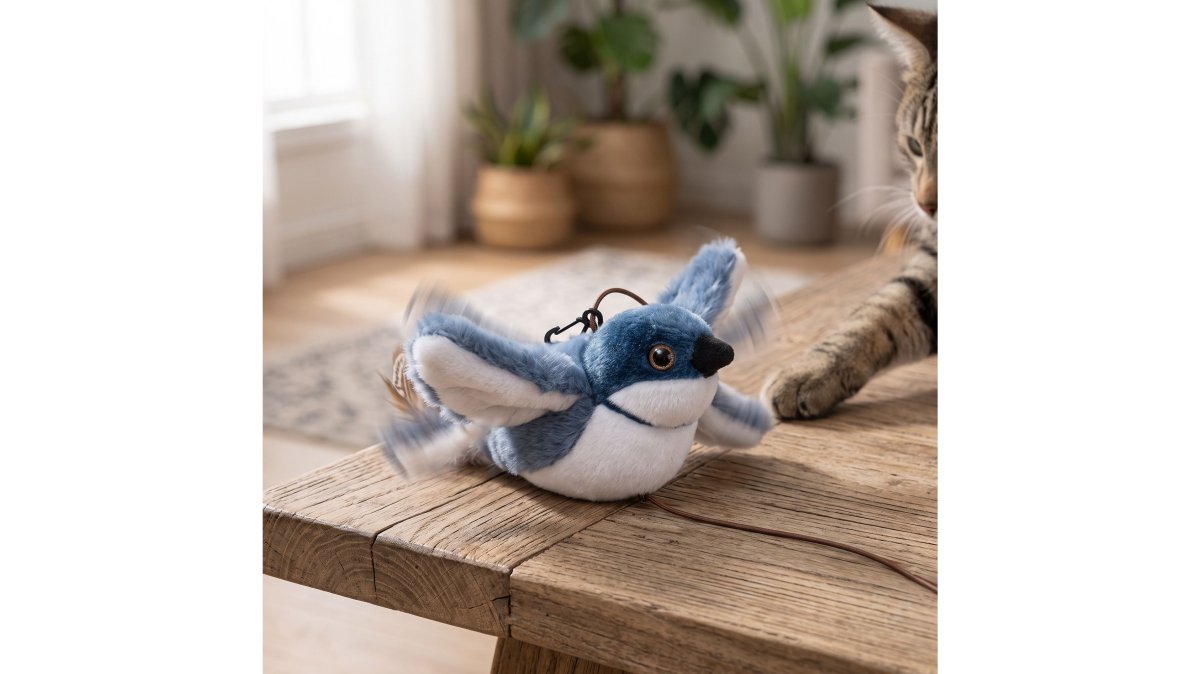
The Flapping Bird Cat Toy is our top pick for solo stimulation: realistic flapping mimics a bird and triggers the hunting instinct without a beam of light. At $22.99, it fills the gap a laser leaves.

The Suction Cup Cat Teaser Toy attaches to a smooth surface and gives your cat a moving target to bat and chase. At $15.99, it is the cheapest way to add a real physical catch to a play routine.

For cats that need a hide-and-pounce outlet, the Round Cat Tunnel combines an enclosed tunnel with a padded top that doubles as a lounging spot, supporting the stalking phase laser play skips. Available in Pink, Gray, Dark Gray, and Blue for $44.99.

The Smart Rolling Pet Ball with Rope rolls and changes direction on its own, with a rope attachment for tug-and-chase play. At $19.99, it bridges independent and hands-on play.
| Toy | Price | Best For | How It Completes the Hunt |
|---|---|---|---|
| Flapping Bird Cat Toy | $22.99 | Solo indoor play | Physical catch on a moving target |
| Suction Cup Cat Teaser Toy | $15.99 | Supervised sessions | Batting and pouncing on a fixed target |
| Round Cat Tunnel | $44.99 | Hiding and stalking | Supports the stalk-and-ambush phase |
The Role of Physical Exercise and Mental Stimulation
Physical exercise and mental stimulation are not the same need, and a laser toy only addresses one. Chasing builds short bursts of speed but not problem-solving, and it does not tire a cat the way a completed hunt does.
Indoor cats live in a low-stimulation environment, and boredom shows up as overgrooming, night vocalizing, and destructive scratching.
Frequently Asked Questions
Are laser light toys safe for cats?
Laser toys are safe when used correctly. The main risk is not eye damage from a consumer laser pointer, but behavioral frustration. Cats never catch the light, which can lead to obsessive-compulsive behavior. Always end sessions with a physical reward like a treat or a tangible toy such as the Flapping Bird Cat Toy. Never shine a laser directly into your cat's eyes, and avoid high-powered lasers.
How long should cats play with lasers?
Keep laser sessions short, around 5 to 10 minutes. Longer sessions increase the risk of frustration because your cat never completes the predatory sequence. Follow up with a physical catch, like a treat or a plush toy, to provide closure. If your cat shows signs of anxiety or obsessive behavior, switch to interactive toys that offer a tangible reward, such as the Suction Cup Cat Teaser Toy.
What are the best alternatives to laser toys for cats?
Interactive toys that let your cat physically catch something are better alternatives. The Flapping Bird Cat Toy mimics prey with realistic flapping motion, satisfying the hunting instinct. The Smart Rolling Pet Ball with Rope moves unpredictably and can be batted and chased. The Round Cat Tunnel offers hide-and-seek play. These options provide mental stimulation and physical exercise without the frustration of an uncatchable light.