 listicle
5 Affordable Alternatives to Expensive Cat Trees
Table of Contents
- Why Cat Trees Cost So Much (and What to Do Instead)
- DIY Cat Shelves Ideas That Cost Less Than a Cat Tree
- Cat Window Perches vs Cat Trees: Which Saves More Space?
- How to Make a Cat Tree Cheaper (Without Buying One)
- Choosing the Right Alternative for Your Cat
- Maintenance and Durability: Making Alternatives Last
- Frequently Asked Questions
Last Updated: September 25, 2026
Why Cat Trees Cost So Much (and What to Do Instead)
Cat trees cost so much because of shipping bulk, sisal wrapping, and carpeted platforms that eat floor space. This guide from SofttailSupply covers 5 affordable alternatives to expensive cat trees, from DIY cat shelves ideas to window perches.
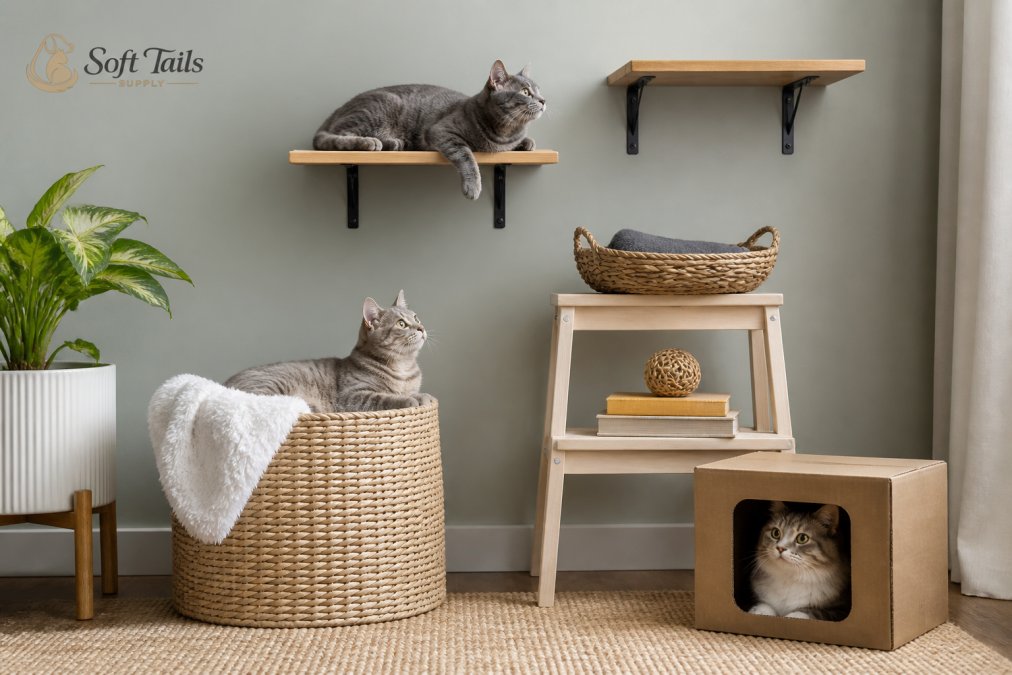
A floor-standing tree is bulky and often wobbles. Build vertical space in pieces instead: wall-mounted shelves, window perches, and upcycled furniture cost less and fit apartments better.
According to the American Veterinary Medical Association's pet owner resources, indoor cats need environmental enrichment to stay active and reduce stress. The ASPCA's cat behavior guidance also notes that climbing and scratching are natural feline needs, not bad habits. Meeting those needs does not require a $200 tower. It requires planning.
Below are 5 affordable alternatives to expensive cat trees, with real costs and stability notes.
DIY Cat Shelves Ideas That Cost Less Than a Cat Tree
DIY cat shelves ideas start with a simple bracket-and-board setup: one wall-mounted shelf costs far less than a full cat tree, and you can add levels over time. A common approach is three staggered shelves connected by a cat ladder or short jump gaps.
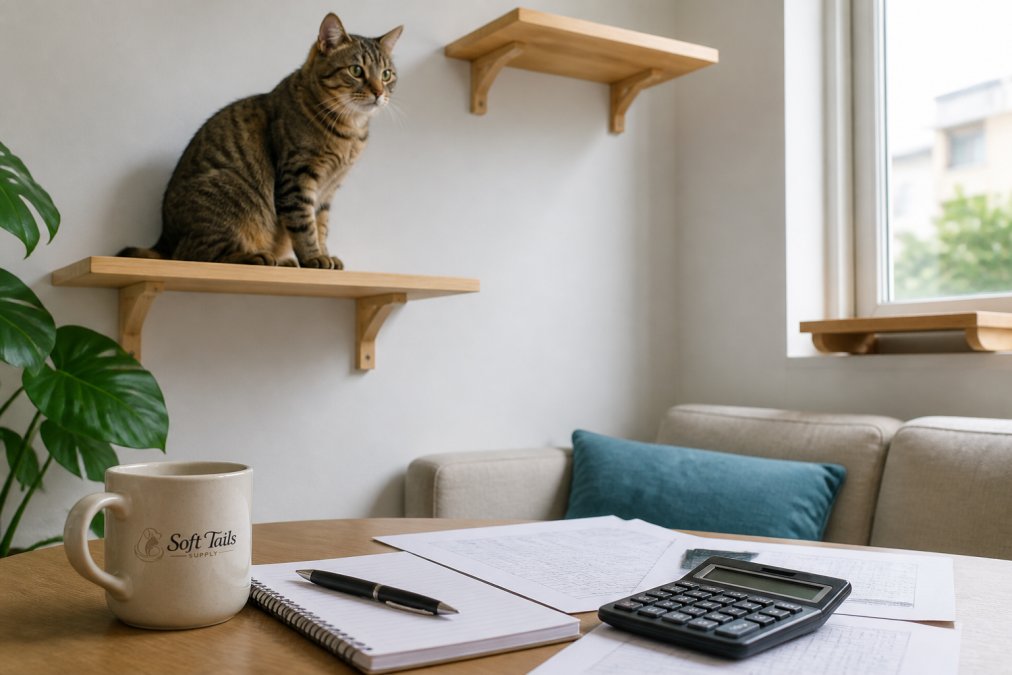
Anchor brackets into studs, not drywall alone; wrap one shelf edge in sisal rope so it doubles as a scratching post; use heavy-duty removable adhesive strips or tension poles if you cannot drill; and choose sanded pine or birch plywood with sealed edges to prevent splinters.
To skip the drill, SofttailSupply's Cat Self-Grooming Corner Brush mounts to any wall corner with an included adhesive base, no tools required, giving your cat a scratching and self-grooming spot that loosens fur before it reaches your sofa.
Cat Window Perches vs Cat Trees: Which Saves More Space?
Cat window perches vs cat trees comes down to floor footprint: a perch uses zero floor space, while a tree can occupy several square feet.
| Option | Floor Footprint | Stability | Best For |
|---|---|---|---|
| Window perch | None | Suction or bracket mount | Small apartments |
| Wall shelves | None | Stud-anchored | Multi-level climbing |
| Cat tree | 2-4 sq ft | Base-weighted | Multiple cats |
A window perch wins on space and often on price, but check weight limits and suction reliability before trusting it with a larger cat. It delivers bird-watching and sunbathing, vertical stimulation a floor tree cannot match; pair it with a cozy bed nearby for a rest-and-watch zone.
SofttailSupply's Warm & Cozy Plush Cat Bed at $24.99 fits under a window ledge with raised bolster sides, a non-slip base, and machine-washable fabric.

How to Make a Cat Tree Cheaper (Without Buying One)
Learning how to make a cat tree cheaper usually means not building a tree at all. Start with what you own: a sturdy bookshelf, dresser, or step stool becomes a climbing base when cleared and secured, then add a sisal-wrapped post and a perch on top.
Choosing the Right Alternative for Your Cat
Match the setup to your cat's age, size, and energy.
- Kittens and active cats: Wall shelves and multi-level systems.
- Senior cats: Low steps, wide platforms, soft landings.
- Large cats: Reinforced brackets, wider perches, checked load limits.
- Picky scratchers: Add a sisal surface and a dedicated scratching post.
For a playful, enclosed option, the Banana-Shaped Pet Bed at $29.99 gives a den-like burrow that is lightweight and easy to move. For a quiet retreat, the Cozy Nest Semi-Enclosed Pet Bed at $39.99 has a padded lining in sizes from 40 to 80 cm. The Plush Round Pet Bed at $59.99 gives a 75 cm padded surface.


Maintenance and Durability: Making Alternatives Last
Durable construction separates a one-month fix from a long-term setup. Tighten wall anchors every 60 days, replace frayed sisal before it sheds, wash bed covers monthly, and re-test stability after moving any piece.
A cat-friendly home does not need expensive gear, just safe, stable, well-placed pieces.
Frequently Asked Questions
What can I use instead of a cat tree?
Wall-mounted shelves give cats vertical territory without a bulky floor footprint. A corner-mounted self-grooming brush adds a scratching and rubbing station for under $20. For resting spots, a semi-enclosed bed like the Cozy Nest ($39.99) gives the same sheltered feel cats get from a condo cubby.
Are DIY cat shelves cheaper than buying a cat tree?
Usually yes. Basic brackets and boards can cost a fraction of a $150-$250 cat tree, and you control the materials. The trade-off is your time and the need to find wall studs for load-bearing.
How can I provide vertical space for my cat on a budget?
Start with what you already have: clear a bookshelf top, or mount a corner brush. Then layer in one or two affordable pieces, like the Warm & Cozy Plush Cat Bed ($24.99) placed on a dresser or the Banana-Shaped Pet Bed ($29.99) tucked into a closet shelf.
Building vertical space for your cat should not drain your budget or your floor plan. SofttailSupply makes it easier with cozy sleeping solutions, grooming tools, and fast 24 to 48 hour shipping, secure payment options, and responsive customer support. Start with one perch or bed and expand from there. Continue shopping at SofttailSupply and give your cat the comfort and enrichment they deserve.